
TSI Antibodies: What They Are, Why They Matter, and How They Affect Thyroid Health
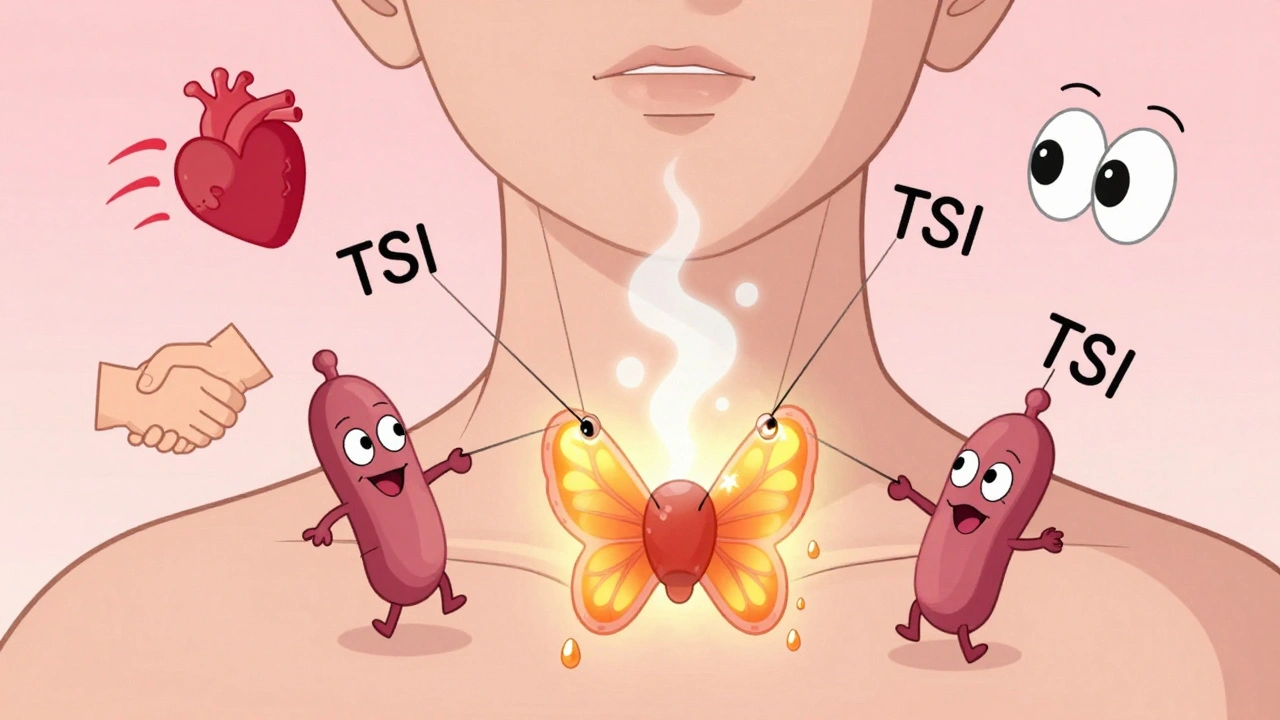
When your immune system goes rogue, it can start attacking your own thyroid—and TSI antibodies, thyroid-stimulating immunoglobulins that mimic TSH and overdrive thyroid hormone production. Also known as thyroid-stimulating immunoglobulins, these antibodies are the main driver behind Graves' disease, the most common cause of hyperthyroidism. Unlike other thyroid antibodies that just damage tissue, TSI antibodies trick your thyroid into overproducing hormones, leading to symptoms like rapid heartbeat, weight loss, anxiety, and bulging eyes. This isn’t just a lab result—it’s a biological glitch that changes how your body runs.
TSI antibodies don’t show up alone. They’re part of a larger group called thyroid antibodies, autoantibodies that target proteins in the thyroid gland. Others include TPOAb (thyroid peroxidase antibodies) and TgAb (thyroglobulin antibodies), which often appear in Hashimoto’s. But TSI is unique—it doesn’t just mark autoimmune activity, it actively causes disease. That’s why doctors test for it when someone has an overactive thyroid, especially if they’re young, female, or have a family history. If TSI is high, it’s not just inflammation—it’s a signal that the thyroid is being hijacked by your own immune system.
Testing for TSI antibodies helps confirm Graves’ disease, rule out other causes of hyperthyroidism, and guide treatment. It’s also used to monitor remission—when levels drop, it often means the disease is calming down. For pregnant women with Graves’, TSI levels can cross the placenta and affect the baby’s thyroid, so tracking them matters for both mother and child. Even after treatment with meds, radioactive iodine, or surgery, TSI antibodies can linger, which is why some people relapse years later.
What you’ll find in the posts below isn’t just a list of articles—it’s a practical guide to how TSI antibodies connect to real-world medication choices, side effects, and long-term health. You’ll see how drugs like methimazole and propylthiouracil work to calm the immune attack, why some thyroid meds interact with other prescriptions, and how conditions like postpartum depression or statin use can overlap with thyroid disorders. This isn’t theory. It’s what happens when your immune system and your metabolism collide—and what you can actually do about it.
Graves' Disease: Causes, Symptoms, and Proven Treatment Options for Autoimmune Hyperthyroidism
- Dec, 4 2025
- Daniel Remedios
- 14 Comments
Graves' disease is the most common cause of hyperthyroidism, triggered by autoimmune antibodies that overstimulate the thyroid. Learn the symptoms, diagnostic tests, and proven treatments including medication, radioactive iodine, and surgery.