
Furanocoumarins and Drugs: What You Need to Know About Dangerous Interactions
When you eat grapefruit or drink its juice, you might be unknowingly putting yourself at risk for serious drug interactions. furanocoumarins, natural chemicals found in citrus fruits like grapefruit, Seville oranges, and pomelos. These compounds are not harmful on their own—but they can stop your body from breaking down certain medications properly. This leads to dangerously high levels of drugs in your bloodstream, turning a normal dose into a potential overdose. Also known as furanocoumarins, furocoumarins, these substances are the reason your pharmacist warns you not to mix grapefruit with your pills.
CYP3A4 inhibition, the process by which furanocoumarins block a key liver enzyme responsible for metabolizing over half of all prescription drugs is the main culprit. This enzyme, called CYP3A4, normally breaks down medications like statins, blood pressure drugs, and immunosuppressants. When furanocoumarins shut it down, those drugs build up—sometimes to toxic levels. A single glass of grapefruit juice can affect your body for up to 72 hours. That’s why even taking your medication hours after eating grapefruit won’t always save you. This isn’t just a theory—it’s backed by real cases of rhabdomyolysis from statins, kidney failure from immunosuppressants, and sudden drops in blood pressure from calcium channel blockers.
Not all citrus fruits are dangerous. Oranges and lemons don’t contain enough furanocoumarins to cause problems. But Seville oranges, pomelos, and some limes do. Even some herbal supplements and juices labeled as "natural" can contain these compounds. The real danger? Many people don’t realize their medication is on the list. Statins like simvastatin, blood pressure drugs like amlodipine, anti-anxiety meds like buspirone, and even some cancer drugs are all affected. And because the effects last so long, skipping grapefruit only on the days you take your pill won’t help—you need to avoid it completely.
If you’re on any regular medication, check with your pharmacist. Ask: "Does this interact with grapefruit?" Don’t assume it’s safe just because you’ve eaten citrus for years. Your body doesn’t build up a tolerance. The risk stays the same. And if you’ve ever felt dizzy, nauseous, or unusually tired after eating grapefruit and taking your pills—those might not be side effects of the drug. They could be signs of an interaction you didn’t know about.
Below, you’ll find real-world examples of how these interactions play out in practice—from statins and blood pressure meds to drugs that affect your liver and kidneys. Each post breaks down what happens, who’s at risk, and how to avoid trouble without giving up your favorite foods entirely. You don’t need to guess. You just need to know what to look for.
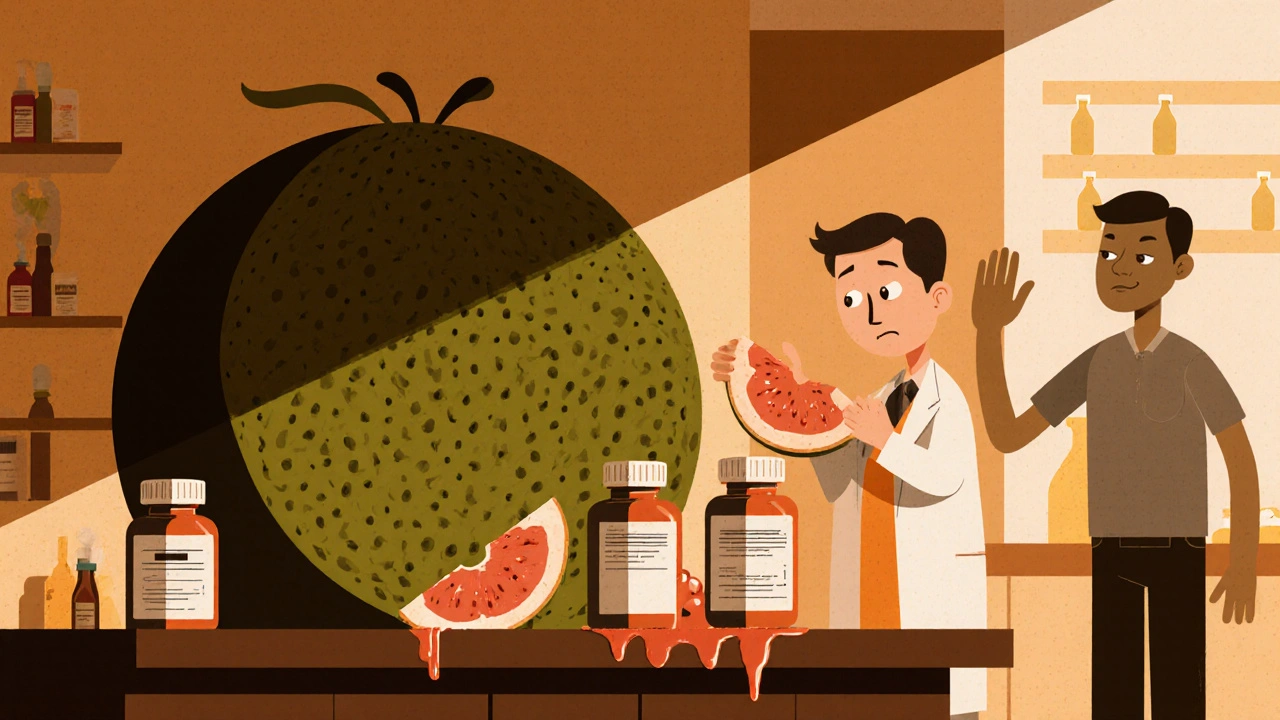
Citrus Fruits Beyond Grapefruit: Pomelo and Seville Orange Effects on Drugs
- Nov, 29 2025
- Daniel Remedios
- 13 Comments
Pomelo and Seville orange can be just as dangerous as grapefruit when taken with medications like statins, blood pressure pills, and immunosuppressants. Learn which drugs are affected, how these fruits interact, and what to do to stay safe.