
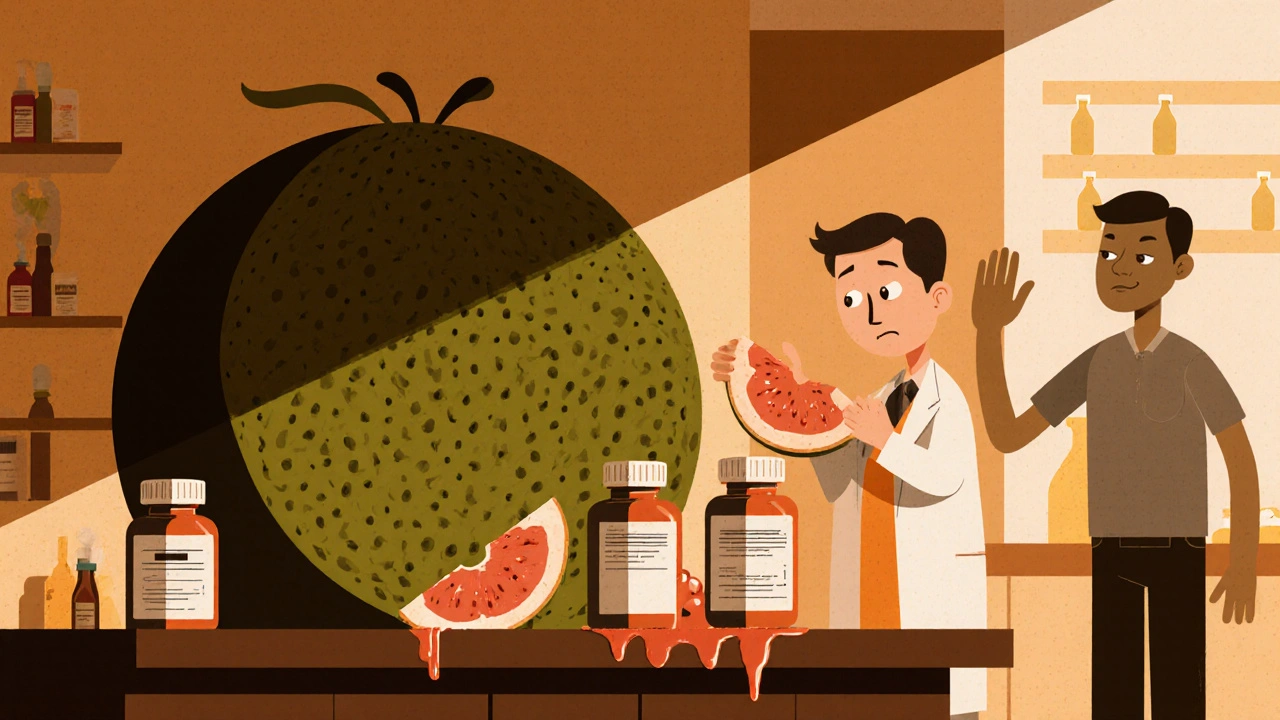
Most people know grapefruit can mess with their meds. But what about the big, pinkish fruit at the Asian market labeled "Chinese grapefruit"? Or the bitter marmalade your grandma swears by? Those are pomelo and Seville orange-and they’re just as dangerous as grapefruit when you’re on certain drugs.
You might think, "I don’t eat grapefruit, so I’m safe." But if you’ve had a slice of pomelo for breakfast, or spread Seville orange marmalade on your toast, you could be risking serious side effects-even if you’ve never heard of these fruits interacting with medicine. The science is clear: these citrus fruits aren’t just different flavors. They’re chemical wildcards that can turn safe doses of your pills into toxic ones.
Why These Fruits Are Riskier Than You Think
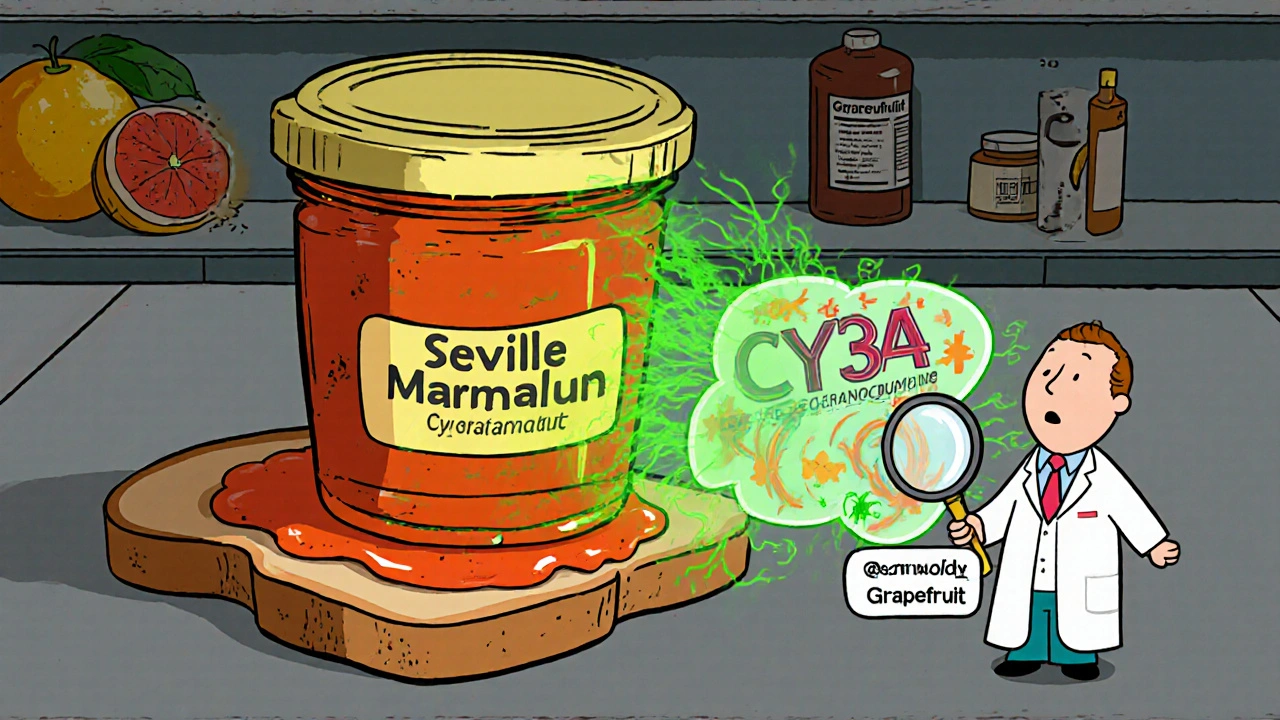
Pomelo and Seville orange don’t just mimic grapefruit-they often beat it. Both contain high levels of furanocoumarins, especially bergamottin and 6’,7’-dihydroxybergamottin. These compounds shut down an enzyme in your gut called CYP3A4, which normally breaks down drugs before they enter your bloodstream. When it’s blocked, your body absorbs way more of the medication than it should.
Studies show pomelo has 1.5 to 2.5 micromoles per liter of these inhibitors-higher than grapefruit’s 1.0 to 2.0. Seville orange? Even worse. Some varieties hit 3.0 to 4.0 micromoles. That means a single glass of pomelo juice can boost the blood levels of simvastatin (a cholesterol drug) by 350%, compared to 300% for grapefruit. And Seville orange marmalade? One study found it spiked tacrolimus (a transplant drug) levels by 400%, leading to kidney damage and hospitalization.
The problem? These effects last up to 72 hours. It’s not about having the fruit with your pill. It’s about having it anytime in the last three days. Even one small piece can trigger a reaction. And unlike grapefruit, most people don’t realize they’re eating these fruits in disguise.
What Medications Are at Risk?
These fruits don’t play favorites-they target specific drugs that rely on CYP3A4 to be processed. The big three categories are:
- Statins like simvastatin, atorvastatin, and lovastatin. Too much in your blood = muscle breakdown (rhabdomyolysis), which can cause kidney failure.
- Calcium channel blockers like amlodipine, diltiazem, and verapamil. Excess levels = dangerously low blood pressure, dizziness, fainting.
- Immunosuppressants like tacrolimus and cyclosporine. Too much = organ toxicity, infections, or rejection after transplant.
Other risky drugs include some anti-anxiety meds (like buspirone), certain heart rhythm drugs (amiodarone), and even some cancer treatments. The University of Florida’s Pharmacogenomics Center lists 107 medications with confirmed interactions. If your pill’s label says "avoid grapefruit," assume pomelo and Seville orange are off-limits too.
And no, sweet oranges, tangerines, or clementines are safe. They don’t contain the same furanocoumarins. The danger is only in the bitter, thick-skinned citrus: pomelo, Seville orange, and grapefruit.
Hidden Sources You’re Probably Missing
The biggest trap? People don’t recognize these fruits in processed foods.
Seville orange is almost never sold fresh in the U.S. or New Zealand. Instead, it’s turned into marmalade, sauces, or flavoring. If you’ve ever bought "bitter orange marmalade" or "Spanish-style orange spread," you’re consuming a concentrated dose of furanocoumarins. One tablespoon can be as potent as a full glass of juice.
Pomelo is often sold as "large grapefruit" in Asian grocery stores. Labels don’t say "interacts with medications." Customers assume it’s safe because it’s "just another citrus." A 2023 survey found 68% of patients who had adverse reactions weren’t warned by their doctor or pharmacist.
Even supplements with "bitter orange extract"-marketed for weight loss or energy-can contain enough furanocoumarins to cause trouble. The FDA has received over 200 adverse event reports tied to pomelo and Seville orange since 2018. That number is rising.
Why Doctors and Pharmacies Are Falling Short
Here’s the ugly truth: most healthcare providers still only warn about grapefruit.
A 2023 survey of U.S. community pharmacists showed only 42% routinely ask patients about pomelo or Seville orange use. Compare that to 87% who ask about grapefruit. That gap is deadly.
Electronic pharmacy systems? Only 29% of major chains flag pomelo or Seville orange in their drug interaction alerts. Your prescription screen might say "avoid grapefruit"-but nothing about the big fruit you bought last week at the market.
Even the FDA’s official guidance, updated in 2022, only mentions these fruits in passing. It’s not that they’re unaware. It’s that the public health message hasn’t caught up with the science.
Dr. David Bailey, who first discovered the grapefruit-drug interaction in 1989, put it bluntly: "Pomelo is essentially grapefruit’s bigger, more dangerous cousin." And he’s right. The data doesn’t lie.
What You Should Do Right Now
If you’re on any medication-especially statins, blood pressure pills, or immunosuppressants-here’s what to do:
- Check your meds. Look up your drug on the University of Florida’s drug interaction list. If grapefruit is listed, assume pomelo and Seville orange are too.
- Ask your pharmacist. Don’t just say, "Is grapefruit okay?" Say, "What about pomelo or bitter orange marmalade?" Be specific.
- Read labels. If you see "bitter orange," "Seville orange," or "pomelo" in ingredients, avoid it.
- Switch to safe citrus. Sweet oranges, mandarins, and tangerines are fine. They won’t interfere.
- Wait 72 hours. If you ate one of these fruits recently, hold off on your medication until three full days have passed.
One patient in New Zealand developed rhabdomyolysis after eating pomelo daily for two weeks while on simvastatin. He didn’t know it was risky. His doctor didn’t ask. He ended up in the hospital. That’s not rare. It’s predictable.
The Bigger Picture
Global pomelo production has jumped 50% since 2015. More people are eating it. More products are being made with Seville orange. But warning labels? Only 37% of pomelo and Seville orange products carry interaction notices-compared to 78% for grapefruit.
The FDA is finally pushing to expand warning labels to include all furanocoumarin-rich citrus fruits. The rule change is expected by mid-2025. Until then, you can’t rely on labels. You have to rely on knowledge.
Climate change is also making this more complex. A 2022 study found furanocoumarin levels in citrus can vary by up to 25% depending on growing conditions. A pomelo from Thailand might be safer than one from Florida. But you won’t know. So the safest rule? Avoid them all if you’re on sensitive meds.
Real Stories, Real Consequences
On Reddit, a user named u/PharmTech2021 shared a case: a patient on simvastatin developed muscle pain and kidney failure after eating pomelo daily. No one warned them. The patient didn’t know the fruit was dangerous.
A transplant patient in the U.S. took Seville orange marmalade every morning. Her tacrolimus levels skyrocketed. She nearly lost her new kidney. Her doctor had never heard of the interaction.
On the flip side, patients who switched to sweet oranges after being warned reported 82% satisfaction in a 2022 Mayo Clinic survey. They felt safer. They felt heard.
The difference? Awareness.
Final Advice: Don’t Guess. Ask.
You don’t need to become a pharmacologist. But you do need to speak up.
If you take any medication regularly, ask your pharmacist: "Are there any citrus fruits I should avoid besides grapefruit?" If they hesitate or say "just grapefruit," push back. Show them the research. Tell them about pomelo and Seville orange.
These fruits aren’t exotic treats. They’re silent drug accelerators. And if you’re on the wrong meds, they can turn a routine dose into a medical emergency.
There’s no reason to live in fear. Just be informed. And if you’re not sure? Skip it. Your body will thank you.
Can I eat pomelo if I’m not on any medication?
Yes. If you’re not taking any prescription drugs, especially statins, blood pressure meds, or immunosuppressants, pomelo is perfectly safe and even nutritious. It’s high in vitamin C and fiber. The risk only exists when these fruits interact with medications that rely on the CYP3A4 enzyme system.
Is Seville orange marmalade worse than fresh grapefruit?
Yes, often. Seville orange peel, which is used in marmalade, contains concentrated levels of furanocoumarins-sometimes up to 30% higher than in grapefruit juice. Because marmalade is eaten in thick layers on toast, you’re consuming a much more potent dose than you would from a glass of juice. One serving can be enough to trigger a dangerous interaction.
What about orange juice from the grocery store?
Regular sweet orange juice (from Valencia or Navel oranges) is safe. It doesn’t contain furanocoumarins. The only citrus fruits to avoid are grapefruit, pomelo, and Seville orange. Always check the label-if it says "bitter orange" or "Citrus aurantium," avoid it.
How long do the effects last after eating pomelo?
The enzyme inhibition caused by furanocoumarins is irreversible. Your body needs to make new enzymes to replace the blocked ones. This takes about 72 hours. That means even if you ate pomelo three days ago, it could still affect how your body processes your medication today.
Are there any citrus fruits that are completely safe?
Yes. Sweet oranges (like Valencia, Navel, or Blood oranges), tangerines, mandarins, and clementines are all safe. They lack the furanocoumarins that cause drug interactions. You can enjoy these without worry if you’re on medications that react to grapefruit, pomelo, or Seville orange.
Why don’t all drug labels mention pomelo and Seville orange?
Because the research on these fruits is newer and less widespread than grapefruit. Most drug labels were written decades ago, based on early grapefruit studies. Regulatory agencies are updating guidelines, but labeling changes move slowly. Until then, you must assume that if grapefruit is listed as a warning, so are pomelo and Seville orange.
Can I just eat a small piece of pomelo once in a while?
No. Even a small amount-like one wedge-can trigger an interaction. The inhibition is dose-dependent but not linear. There’s no safe threshold. If you’re on a sensitive medication, avoid all pomelo and Seville orange entirely. There’s no benefit worth the risk.
Next time you’re at the market, look at the citrus section again. That big, weird fruit with the thick skin? It’s not just different-it’s dangerous if you’re on meds. Don’t wait for a warning label. Ask. Know. Protect yourself.
Robert Bashaw
This isn't just a warning-it's a public health emergency wrapped in a citrus peel. I had no idea my grandma's "special" marmalade was basically a slow-acting poison for my statin. Now I'm wondering how many people are quietly dying from breakfast.
linda wood
Wow. So I've been eating Seville orange marmalade on my toast for 12 years while on blood pressure meds... and my doctor never said a word? Thanks for the enlightenment, I guess? 😒
Sullivan Lauer
I'm a pharmacist in Ohio and let me tell you-this is the #1 thing we wish patients would ask about. We get asked about grapefruit every day. But pomelo? Never. I had a guy come in last week with rhabdo after eating pomelo daily because he thought it was "just a bigger orange." He didn't even know the word "furanocoumarin." We need signage. We need alerts. We need a damn PSA.
Steven Howell
As someone who grew up in a household where pomelo was a New Year's tradition, I find this both fascinating and alarming. In Chinese culture, the fruit symbolizes abundance and good fortune-yet here we are, consuming a substance that can shut down critical metabolic pathways. The disconnect between cultural practice and pharmacological risk is profound, and it underscores a systemic failure in cross-cultural health communication.
tushar makwana
i live in india and we dont really eat pomelo here but i know some people who bring it from abroad. i never knew it could be dangerous. this is very important info. thank you for sharing. maybe doctors should make posters in local languages too.
Scott Collard
If your doctor doesn’t know this, they’re outdated. Period.
Sohini Majumder
ok but like... why is everyone so scared of a FRUIT?? like i get it, drugs are serious, but this feels like fearmongering with a side of citrus... also marmalade? really? my toast is safe, right??
Peter Axelberg
I’ve been eating pomelo every Sunday morning for years. Never had a problem. I’m on simvastatin. I’ve got no muscle pain, no dizziness, no hospital visits. Maybe it’s not as bad as they say? Or maybe I’m just lucky? I’ve never seen a single study that says one wedge is enough to kill you. I’m not going to give up my favorite fruit because some lab report says so. I’d rather trust my body than a spreadsheet.
Latika Gupta
I am from India and I have never heard of this before. I have a friend who takes medicine for heart and she eats pomelo every day. Should I tell her? I am scared to say something because she might think I am judging her.
Mary Kate Powers
This is such an important post. I’m so glad you shared it. I work with elderly patients and so many of them have been eating Seville orange marmalade for decades because it’s "what their mothers used." No one ever told them it could be dangerous. Let’s make sure this info spreads. You’re helping save lives.
Richard Thomas
The pharmacokinetic data presented is compelling, yet the public health infrastructure remains woefully unprepared. The regulatory lag between empirical evidence and labeling mandates constitutes a form of institutional negligence. One must question the epistemic authority of agencies that prioritize bureaucratic inertia over patient safety. The 72-hour window of CYP3A4 inhibition is not merely a pharmacological footnote-it is a silent, systemic threat.
Sara Shumaker
It’s funny how we’re taught to fear chemicals in food, but never taught to question the cultural rituals around them. We celebrate pomelo during Lunar New Year, we spread marmalade on toast like it’s harmless tradition-yet no one ever asks: "What is this doing to my body?" Maybe the real problem isn’t the fruit. It’s that we’ve stopped asking questions about what we consume.
jamie sigler
So what? I’m not dying because I ate a piece of fruit. You people need to chill. This is just another way to scare folks into buying more meds or going to more doctors. I’m not falling for it.