
Citrus Fruit Drug Interactions: What You Need to Know
When you eat a grapefruit or drink orange juice with your medicine, you might be doing more than just adding flavor—you could be changing how your body handles the drug. This is called a citrus fruit drug interaction, a reaction where compounds in citrus fruits interfere with how certain medications are broken down in the body. Also known as grapefruit-drug interaction, it’s not a myth—it’s a well-documented risk that affects millions. The problem isn’t the fruit itself, but a group of chemicals called furanocoumarins that block an enzyme in your gut called CYP3A4. That enzyme normally breaks down many drugs before they enter your bloodstream. When it’s shut down, too much of the drug gets absorbed, which can turn a safe dose into a dangerous one.
Some of the most common drugs affected include statins like simvastatin, blood pressure meds like felodipine, and immunosuppressants like cyclosporine. Even a single glass of grapefruit juice can cause this effect to last over 24 hours. That means if you take your pill in the morning and drink juice at breakfast, you’re still at risk hours later. Oranges and tangerines are usually safer, but Seville oranges and pomelos are just as risky as grapefruit. Don’t assume all citrus is equal. And no, switching to a different brand of juice won’t help—the chemicals are in the fruit, not the processing.
This isn’t just about pills you take daily. It can affect antibiotics, heart rhythm drugs, and even some pain medications. The risk is higher if you’re older, have liver or kidney issues, or take multiple meds at once. You won’t always feel symptoms right away. Sometimes the first sign is dizziness, muscle pain, or an irregular heartbeat—symptoms that could be mistaken for something else. That’s why it’s so important to ask your pharmacist or doctor: "Does this medicine interact with citrus?" Not every drug is affected, but if yours is, skipping grapefruit isn’t a suggestion—it’s a safety rule.
Below, you’ll find real-world examples of how these interactions show up in practice. From statins and blood pressure meds to antibiotics and beyond, the articles here break down exactly which drugs are risky, what to watch for, and how to manage your meds without giving up your favorite breakfast.
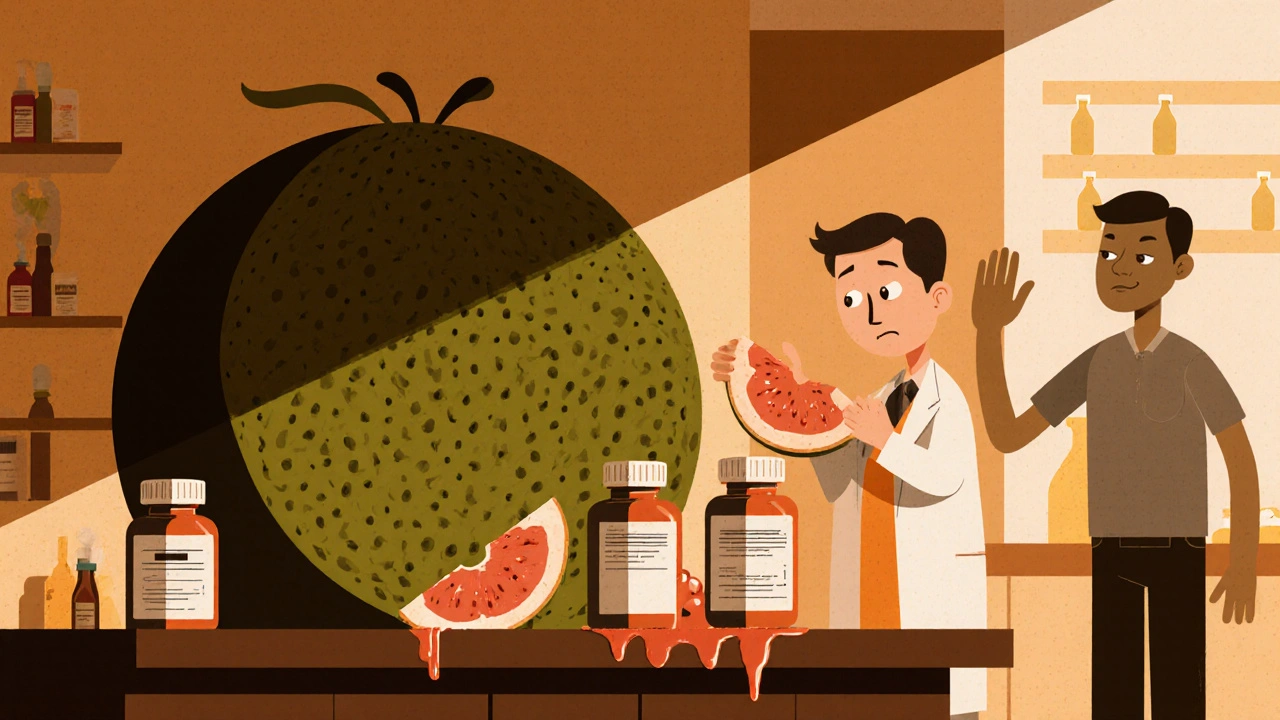
Citrus Fruits Beyond Grapefruit: Pomelo and Seville Orange Effects on Drugs
- Nov, 29 2025
- Daniel Remedios
- 13 Comments
Pomelo and Seville orange can be just as dangerous as grapefruit when taken with medications like statins, blood pressure pills, and immunosuppressants. Learn which drugs are affected, how these fruits interact, and what to do to stay safe.