
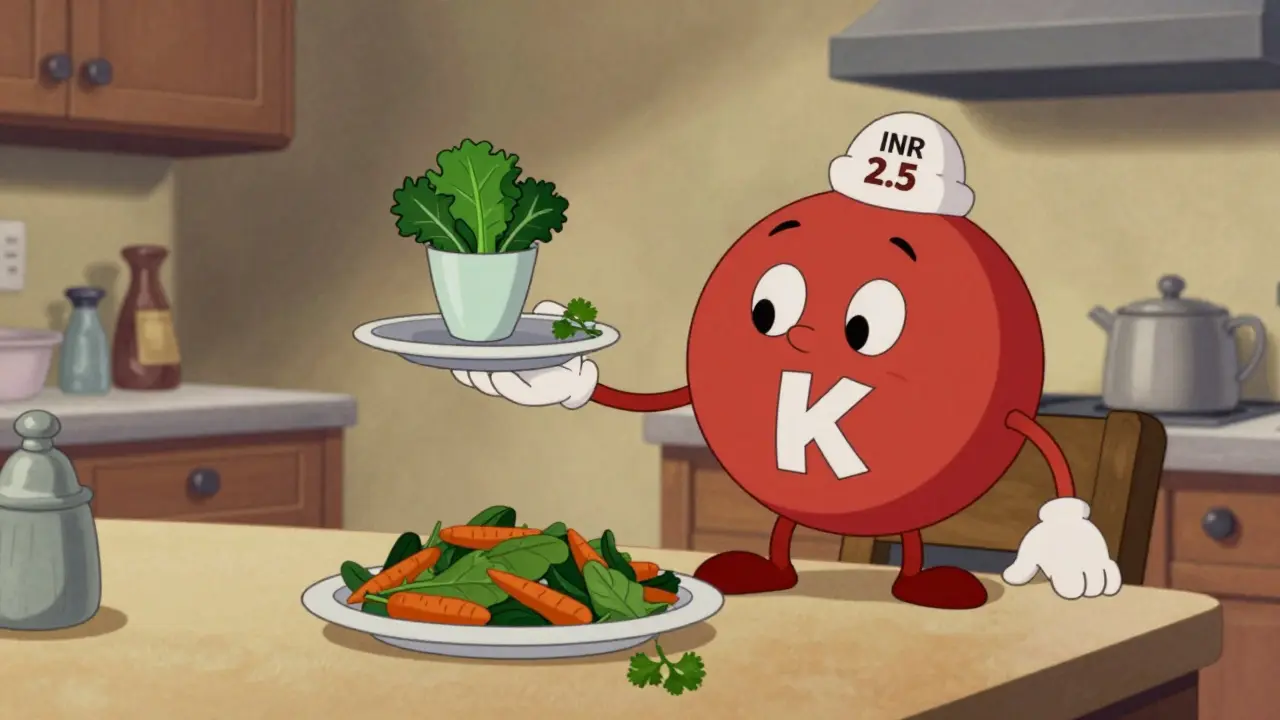
Vitamin K Intake Tracker
How This Tool Works
Consistency is key when managing warfarin. This tool helps you track your vitamin K intake to maintain stable INR levels. Never eliminate vitamin K foods completely—instead, maintain consistent daily intake.
Aim for a consistent amount within 200-400 mcg per day (varies by individual)
Add Your Foods
Your Daily Intake
When you're on warfarin, what you eat isn't just about nutrition-it can mean the difference between staying safe and ending up in the hospital. Warfarin is a blood thinner used to prevent dangerous clots in people with atrial fibrillation, mechanical heart valves, or a history of deep vein thrombosis. But it doesn't work the same way for everyone. Your body’s response to warfarin is highly sensitive to what’s on your plate, especially foods high in vitamin K. One day you eat a big salad, the next day you skip it, and suddenly your INR spikes or crashes. That’s not just inconvenient-it’s life-threatening.
How Warfarin Works (And Why Food Matters)
Warfarin blocks your body’s ability to use vitamin K, which is essential for making clotting factors. Think of it like turning down a faucet that controls blood thickening. Too little warfarin? Your blood clots too easily. Too much? You risk bleeding inside your brain, stomach, or joints. The goal is to keep your INR (International Normalized Ratio) between 2.0 and 3.0 for most people, or 2.5 to 3.5 if you have a mechanical heart valve. But your INR doesn’t just depend on your dose-it depends on how much vitamin K you eat, and when.
A single cup of cooked spinach can contain nearly 900 micrograms of vitamin K. That’s more than 10 times the daily recommended amount for women. If you normally eat a small amount of greens and then suddenly have a large serving of kale or collard greens, your INR can drop by 0.5 to 1.0 units within just three days. That’s enough to put you at risk for a stroke or pulmonary embolism. On the flip side, if you suddenly cut out all green vegetables, your INR can rise dangerously high, increasing bleeding risk.
The Vitamin K Food List: What to Know
Not all foods affect warfarin the same way. The key is consistency, not elimination. You don’t have to give up your favorite veggies-you just need to eat about the same amount every day. Here’s a clear breakdown based on vitamin K content per 100 grams (roughly 3.5 ounces):
| Food | Vitamin K (mcg per 100g) | Category |
|---|---|---|
| Kale | 817 | Very High |
| Collard greens | 623 | Very High |
| Parsley | 616 | Very High |
| Seaweed (nori) | 599 | Very High |
| Spinach (cooked) | 483 | Very High |
| Swiss chard | 450 | Very High |
| Turnip greens | 421 | Very High |
| Brussels sprouts (cooked) | 177 | High |
| Broccoli (raw) | 102 | High |
| Green tea | 106 | High |
| Asparagus (cooked) | 70 | Medium |
| Cabbage (cooked) | 60 | Medium |
| Lettuce (raw) | 30 | Medium |
| Carrots | 13 | Low |
| Apples | 4 | Low |
| Bananas | 0.6 | Very Low |
Notice something? You don’t have to avoid these foods. You just need to keep your intake steady. If you normally eat one cup of cooked spinach three times a week, keep doing that. If you start eating two cups on weekends and none on weekdays, your INR will swing like a pendulum. The same goes for broccoli, cabbage, or even green tea. Consistency is the only rule that matters.
Other Foods and Drinks That Interfere with Warfarin
Vitamin K isn’t the only player here. Other common foods and drinks can mess with how warfarin is broken down in your liver-especially through enzymes like CYP2C9 and CYP3A4. These interactions can be just as dangerous as vitamin K swings.
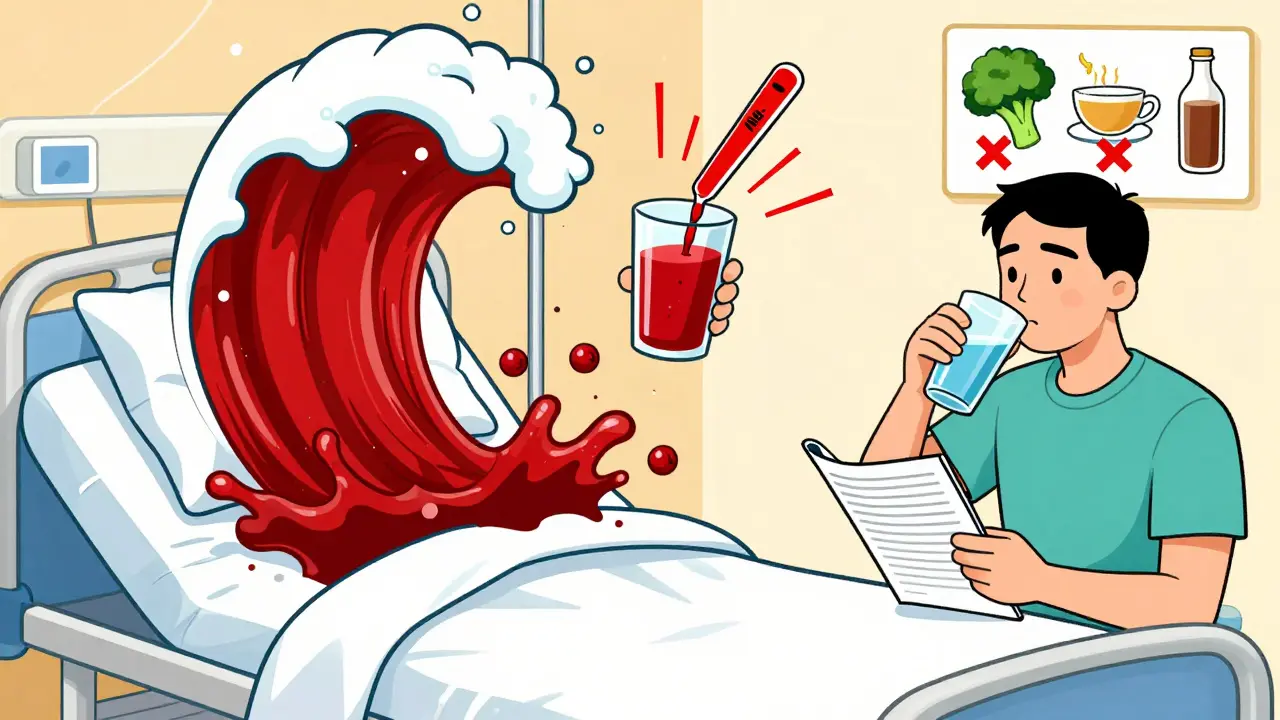
- Cranberry juice: Even small amounts-like 8 ounces a day-can raise your INR by 1.0 to 2.0 units. One user on Reddit saw their INR jump from 2.4 to 4.1 after drinking cranberry juice daily. That’s a bleeding risk.
- Grapefruit juice: It blocks the liver enzyme that clears warfarin. Studies show it can increase bleeding risk by 30%. Avoid it entirely.
- Alcohol: More than two drinks a day lowers warfarin’s effectiveness. Heavy drinking can also damage your liver, making it harder to control your INR. Stick to one drink a day, and have at least two alcohol-free days each week.
And don’t forget about supplements. Many people think natural means safe-but that’s not true with warfarin.
- Fish oil (omega-3): Increases bleeding risk by 25%. If you take it for heart health, talk to your doctor first.
- Garlic supplements: Can raise INR by 0.8 to 1.2 units. Raw garlic in food is usually fine, but pills are risky.
- Ginkgo biloba: Linked to serious bleeding in multiple case reports. Avoid completely.
What the Experts Say
Dr. John Smith, Director of the Anticoagulation Clinic at Mayo Clinic, put it plainly: “The biggest mistake patients make is either eliminating all green vegetables or dramatically increasing them during diet changes.”
That’s why the American Heart Association and the National Institutes of Health now recommend consistent intake, not restriction. Your goal isn’t to eat zero vitamin K. It’s to eat the same amount every day. If you usually have a spinach salad for lunch, keep having it. If you rarely eat greens, don’t suddenly start eating three cups of kale every day.
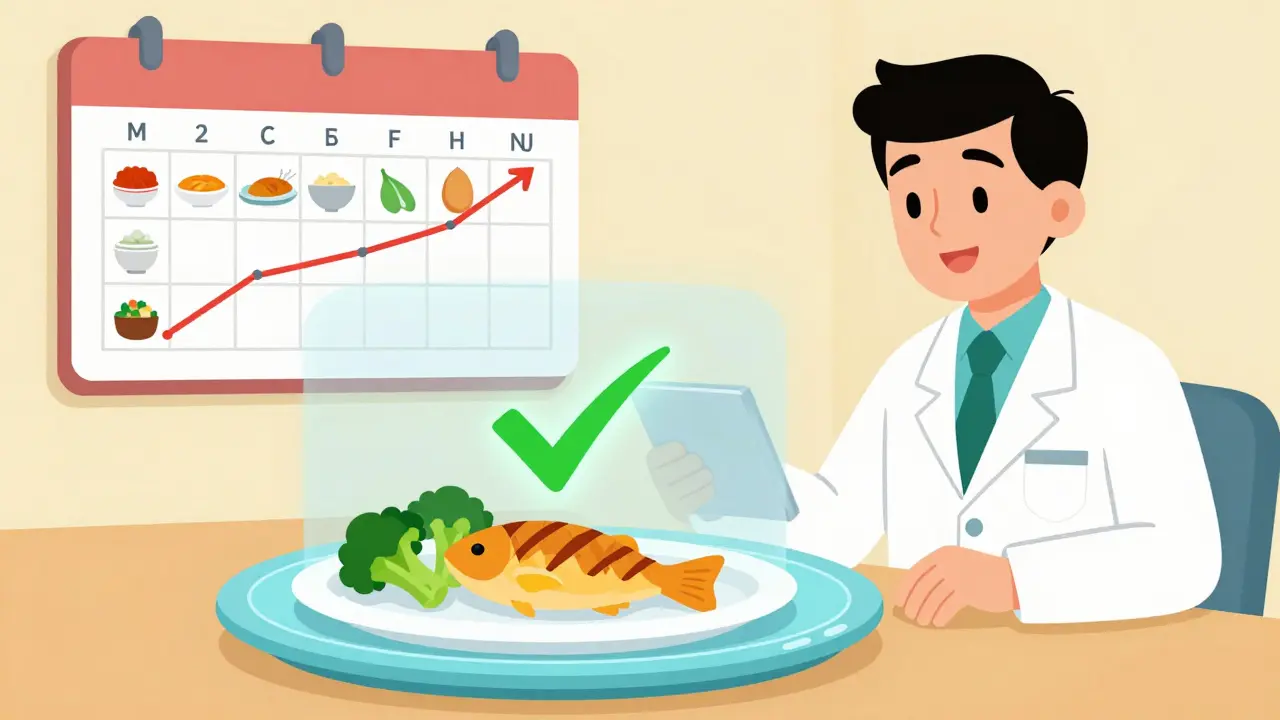
Patients who track their food intake have better outcomes. A 2023 study found that 76% of people who kept a food journal spent 70% or more of their time in the therapeutic INR range. Those who didn’t track? Only 48% stayed in range.
Practical Tips to Stay Safe
Here’s what works in real life:
- Set a baseline. Before starting warfarin, note what you normally eat. How much spinach? How many cups of tea? Write it down.
- Stick to it. Eat about the same amount of vitamin K every day. Don’t go wild on weekends.
- Avoid cranberry and grapefruit juice. Period. No exceptions.
- Limit alcohol. One drink max per day. Two days off per week.
- Check supplements. Don’t start anything new without talking to your anticoagulation clinic.
- Use a food tracker. Apps like MyFitnessPal can track vitamin K. Log everything for a week before your INR test. You’ll spot patterns.
Some companies now offer meal kits designed for warfarin users. Nutrisystem launched a line in early 2024 with meals containing exactly 25-30 mcg of vitamin K per serving. While not necessary, they’re helpful if you’re overwhelmed.
Warning Signs You Need Help Now
Warfarin is safe when managed well-but it can be deadly if ignored. Call your doctor or go to the ER if you notice:
- Bleeding from a cut that doesn’t stop after 5 minutes
- Black, tarry, or bloody stools
- Severe headaches, dizziness, or confusion (signs of brain bleeding)
- Unusual bruising, especially on the back or chest
- Red or pink urine
These aren’t rare. The CDC reports that 18% of warfarin-related ER visits are due to bleeding that lasts longer than 5 minutes. Seven percent of major bleeds involve gastrointestinal bleeding. Don’t wait to see if it gets better.
Why Warfarin Is Still Used (Even With Newer Drugs)
You might wonder why doctors still prescribe warfarin when there are newer blood thinners like apixaban or rivaroxaban. The answer is simple: warfarin is still the best option for certain people.
For example, 85% of patients with mechanical heart valves rely on warfarin. Newer drugs don’t work as well for them. Warfarin is also much cheaper, making it the only option for many people without good insurance. In 2023, over 9 million warfarin prescriptions were filled in the U.S.-despite a 3.2% yearly decline.
The real challenge isn’t the drug. It’s the lack of consistent education. A 2023 study found that only 58% of patients at safety-net hospitals received proper dietary counseling, compared to 89% at top academic centers. If you’re not getting clear, personalized advice, ask for it. Your life depends on it.
What’s Next for Warfarin Management
In March 2024, the FDA approved the first warfarin-dosing algorithm that includes your daily vitamin K intake. Called WarfarinDoseIQ, it’s being tested in clinics now. It uses your food logs, INR history, and genetics to predict the right dose. In trials, it improved time-in-therapeutic-range by 15%.
Even more exciting? Smart plates that scan your meal and estimate vitamin K content in real time. Trials are underway in the U.S. and Europe. In five years, you might not need to guess how much spinach is too much-you’ll just scan your plate.
For now, though, the best tool you have is simple: consistency. Eat the same foods, in the same amounts, every day. Track it. Talk to your clinic. And never assume something is “safe” just because it’s natural.
Can I eat spinach if I’m on warfarin?
Yes-but only if you eat the same amount every day. A cup of cooked spinach has nearly 900 mcg of vitamin K. If you normally eat it twice a week, keep doing that. If you suddenly eat it every day, your INR will drop. If you stop eating it completely, your INR will rise. Consistency is the key.
Does cranberry juice really affect warfarin?
Yes, and it’s dangerous. Cranberry juice blocks how your liver breaks down warfarin, which can cause your INR to spike. One study showed INR rising from 2.4 to 4.1 after daily cranberry juice use. Avoid it completely. Same goes for cranberry supplements.
Is it okay to drink alcohol while on warfarin?
One drink per day is generally safe. More than that can lower warfarin’s effect and increase bleeding risk. Heavy drinking also damages your liver, which makes INR control harder. Stick to one drink, and have at least two alcohol-free days each week.
Should I take vitamin K supplements?
No, unless your doctor specifically tells you to. Vitamin K supplements can make warfarin less effective and increase your risk of clots. Even small doses can throw off your INR. Never take them without medical approval.
How often should I get my INR checked?
When you first start warfarin, you’ll need checks every few days to a week. Once stable, most people get tested every 2 to 4 weeks. If you change your diet, start a new medication, or feel unwell, get tested sooner. Always tell your clinic about any dietary changes.
Can I switch to a different blood thinner?
Maybe-but not always. Newer drugs like apixaban or rivaroxaban don’t require dietary changes, but they’re not right for everyone. People with mechanical heart valves, certain kidney issues, or those who can’t afford them often need to stay on warfarin. Talk to your doctor about your options, but don’t switch without medical guidance.
Next Steps
If you’re on warfarin, start today: write down everything you eat for one week. Focus on greens, tea, and alcohol. Use a free app like MyFitnessPal to track vitamin K. Bring the log to your next INR test. Ask your clinic if they offer dietary counseling. If they don’t, ask for a referral. You’re not alone-millions of people manage warfarin successfully. It’s not about perfection. It’s about consistency. And that’s something you can control.
Tommy Chapman
Let me get this straight-you eat kale like it’s candy and wonder why your INR’s all over the place? Bro, consistency isn’t a suggestion, it’s your fucking lifeline. I’ve seen guys go from 2.1 to 5.8 in 72 hours because they did a ‘detox’ with spinach smoothies. You think your trendy green juice is healthy? It’s a blood thinner grenade. Stop being a foodie and start being a patient.
Robin bremer
cranberry juice is evil 😱 i drank 1 glass and my arm turned purple like a grape… went to er and they were like ‘bro did you drink cranberry?’ yep. now i just drink water. 🥵
Hariom Sharma
Wow, this is so helpful! I’ve been on warfarin for 5 years and never realized how much my daily chai tea mattered. In India, we drink it with mint and ginger-but now I know green tea is the real villain. I’m starting a food log today. Small steps, big results! 🙌 Keep sharing this wisdom!
aine power
Consistency. Not restriction. The only two words you need.
Laura B
This is actually one of the clearest explanations I’ve read. I’ve been scared to eat anything green since starting warfarin, but now I get it-it’s not about avoiding veggies, it’s about keeping them steady. I’m gonna start tracking with MyFitnessPal. Thanks for the practical tips, especially the part about the meal kits. That’s genius.
Nina Catherine
omg i just realized i’ve been eating 2 cups of spinach every tuesday and none other days 😳 i’m so dumb. i thought i was being healthy! i’m gonna start eating 1 cup every day no matter what. also-ginkgo biloba? i’ve been taking that for ‘brain fog’… i’m canceling my subscription rn. thanks for the wake-up call!! 💕
Irish Council
They say vitamin K is the problem but what about the phthalates in plastic food containers leaching into your salad? Or the glyphosate in conventionally grown kale? The FDA doesn’t test for that. Your INR swings aren’t from food-they’re from the system poisoning you. You think they want you stable? They want you dependent. Check the studies. The real conspiracy is in the lab reports.
Jayanta Boruah
It is imperative to underscore that the biochemical interplay between warfarin and dietary vitamin K is not merely a matter of quantitative intake, but rather a complex, nonlinear pharmacokinetic interaction mediated by hepatic cytochrome P450 isoforms, particularly CYP2C9 polymorphisms, which vary significantly across ethnic populations. For instance, individuals of South Asian descent exhibit higher CYP2C9*3 allele prevalence, rendering them disproportionately susceptible to supratherapeutic INR elevation under conditions of dietary vitamin K fluctuation. Therefore, blanket recommendations for ‘consistency’ without genetic stratification are not only scientifically inadequate-they are clinically hazardous. A personalized, genomics-informed approach is non-negotiable.
Benjamin Fox
USA is the only country that actually tells you what to eat on warfarin 🇺🇸 everyone else just says ‘take your pill’ and hopes for the best. we got smart people here. we got food logs. we got apps. we got smart plates coming. rest of the world? still eating rice and wondering why their legs swell. #AmericanMedicineWins