
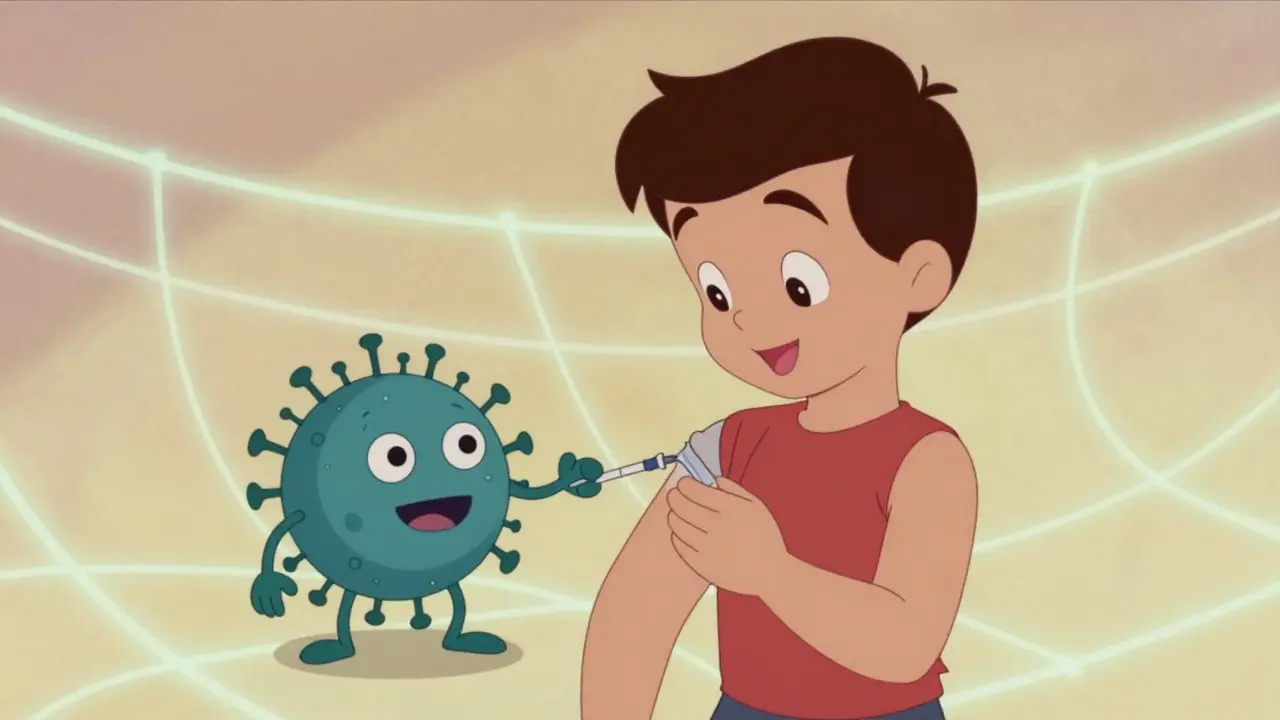
When you get a vaccine, your body learns how to fight off a virus without ever getting sick. That’s the whole point. But for a tiny number of people, something unexpected happens: their body reacts badly. Not because the vaccine is broken, but because their immune system overreacts. It’s rare. Like, vaccine allergic reactions are rarer than being struck by lightning. But when they do happen, they matter. And that’s why we’ve built one of the most detailed safety nets in medicine to catch them before they become dangerous.
How Rare Are Allergic Reactions to Vaccines?
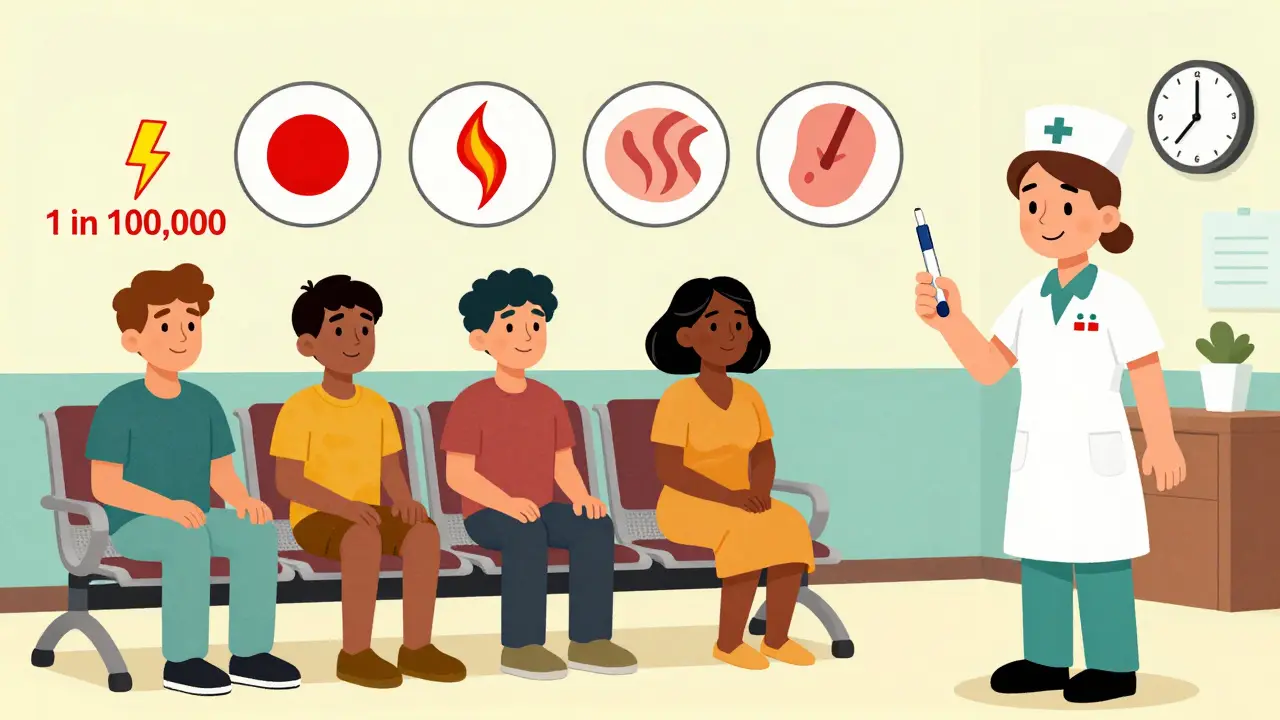
Let’s start with the numbers. Out of every million doses given, about 1.3 result in anaphylaxis - the most serious type of allergic reaction. That’s less than 1 in 100,000. For the mRNA COVID-19 vaccines, the rate was slightly higher at 5 to 11 cases per million doses. Still, that’s like flipping a coin 100,000 times and getting heads only five times. Most people will never see one in their lifetime.
And here’s the thing: most reactions aren’t even allergies. A lot of people get a red, itchy bump at the injection site. Or feel a little feverish. Or get a rash days later. Those aren’t allergic reactions. Those are normal immune responses. True IgE-mediated allergies - the kind that cause swelling, trouble breathing, or a drop in blood pressure - are almost always immediate. And they almost always happen within 15 to 30 minutes after the shot.
What Causes These Reactions?
It’s not the virus part of the vaccine. It’s not the dead or weakened germ. It’s usually something else - an ingredient that helps the vaccine work or stay stable.
For the mRNA vaccines, the biggest suspect is polyethylene glycol, or PEG. It’s used to protect the fragile genetic material inside. A small number of people have antibodies to PEG already - maybe from using certain laxatives or cosmetics - and their bodies react when they see it again in a vaccine. That’s why experts now ask: Have you ever had a severe reaction to a product containing PEG? If yes, talk to your doctor before getting an mRNA shot.
Another common trigger is yeast protein. You might hear about hepatitis B or HPV vaccines and think, “Oh, they’re made with yeast.” That’s true. But the amount of yeast protein left in the final product is microscopic. Out of 180,000 allergic reaction reports in the U.S. over decades, only about 15 even hinted at yeast being the cause. And even then, proof was shaky.
Then there’s egg. For years, people with egg allergies were told to avoid flu shots. That changed after studies showed over 4,300 egg-allergic people - including more than 650 who’d had life-threatening egg reactions - got the flu vaccine with zero serious side effects. Today, no special precautions are needed. You don’t need to wait longer. You don’t need to go to an allergist first. Just get the shot.
Aluminum salts, used as adjuvants in many vaccines, don’t cause anaphylaxis. But they can cause lumps under the skin that last for months. It’s annoying, not dangerous.
Who’s Most at Risk?
Women make up 81% of reported allergic reactions to vaccines. The average age is 40. That doesn’t mean men or kids are immune - it just means most reactions are seen in adult women. Why? We don’t fully know. It could be biological differences in immune response, or maybe women are more likely to report symptoms.
People with a history of severe allergies - to foods, drugs, or insect stings - are at slightly higher risk. But even then, the chance of a vaccine triggering anaphylaxis is still less than 1 in 100,000. Most people with allergies get vaccines without issue. The key is telling your provider: “I’ve had anaphylaxis before.” That way, they can prepare.
What Happens When a Reaction Occurs?
When anaphylaxis happens, it’s fast. About 71% of cases show symptoms within 15 minutes. That’s why clinics now require everyone to wait 15 minutes after vaccination. For people with a history of severe allergies, they wait 30 minutes.
During that time, staff are trained to spot the signs: hives, swelling of the lips or tongue, wheezing, dizziness, nausea, or a sudden drop in blood pressure. If it happens, epinephrine is given right away - usually through an auto-injector like an EpiPen. That’s the only thing that stops anaphylaxis from turning deadly. Hospitals are rarely needed. Most people recover fully within an hour.
And here’s something important: no one has died from a vaccine-related anaphylaxis in the U.S. since monitoring began. Not one. Not in 30 years. That’s thanks to preparedness, not luck.
How Do We Know If Something’s Going Wrong?
There’s a system built just for this. It’s called VAERS - the Vaccine Adverse Event Reporting System. Run by the CDC and FDA, it collects reports from doctors, patients, and vaccine makers. Anyone can file a report. You don’t need proof. You just need to say: “Something happened after the shot.”
VAERS gets 30,000 to 50,000 reports a year. Most are minor - a sore arm, a headache, a fever. Less than 1% are serious. But that’s okay. VAERS isn’t designed to prove causation. It’s designed to find signals. If 100 people report the same rare reaction after a new vaccine, scientists dig deeper. They check medical records. They compare rates to unvaccinated groups. They look for patterns.
Since the 1976 swine flu vaccine linked to Guillain-Barré syndrome, this system has saved lives. It caught the small spike in narcolepsy after the 2009 H1N1 vaccine in Europe. It flagged the rare blood clot risk with the AstraZeneca COVID-19 vaccine. It helped us understand that PEG was a trigger in some mRNA vaccine reactions.
Today, we’ve added even more tools. v-safe, a smartphone app launched during the pandemic, sent daily check-ins to 3.6 million people. It asked how they felt. It tracked fevers, fatigue, rashes. It gave real-time data faster than any hospital could report.

What Should You Do If You’re Worried?
If you’ve had a serious allergic reaction to a vaccine before - or to something like PEG or polysorbate - talk to your doctor. You don’t need to skip vaccines. You just need a plan.
Most allergists can do skin tests or blood tests to check for specific triggers. If you’re allergic to PEG, you might still get a non-mRNA vaccine. If you’re allergic to yeast, there are hepatitis B vaccines made without it. There’s always a safe option.
And if you’re just nervous? Ask your provider: “What’s your protocol if someone has a reaction?” If they say, “We have epinephrine ready,” and “We watch everyone for 15 minutes,” that’s all you need to know.
Why This Matters for Public Health
Every time someone skips a vaccine because they’re scared of an allergic reaction, the whole community pays. Measles outbreaks happen when vaccination rates drop. Polio can come back. Whooping cough kills babies. The risk of dying from a vaccine-preventable disease is thousands of times higher than the risk of dying from an allergic reaction to the vaccine.
That’s why we monitor so closely. Not because vaccines are dangerous. But because they’re too important to get wrong. The system isn’t perfect. But it’s the best we’ve ever had. And it keeps getting better.
Right now, researchers are looking for biomarkers - tiny biological signs - that might predict who’s at risk before they even get the shot. In five to seven years, we might have a simple blood test that says: “You’re safe to get this vaccine.” Or: “Hold on - let’s check this first.”
For now, though, the message is simple: Vaccines are safe. Allergic reactions are rare. And we’re watching - closely - so you don’t have to worry.
Roisin Kelly
So let me get this straight - we’re supposed to trust a system that’s ‘never had a death’… but also admits they don’t even know what causes most reactions? Cool. I’ll just take my chances with the disease thanks, and also your ‘safety net’ looks like a net made of wet tissue paper.
Samuel Mendoza
1.3 per million? That’s not rare. That’s just statistically convenient.
Amber Lane
I had a rash after my flu shot. Didn’t panic. Didn’t call a lawyer. Just used some hydrocortisone and went on with my day. People need to chill.
Uju Megafu
OMG I CAN’T BELIEVE YOU’RE JUST ACCEPTING THIS! Do you know how many people have been ‘silent victims’ of PEG? They’re not counting the ones who got chronic fatigue after the shot and were told it’s ‘just stress’! This is systemic gaslighting wrapped in a lab coat! 🤬
michelle Brownsea
Let’s be precise: the claim that ‘no one has died from vaccine-related anaphylaxis in the U.S. since monitoring began’ is factually accurate - but only if you ignore the fact that ‘monitoring began’ in 1990, and that ‘vaccine-related’ is a legal, not medical, classification. Also: ‘almost always’ is not ‘always.’
Glenda Marínez Granados
So we’re using a smartphone app to track how we feel after a shot… but we’re not using it to track how we feel after scrolling through 12 hours of TikTok? 🤔
Sangeeta Isaac
PEG? Like… the stuff in toothpaste? So if I flossed with Colgate yesterday, I’m basically pre-allergic to Pfizer? That’s wild. I’m gonna start carrying a ‘I ♥ PEG’ bumper sticker just to be safe. 🚗💖
Malvina Tomja
81% of reactions in women? That’s not a biological anomaly - that’s a systemic failure of data collection. Women are socialized to report symptoms. Men are socialized to suffer in silence. This isn’t evidence - it’s cultural bias dressed up as science.
Ashok Sakra
I know a guy who got the shot and his arm turned purple. Then he got a job at Walmart. Now he says he’s fine. So I think it’s fake. Also my cousin’s dog got a vaccine and barked for 3 days. That’s proof.
Rod Wheatley
Listen - I’ve been a nurse for 22 years. I’ve seen anaphylaxis. I’ve seen people recover because we had epinephrine ready. I’ve seen people die because they didn’t get the shot. Don’t let fear rob you of protection. You’re not alone. We’ve got you.
Andrew Rinaldi
It’s fascinating how we’ve built a system that’s designed not to prevent every reaction - but to respond to them so well that death becomes statistically impossible. That’s not just science. That’s civilization working as it should.
MARILYN ONEILL
Oh wow. So the government says ‘trust us’ and you just nod? I’ve got a friend who works at a lab. He says they use PEG because it’s cheap. And they know it causes issues. But hey - it’s cheaper than making a new one. #CorporateTruth
Melanie Pearson
Why are we still using foreign-manufactured adjuvants? If this were a national security issue - like a missile defense system - we wouldn’t outsource the core component. We need domestic vaccine production. Period.
MAHENDRA MEGHWAL
Thank you for the detailed and scientifically grounded explanation. It is rare to encounter such clarity in public discourse. I hope this information reaches those who fear the unknown, as knowledge is the most effective antidote to misinformation.