

Quick Safety Takeaways
- High Risk: Never use expired insulin, epinephrine, or nitroglycerin; they lose potency too quickly.
- Moderate Risk: Liquid antibiotics degrade rapidly; use with extreme caution.
- Lower Risk: Solid tablets like acetaminophen or ibuprofen often maintain most of their strength for years if stored cool and dry.
- Red Flags: Discoloration, crumbling, or a strange smell are instant signs to throw a drug away.
- Environmental Damage: If a drug touched floodwater or sat in 86°F+ heat for two days, it's likely compromised.
The Science of the Expiration Date
Many people think a medication becomes toxic the second the clock strikes midnight on its expiration date. That's a myth. The FDA (U.S. Food and Drug Administration) requires manufacturers to provide stability data, but the date on the bottle is essentially a guarantee of 100% potency under ideal conditions. It's a quality assurance deadline, not a "poison" deadline.
To understand this, look at the Shelf Life Extension Program (SLEP). This joint effort between the Department of Defense and the FDA found that 88% of tested drug products remained stable long after their labeled expiration date when stored in strict military conditions. Now, your bathroom cabinet isn't a military bunker, but it shows that the chemical structure of many drugs is more resilient than we're led to believe.
When the Risk is Too High: Critical Medications
Not all drugs are created equal. In a disaster, some medications are too dangerous to use if they're expired because a slight drop in potency can be fatal. We call these "life-sustaining" medications. If these fail, you aren't just dealing with a lingering symptom; you're dealing with a medical emergency.
Take Insulin, for example. It's a fragile protein. At room temperature, it can lose about 10% of its strength every single month after it expires. Using expired insulin during a power grid failure-where refrigeration is gone-can lead to uncontrolled blood sugar levels. Similarly, Epinephrine (used for anaphylaxis) degrades at 2-4% per month. If you're treating a severe allergic reaction with an injector that's only 60% effective, you're effectively under-dosing yourself during a life-or-death moment.
Then there's Nitroglycerin. These sublingual tablets are notorious for losing up to 50% of their potency within just three months of opening the bottle. In the case of chest pain or a heart attack, that loss of strength is unacceptable.
| Drug Category | Example | Degradation Rate | Risk Level |
|---|---|---|---|
| Life-Sustaining | Insulin / Epinephrine | High (Monthly loss) | Critical |
| Liquid Antibiotics | Amoxicillin (Suspension) | 30-50% loss in 6 months | High |
| Solid Antibiotics | Ciprofloxacin (Tablets) | Slow (Years) | Moderate |
| Over-the-Counter | Acetaminophen / Ibuprofen | Very Slow | Low |
Evaluating Solid vs. Liquid Medications
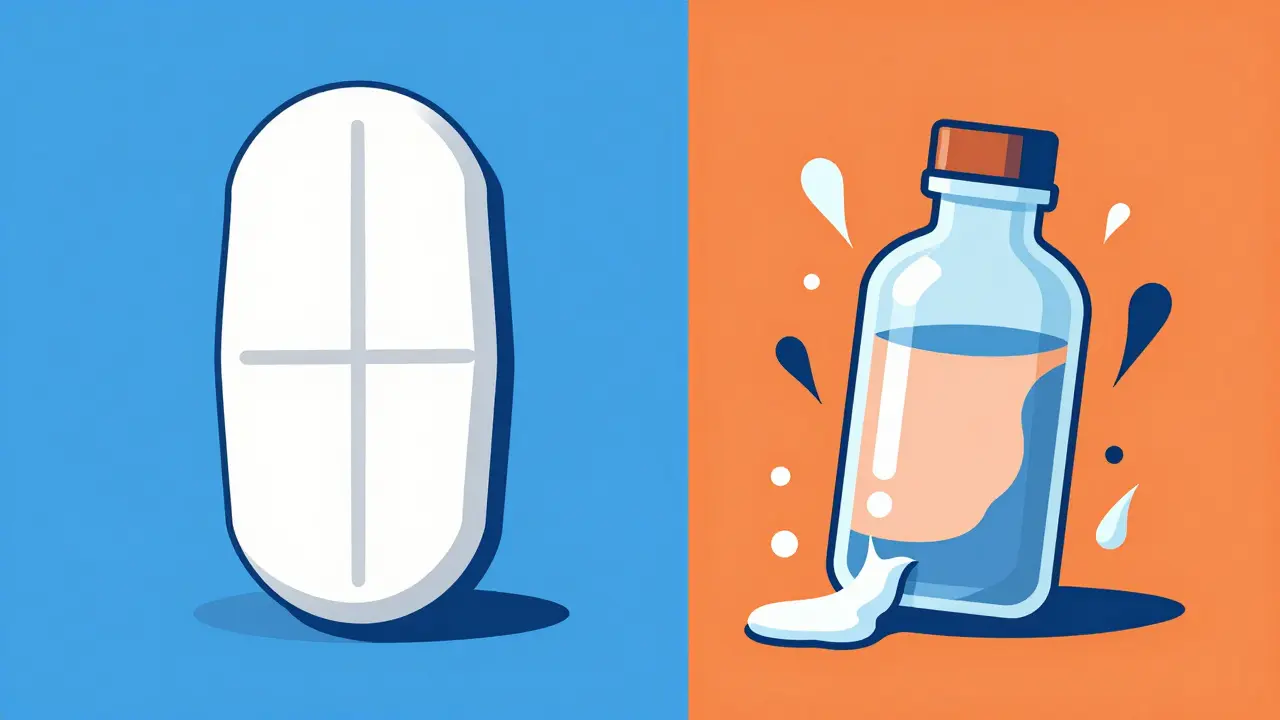
If you're auditing your emergency kit, the form of the medication matters as much as the date. Solid dosage forms-like tablets and capsules-are generally the most stable. Research shows many tablets retain 90% of their potency for one to five years past their expiration date, provided they haven't been exposed to moisture or extreme heat.
Liquids are a different story. Water is a catalyst for chemical breakdown. Liquid antibiotics can lose half their strength in just six months. If you're treating a serious infection with a degraded antibiotic, you aren't just failing to kill the bacteria; you might be contributing to antibiotic resistance. A Johns Hopkins study found that 28% of disaster survivors using expired antibiotics developed resistant infections, compared to only 8% of those with fresh medication.
There's also the danger of toxicity. While rare, some drugs don't just get weaker; they get dangerous. The Institute for Safe Medication Practices has warned that expired tetracycline can break down into products that cause Fanconi syndrome, a serious kidney condition. This is why a "one size fits all" approach to expired drugs is dangerous.
The Disaster Environment: Heat and Water
The date on the bottle assumes the drug was stored at a steady temperature. Disasters rarely provide that luxury. If your medications were sitting in a hot car or a humid basement during a storm, the expiration date becomes almost irrelevant because the environment accelerated the decay.
High-performance liquid chromatography tests show that drugs exposed to temperatures above 86°F (30°C) for 48 hours break down 15-25% faster. Even worse is water damage. According to FDA disaster response data, 92% of medications exposed to floodwater for just 24 hours showed bacterial contamination. If the bottle was wet or the pills feel sticky, throw them away immediately, regardless of the date.
Decision Framework: Should You Use It?
When you're staring at an expired bottle in a crisis, use this five-step mental checklist to decide if the risk is worth it. This mirrors the guidance used by emergency pharmacists during federal disasters.
- Physical Check: Does the pill look different? Is it crumbled, discolored, or does it have a weird smell? If yes, discard it.
- Environmental Audit: Was it exposed to extreme heat (above 86°F) or moisture/flooding? If yes, discard it.
- Criticality Assessment: Is this a life-saving drug (Insulin, Epinephrine, Warfarin)? If yes, the risk of potency loss is too high to gamble with.
- Timeframe Check: Is it a few months past? Or several years? A 6-month expired ibuprofen is a different conversation than a 6-year expired one.
- Alternative Search: Can you reach a pharmacist via telehealth or a nearby emergency center? In many states, pharmacists have the legal authority to provide 72-hour emergency supplies without a new prescription during declared disasters.
How to Talk to Health Professionals About This
If you have access to a doctor or pharmacist during a shortage, be honest about what you have. Don't hide the fact that your medication is expired. Instead, ask specific questions based on the drug's chemistry.
Instead of asking "Is this safe?", ask: "Given that this is a solid tablet and was stored in a cool place, is the risk of reduced potency higher than the risk of going without treatment for the next three days?" This shifts the conversation toward a professional risk-benefit analysis. Pharmacists can help you determine if a dose adjustment is necessary-for example, some guidelines suggest considering higher doses for slightly expired antibiotics to compensate for potency loss, though this must only be done under professional supervision.
Can I use expired Aspirin during an emergency?
Generally, yes, but with a caveat. Acetaminophen and Ibuprofen are very stable. However, Aspirin breaks down into salicylic acid over time. If you smell a vinegar-like scent when you open the bottle, the drug has hydrolyzed. While it may still work for pain, the breakdown products can cause more gastric irritation than fresh Aspirin.
What happens if I use an expired antibiotic for a serious infection?
The primary risk is "treatment failure." If the drug has dropped to 50% potency, it might slow the bacteria down without killing it. This allows the bacteria to adapt, potentially leading to a resistant infection that is much harder to treat once you finally get to a hospital. This is why liquid antibiotics are particularly risky.
Why is insulin more dangerous to use expired than a blood pressure pill?
Insulin is a biological protein, which is chemically unstable. Blood pressure meds like Lisinopril are small molecules that are far more durable. While an expired blood pressure pill might result in slightly higher readings, an expired dose of insulin can lead to Diabetic Ketoacidosis (DKA) because the potency drop is sudden and significant.
Is it safe to use expired medications if they were kept in a refrigerator?
Refrigeration slows down chemical degradation, meaning a refrigerated drug is more likely to maintain its potency past the expiration date than one kept at room temperature. However, the date still serves as the manufacturer's guarantee. Always check for physical changes (cloudiness in liquids) before considering use.
Where can I legally dispose of these medications after the disaster?
Look for DEA-registered collection sites. Many pharmacies and police stations have permanent drop-boxes. Avoid flushing medications down the toilet, as this contaminates the water supply, which is already a major concern during flood-related disasters.
Next Steps for Your Emergency Kit
To avoid this dilemma in the future, move from a passive storage strategy to an active rotation system. Set a calendar alert for six months before your critical medications expire. This gives you a window to request a refill or a "bridge supply" from your doctor. If you are building a long-term stockpile, prioritize solid tablets over liquids and invest in airtight, light-blocking containers. Store them in the coolest, driest part of your home-not the bathroom, where humidity from the shower can degrade pills faster than the calendar does.