
Statins & Pregnancy Risk Assessment Tool
Personalized Pregnancy Risk Assessment
This tool helps determine if continuing statins during pregnancy is appropriate based on current evidence and your specific medical situation.
When you’re taking statins for high cholesterol and find out you’re pregnant, it’s natural to panic. Was your baby at risk? Should you have stopped sooner? These aren’t just hypothetical questions-they’re real concerns for thousands of women every year. The answer isn’t as simple as ‘stop immediately’ anymore. In fact, the rules changed in 2021, and many doctors are still catching up.
Why Statins Were Once Considered Dangerous in Pregnancy
Statins work by blocking HMG-CoA reductase, an enzyme your body needs to make cholesterol. Since cholesterol is critical for building cell membranes and hormones during early fetal development, doctors worried that lowering it could cause birth defects. Animal studies in the 1980s showed problems at very high doses, and that was enough for regulators to label statins as Pregnancy Category X-meaning the risks clearly outweighed any benefits. For decades, that label stuck. Women were told to stop statins before trying to conceive. Even if someone got pregnant accidentally while on a statin, they were often counseled to consider termination. The fear wasn’t based on human data-it was based on theory, and theory alone.The FDA’s Big Shift in 2021
On July 20, 2021, the U.S. Food and Drug Administration did something unexpected. They removed the strongest possible warning against statins in pregnancy. Not because they said statins are safe for everyone. But because the evidence showed the old warning was wrong. They reviewed data from over 1.1 million pregnancies. One key study looked at 1,152 women who took statins during early pregnancy and compared them to nearly 900,000 who didn’t. After adjusting for age, diabetes, obesity, smoking, and other factors, the risk of major birth defects was almost identical: 1.07 times higher-but not statistically significant. That means no real increase in risk. Other large studies confirmed this. A 2021 analysis of 1.4 million pregnancies found no link between statin use and congenital malformations. A 2025 study in Norway, tracking over 800,000 pregnancies, found the same thing. The data didn’t show statins causing heart defects, cleft palates, or neural tube defects. The old fear didn’t hold up.What the Data Actually Shows
Let’s be clear: statins aren’t risk-free in pregnancy. But the risks aren’t what we thought.- Birth defects: No meaningful increase found in any major study. The background risk of birth defects in any pregnancy is 3-5%. Statins don’t raise that.
- Stillbirth or miscarriage: No significant link. One meta-analysis found no increase in miscarriage risk, even when statins were taken in the first trimester.
- Preterm birth: Some studies show a small increase-around 16% vs. 8.5% in non-exposed groups. But it’s unclear if this is caused by statins, or by the underlying condition (like severe high cholesterol or heart disease) that made the woman need statins in the first place.
- Low birth weight: Slightly more common in statin-exposed babies, but again, it’s hard to separate the drug effect from maternal health.
Who Should Still Stop Statins?
Most women should still stop statins when they find out they’re pregnant. That’s still the standard advice from most guidelines. Why? Because for the vast majority of women, high cholesterol isn’t an emergency. It’s a slow-moving risk. You can manage it with diet, exercise, and monitoring during pregnancy. The heart doesn’t need statins to survive nine months. But there’s a small group of women for whom stopping statins could be dangerous:- Women with familial hypercholesterolemia (FH)-a genetic condition where LDL cholesterol can be over 200 mg/dL from birth. One in every 250 women has this.
- Women with established heart disease-like a prior heart attack, stent, or bypass surgery.
- Women with very high LDL (>190 mg/dL) and other risk factors like diabetes or smoking.
Planning Ahead: What to Do Before You Get Pregnant
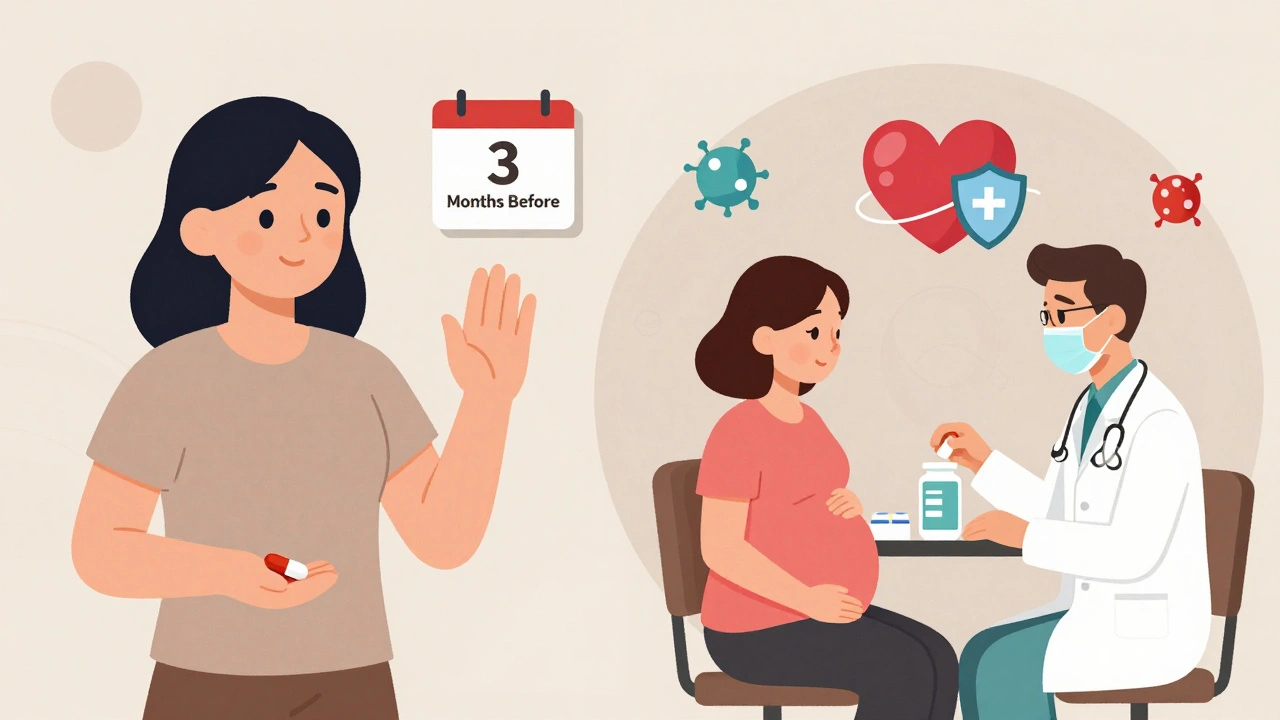
If you’re on statins and thinking about pregnancy, don’t wait until you miss your period. Talk to your doctor at least three months before trying to conceive. Here’s what a good plan looks like:- Assess your risk. Do you have FH? Heart disease? Very high LDL? If yes, you’re in the small group where continuing statins might be considered.
- Get a cardiology consult. Your cardiologist and OB should work together. The American College of Obstetricians and Gynecologists says shared decision-making is essential.
- Switch to a safer alternative if possible. Bile acid sequestrants like cholestyramine are approved for pregnancy and don’t cross the placenta. They’re less effective than statins, but safer.
- Stop statins before conception if you can. Even if you’re low-risk, stopping before pregnancy is still the safest default.
- Track your cholesterol. Your levels will naturally rise during pregnancy. Monitoring helps determine if you need intervention.
What If You Got Pregnant While on Statins?
You’re not alone. About 12,000-15,000 U.S. pregnancies each year involve statin exposure at conception. Most are accidental-women didn’t know they were pregnant yet. If this happened to you:- Don’t panic. The data shows no increased risk of birth defects.
- Stop the statin immediately. Even if you’re high-risk, stopping now reduces any potential exposure.
- Get a detailed anatomy scan. A level II ultrasound at 18-22 weeks can check for major structural issues.
- Consider genetic counseling. Especially if you have FH or a family history of early heart disease.
- Don’t blame yourself. You were following your doctor’s advice. The guidelines changed. You didn’t do anything wrong.
What About New Uses for Statins in Pregnancy?
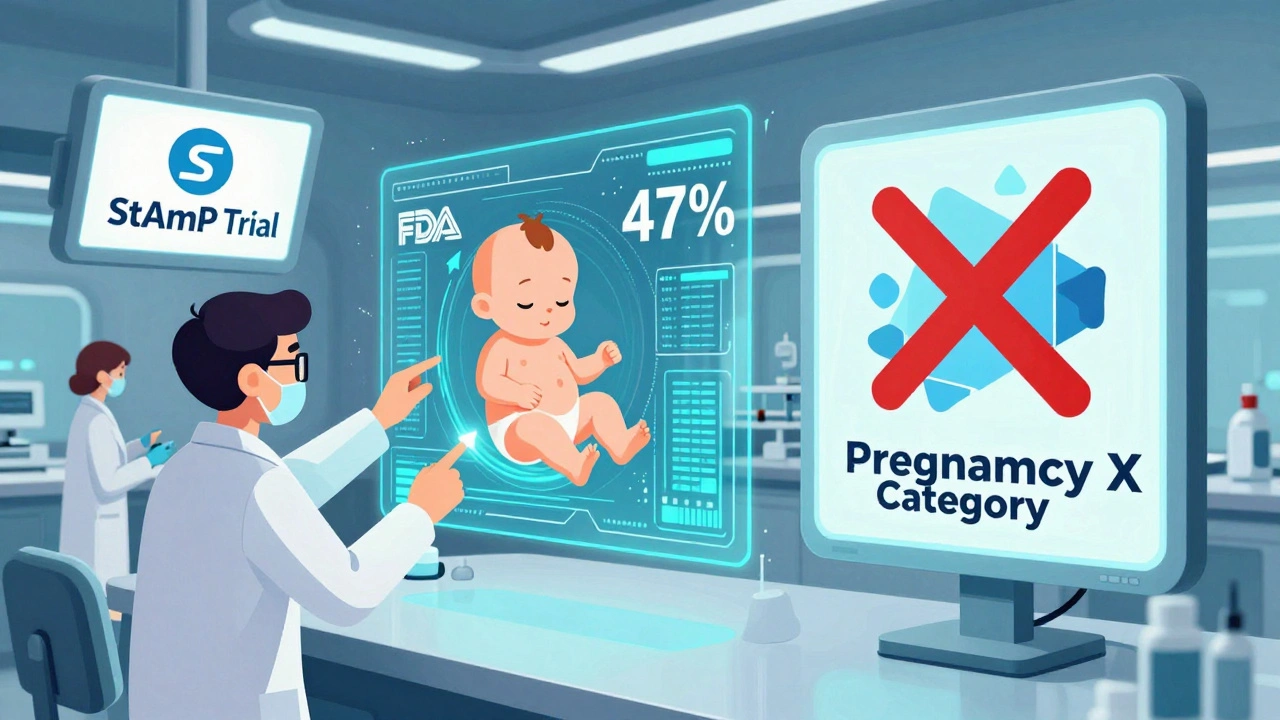
There’s exciting research happening-not just about safety, but about using statins to help pregnancies. The StAmP trial is testing pravastatin in women at high risk for preeclampsia. Early results showed a 47% reduction in preeclampsia. That’s huge. Preeclampsia kills mothers and babies. If statins can help prevent it, that changes everything. The NIH is launching the PRESTO study in 2025, tracking 5,000 pregnancies with statin exposure. It will break down risks by trimester, by statin type, and by maternal health status. That’s the kind of data we’ve been missing.Where the Guidelines Still Conflict
The FDA says statins can be continued in high-risk cases. The European Society of Cardiology says no-only in exceptional circumstances. The American College of Cardiology is split. Why the difference? It’s not just about the science. It’s about culture. In the U.S., there’s more emphasis on individual risk and shared decision-making. In Europe, the default is caution. For now, here’s what works:- If you’re low-risk: Stop statins. Manage cholesterol with diet and monitoring.
- If you’re high-risk: Talk to your cardiologist and maternal-fetal medicine specialist. Consider continuing, with close monitoring.
- If you’re unsure: Get a second opinion. Don’t rely on a single doctor’s gut feeling.
What’s Next?
By 2030, the American College of Cardiology predicts that 15-20% of women with severe heart disease or FH will continue statins during pregnancy. That’s up from less than 5% today. The shift isn’t just about drugs. It’s about recognizing that pregnancy isn’t a disease. And for some women, managing chronic illness during pregnancy isn’t optional-it’s life-saving. The message now is simple: Statins don’t cause birth defects. But they’re not for everyone. The key isn’t blanket advice-it’s personalized care, based on real data, not fear.Can statins cause birth defects?
No, large human studies show no increased risk of major birth defects in babies exposed to statins during early pregnancy. The background risk of birth defects is 3-5%, and statin exposure doesn’t raise that number. Earlier concerns came from animal studies at very high doses, which don’t reflect human use.
Should I stop statins if I’m trying to get pregnant?
Yes, if you’re not in a high-risk group. For most women, cholesterol rises naturally during pregnancy and doesn’t need medication. Stop statins at least three months before trying to conceive. If you have familial hypercholesterolemia or heart disease, talk to your cardiologist and OB-they may recommend continuing with close monitoring.
What if I took statins before I knew I was pregnant?
Stop taking them now. But don’t panic. Studies show no increased risk of birth defects from early exposure. Schedule a detailed anatomy ultrasound at 18-22 weeks to check for structural issues. Most women in this situation go on to have healthy babies.
Are there safer alternatives to statins during pregnancy?
Yes. Bile acid sequestrants like cholestyramine are approved for use in pregnancy and don’t cross the placenta. They’re less effective than statins but safe. Diet and exercise are also key. For women with severe high cholesterol, these may be enough to manage risk without drugs.
Can statins help prevent preeclampsia?
Early research suggests yes. The StAmP trial found that pravastatin reduced preeclampsia risk by 47% in high-risk women when taken from 12-16 weeks. This is still experimental, but it’s one of the most promising new uses for statins in pregnancy. Larger trials are underway.
Why do some doctors still say statins are dangerous in pregnancy?
Because the old warnings were strong, and many doctors haven’t updated their knowledge. The FDA changed its stance in 2021, but guidelines in Europe and some U.S. clinics still lag. Also, many providers are cautious by nature-especially when it comes to pregnancy. If your doctor says to stop, ask if they’ve reviewed the latest data from the FDA and large observational studies.
Kshitij Shah
So let me get this straight - we spent 40 years scaring women into terminating pregnancies because of animal studies at doses you’d need to give a rhino, and now the FDA says ‘lol whoops’? 😏
Meanwhile, my cousin took simvastatin for 3 months before she knew she was pregnant and now her kid’s 4 and plays violin. Guess the sky didn’t fall.
Also, why are we still acting like cholesterol is the devil? It’s not a villain, it’s a building block. We’re just now catching up to biology 101.
Sean McCarthy
Data shows no increase in birth defects. That is the key point. 1.1 million pregnancies analyzed. No statistically significant difference. That is not speculation. That is evidence. Stop relying on fear. Start relying on data.
Shashank Vira
How quaint - we’ve reduced the sacred mystery of fetal development to a p-value and a meta-analysis. The human body is not a lab rat in a controlled trial, and the sanctity of gestation cannot be quantified by regression models.
Yet here we are, the modern priesthood of data-worshippers, chanting ‘statistically insignificant’ as if it absolves us of all moral responsibility.
What happened to caution? To reverence? To the humility of not knowing?
Now we just press ‘continue’ because the numbers don’t scream loud enough.
Adrian Barnes
The FDA's revision was premature and lacks sufficient longitudinal data. While short-term observational studies suggest no increased teratogenic risk, they fail to account for epigenetic modifications, placental dysfunction, or long-term neurodevelopmental outcomes in offspring.
Furthermore, the confounding variables - maternal obesity, insulin resistance, and systemic inflammation - are inadequately controlled for in most cohorts.
Until we have randomized controlled trials with fetal tissue sampling, this remains a dangerous precedent.
Declan Flynn Fitness
Big relief honestly. I know a few moms who freaked out when they got pregnant on statins - one even cried at her ultrasound because she thought she’d messed up her kid.
Turns out her baby was perfect. And now she’s got a 2-year-old who eats broccoli and does cartwheels.
Also, if you have FH? Don’t stop cold turkey. Talk to your docs. You’re not alone. 🙌
Michelle Smyth
It’s fascinating how we’ve fetishized data as the sole arbiter of moral truth in reproductive medicine.
The epistemological arrogance of reducing fetal development to epidemiological noise is staggering.
And yet, we are now expected to treat statistical insignificance as ontological certainty.
Where is the phenomenology of the pregnant body? The lived experience? The existential weight of choosing between a pill and a potential life?
These are not questions that can be answered by a p-value.
Patrick Smyth
So what happens when some kid grows up and has a heart attack at 28 and his mom took statins? Who’s gonna pay for it? The FDA? The doctor? The mom? We’re playing God here and nobody’s got insurance for this kind of mistake.
patrick sui
Love that this is finally getting attention. The StAmP trial data on preeclampsia is *huge* - we’ve been treating it like an unavoidable curse, but what if we can actually prevent it?
And for women with FH? They’ve been living with LDL levels higher than most people’s worst nightmare since birth.
Stopping statins during pregnancy is like telling someone with Type 1 diabetes to stop insulin because they’re ‘expecting’.
It’s not just risky - it’s cruel. 🙏
Declan O Reilly
Okay but real talk - if statins don’t cause birth defects, why are we still acting like they’re the devil’s prescription?
Because we’re scared. Not of the drug. Of the idea that we don’t control everything.
And honestly? That’s the real problem.
We want a checklist. A rule. A ‘never’. But life doesn’t work like that.
Some women need this. Let them have it. With support. With care. Not guilt.
Conor Forde
Ohhh so now we’re gonna give statins to pregnant women like they’re vitamin gummies? Next thing you know, we’ll be prescribing Adderall to boost fetal IQ and Prozac to ‘stabilize’ the amniotic fluid.
First it’s ‘oops we were wrong’ - now it’s ‘hey, maybe we should just start using this drug to fix pregnancy itself’?
Someone wake me up when we stop treating biology like a software update.
Linda Migdal
Let’s not forget - the FDA is just another government agency that’s more interested in political correctness than real science. Meanwhile, American moms are being pressured to take drugs that were banned for decades because we’re too lazy to diet and exercise. This is why our kids are unhealthy. Stop outsourcing responsibility to pills.