
Statin Risk-Benefit Calculator
How Statins Affect Your Health
This tool estimates your personal risk of developing diabetes versus the cardiovascular benefit you'd receive from statin therapy based on your health profile. The data is based on research showing statins may increase diabetes risk by 10-36% while preventing 50 major heart events per 1,000 people over five years.
Your Health Information
Additional Health Factors
Your Results
Enter your information above to see personalized results.
Many people take statins to lower their cholesterol and protect their heart. But for some, these medications come with an unexpected side effect: higher blood sugar. It’s not common for everyone, but enough people experience it that doctors now routinely watch for it. If you’re on a statin and notice your blood sugar creeping up, you’re not alone-and it’s not necessarily a reason to stop taking the drug.
Statins Can Raise Blood Sugar, But Why?
Statins work by blocking a liver enzyme that makes cholesterol. That’s good for your arteries. But that same process also interferes with how your body handles glucose. Research shows statins reduce insulin sensitivity by up to 24% and lower insulin production by 12%. That means your cells don’t respond as well to insulin, and your pancreas doesn’t release as much of it. The result? Blood sugar rises.
This isn’t random. It’s tied to how statins affect the mevalonate pathway, a key metabolic route in your body. When this pathway is blocked, it cuts off production of important molecules like CoQ10 and geranylgeranyl pyrophosphate. These molecules help insulin do its job. Without them, glucose can’t enter cells efficiently. Your pancreas tries to compensate by pumping out more insulin, but over time, the cells get tired and insulin resistance sets in.
Studies tracking thousands of people over years confirm this. One major analysis of 8,749 non-diabetic adults found those on statins had a 46% higher chance of developing type 2 diabetes over six years. The effect was stronger with higher doses. People on high-intensity statins like atorvastatin 40-80 mg or rosuvastatin 20-40 mg saw a 36% increased risk. Those on lower doses still faced a 10% higher risk.
Who’s Most at Risk?
Not everyone on statins develops higher blood sugar. The risk is concentrated in people who already have metabolic trouble. If you have:
- Prediabetes
- Obesity, especially around the waist
- High triglycerides or low HDL
- High blood pressure
- A family history of type 2 diabetes
…you’re more likely to see your blood sugar climb after starting a statin. Age also plays a role-people over 65 are more vulnerable. Even medications like steroids can make the effect worse.
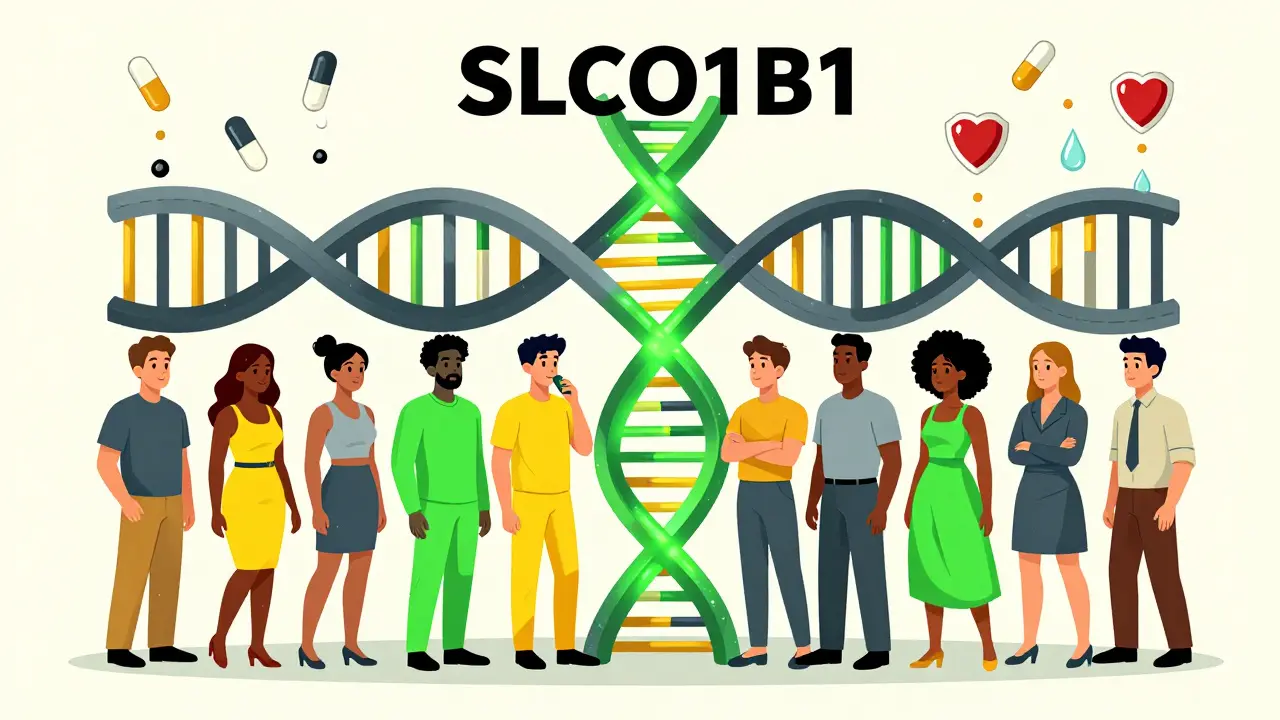
Interestingly, some genetic differences may explain why this happens to some and not others. A 2023 study found people with certain variations in the SLCO1B1 gene had a higher chance of developing diabetes while on statins. This could lead to personalized prescriptions in the future, where your genes help guide which statin you get-or if you should avoid one altogether.
How Big Is the Risk Really?
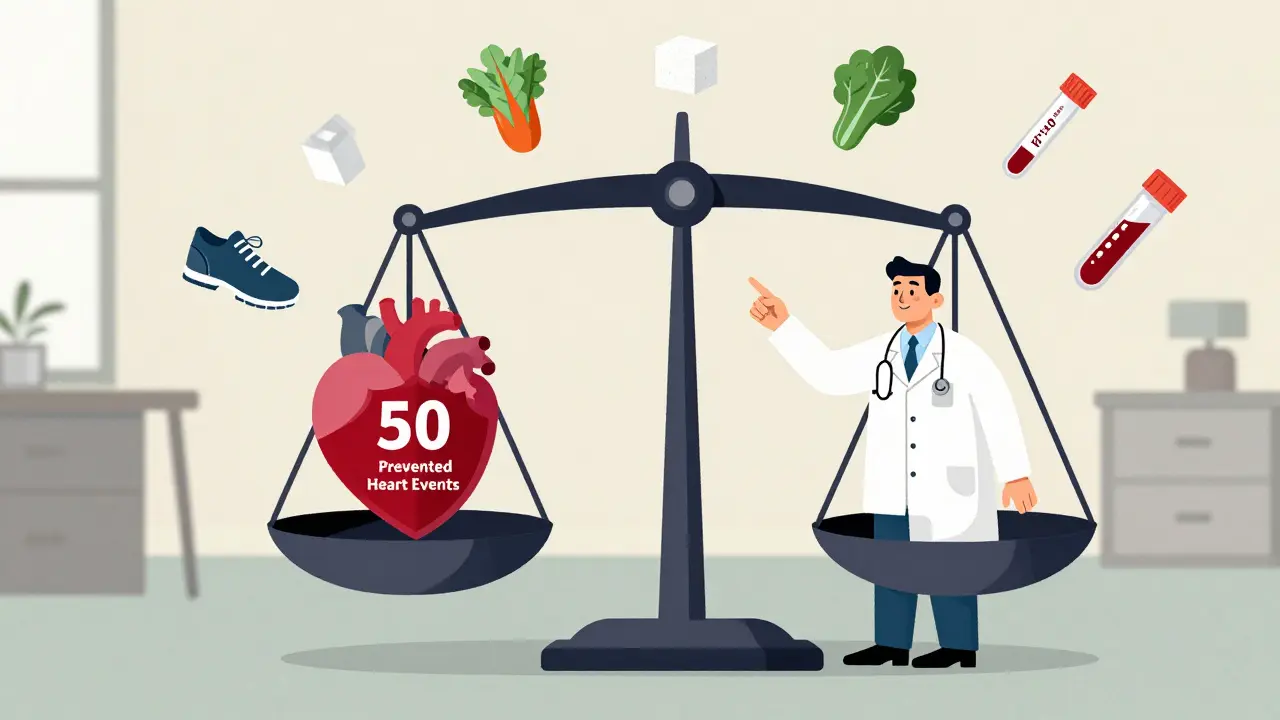
Let’s put numbers to it. For every 1,000 people taking a statin for five years, about 10-20 extra cases of diabetes might occur. That sounds scary until you compare it to what statins prevent. In the same group, statins stop about 50 major heart events-heart attacks, strokes, or death from heart disease. The benefit is five times greater than the risk.
For someone with existing heart disease, the numbers are even more one-sided. A heart attack can be deadly. A rise in blood sugar? Usually manageable with diet, exercise, or a small medication change.
Still, that doesn’t mean the risk is ignored. The FDA required all statin labels to include a warning about increased blood sugar back in 2012. Since then, studies from Oxford, Stanford, and the CDC have all confirmed it. The American Heart Association and the American Diabetes Association agree: don’t avoid statins because of this risk. But do monitor.
What Happens to Blood Sugar Levels?
It’s not a sudden spike. Blood sugar rises slowly-over months or years. You might not feel anything. That’s why regular blood tests matter. Your doctor should check your fasting glucose and HbA1c before you start a statin, then again in 3-6 months after starting, and annually after that.
Some statins seem to affect blood sugar more than others. Atorvastatin and rosuvastatin, especially at high doses, are linked to the greatest rise. Simvastatin and pravastatin appear to have less impact. But switching statins isn’t always the answer-it depends on your cholesterol levels and heart risk.
People who already have diabetes also need to be careful. Statins can make blood sugar harder to control. One study found that those with diabetes on high-dose statins saw their HbA1c rise by 0.3% on average. That might not sound like much, but for someone trying to keep HbA1c under 7%, it can mean needing a new medication or adjusting insulin.
What Can You Do About It?
If your blood sugar goes up after starting a statin, don’t panic. First, talk to your doctor. Don’t stop the statin on your own. The heart protection is too important.
Here’s what actually helps:
- Move more. Just 30 minutes of brisk walking five days a week can improve insulin sensitivity by 20-30%.
- Eat smarter. Cut back on sugary drinks, refined carbs, and processed snacks. Focus on vegetables, lean protein, whole grains, and healthy fats.
- Lose weight if needed. Losing even 5-10% of your body weight can reverse prediabetes.
- Get tested regularly. Keep track of fasting glucose and HbA1c. If levels keep climbing, your doctor might add metformin or adjust your statin dose.
Some people find their blood sugar returns to normal after stopping statins. But again-only do this under medical supervision. For most, the trade-off is worth it.
Should You Avoid Statins Because of This?
No. Not if you need them.
Statins are one of the most studied drugs in history. They’ve saved millions of lives. The small increase in diabetes risk doesn’t cancel out their power to prevent heart attacks and strokes. In fact, the American College of Cardiology estimates statins prevent about 50,000 cardiovascular events each year in the U.S.-while causing only 2,000-3,000 extra cases of diabetes.
For someone with high cholesterol and a family history of heart disease, skipping statins because of diabetes risk is like refusing a seatbelt because you’re worried about being bruised in a crash.
But if you’re healthy, with normal cholesterol and no heart disease, statins likely aren’t right for you in the first place. Guidelines now focus on using them only when the heart benefit clearly outweighs the risk.
What’s Next?
Scientists are working on ways to reduce this side effect. Some are testing statin alternatives that lower cholesterol without affecting glucose. Others are developing drugs that protect insulin-producing cells while still blocking cholesterol. Genetic testing may soon help doctors pick the safest statin for each person.
For now, the message is clear: if you need a statin, take it. But stay aware. Get your blood sugar checked. Make healthy lifestyle changes. Work with your doctor to find the right balance. Statins aren’t perfect-but for millions, they’re still the best tool we have to keep hearts beating.
Becky Baker
Statins are just another Big Pharma scam to keep people hooked. I’ve been off them for two years and my cholesterol’s fine. My grandma lived to 98 eating bacon and butter. Who needs science when you’ve got tradition?
Sumler Luu
I was on atorvastatin for 18 months and my HbA1c crept up from 5.4 to 6.1. My doctor didn’t mention this risk until I brought it up. Now I’m on pravastatin and my numbers are stabilizing. Always ask about alternatives - you’re your own best advocate.
Sophia Daniels
Oh honey, let me break this down like I’m explaining it to your cousin who still thinks ‘natural’ means ‘magic’ - statins don’t cause diabetes, they expose it. Your body’s been screaming for help since you started eating Cheetos for breakfast. The statin just turned up the volume. You think your pancreas is gonna handle 20 years of soda and stress without a single complaint? Nah. It’s not the drug’s fault - it’s the life choices that got you here. And yes, the heart benefit still wins. But please, for the love of all that’s holy, stop drinking Mountain Dew before noon.
Nikki Brown
I’m so disappointed in modern medicine. 😔 People are being told to take a drug that turns their body against itself, all because a spreadsheet says it’s ‘worth it.’ What happened to fixing the root cause? Why not fix the diet? The lifestyle? The stress? Instead, we just slap on another pill. I’ve seen too many people go from ‘high cholesterol’ to ‘diabetic on insulin’ because they trusted the system too much. 🙃
Peter sullen
It is imperative to note, based on meta-analytic data derived from randomized controlled trials (RCTs), that the relative risk (RR) of incident type 2 diabetes mellitus (T2DM) among statin-exposed individuals is approximately 1.46 (95% CI: 1.28–1.67), with a dose-response relationship observed across statin intensity tiers. However, the absolute risk reduction (ARR) in cardiovascular events remains clinically significant, with NNT=20 for primary prevention and NNT=5 for secondary prevention. Therefore, the benefit-risk ratio remains overwhelmingly favorable. Monitoring fasting glucose and HbA1c at baseline, 3–6 months, and annually is standard-of-care.
Fabio Raphael
I was really nervous when my doctor told me statins might raise my blood sugar. I’ve had prediabetes since I was 40. But I kept the statin because I had a mild heart attack last year. I started walking 40 minutes every day and swapped soda for sparkling water. My A1c went from 6.0 to 5.7 in 6 months. I didn’t fix everything - but I didn’t give up either. It’s not perfect, but it’s progress.
Amy Lesleighter (Wales)
statins are like a fire alarm in a house on fire. yeah it’s annoying but you dont turn it off because it’s loud. your body’s on fire from sugar and stress. the statin’s just the alarm. fix the house. not the alarm.
Rajni Jain
my mom took statins and got diabetes but she also ate fried chicken every day and never moved. i told her to walk after dinner and eat veggies. she did both. her sugar went down. she still takes the statin. she’s 72 and hikes now. it’s not the drug. it’s the life. small changes matter.
Natasha Sandra
Just got my HbA1c back at 6.3 after starting rosuvastatin 😭 I cried. But then I remembered - I’m not giving up my heart for my sugar. 🥺 I started meal prepping, cut out dessert, and now I’m walking with my dog every night. It’s hard, but I’m doing it. 💪 #StatinsAreNotTheEnemy #DiabetesIsManageable
Erwin Asilom
The data is clear. The risk is real, but the benefit is greater. The key is not fear - it’s awareness. Monitor. Adjust. Don’t assume. Don’t panic. Act with information, not emotion.
sakshi nagpal
Interesting how we focus so much on the drug’s side effect, but rarely on the systemic issues that led us to need it in the first place. Our food system, our sedentary jobs, our stress culture - these are the real culprits. Statins are a bandage on a broken leg. We need to fix the leg.
Sandeep Jain
my uncle took simvastatin and his sugar stayed normal. he walks 10k steps a day and eats rice with dal. maybe its not the statin, its what we eat after? just sayin
roger dalomba
Wow. A 46% increased risk. That’s like saying ‘your chances of dying from this pill are the same as your chances of winning the lottery - if you buy 100 tickets.’
Brittany Fuhs
Statins for everyone? What a joke. Only the lazy and the brainwashed take them. Real Americans eat eggs. Real Americans don’t need Big Pharma to tell them how to live. I’m off mine. My cholesterol’s fine. My blood sugar’s fine. My conscience? Even finer.
Steven Destiny
Look - I had a heart attack at 48. Statins saved my life. My blood sugar went up? So what. I started lifting weights. I eat more greens. I check my numbers. I’m alive. My kids have a dad. That’s the real math. Don’t let fear steal your future.