

St. John’s Wort might seem like a harmless natural fix for low mood. After all, it’s been used for centuries, sold over the counter, and many people swear it helps with mild depression. But here’s the catch: if you’re taking any prescription medication, this herbal supplement could be silently sabotaging your treatment - sometimes with life-threatening results.
How St. John’s Wort Changes How Your Body Handles Medications
St. John’s Wort doesn’t just sit quietly in your system. Its active ingredient, hyperforin, turns on a powerful switch in your liver called the pregnane-X-receptor (PXR). This switch tells your body to produce more of certain enzymes - mainly CYP3A4, CYP2C9, and CYP1A2 - that break down drugs. It also ramps up P-glycoprotein, a protein that pushes drugs out of your cells. Together, they act like a fast-track detox system for medications.
What happens? Your body gets rid of prescription drugs faster than it should. That means less of the medicine stays in your bloodstream. If you’re on a drug with a narrow therapeutic window - where even a small drop in concentration can cause failure - this isn’t just inconvenient. It’s dangerous.
Think of it like this: if your antidepressant is supposed to keep 5 mg of the drug in your blood at all times, St. John’s Wort might cut that to 2 mg. Your symptoms come back. You think the medicine isn’t working. So you take more. And then you risk overdose when you stop the herb.
Medications That Can Fail Because of St. John’s Wort
There are over 50 documented interactions. Some are more common. Some are more deadly.
- Immunosuppressants like cyclosporine, tacrolimus, and sirolimus: These keep transplanted organs from being rejected. A 2019 case report showed a kidney transplant patient suffered acute organ rejection after just eight weeks of taking St. John’s Wort. Their tacrolimus levels dropped from a safe 10 ng/mL to 3 ng/mL - below the minimum needed to prevent rejection.
- HIV medications like protease inhibitors (ritonavir, indinavir) and non-nucleoside reverse transcriptase inhibitors: These keep the virus under control. St. John’s Wort can slash their levels by up to 60%. That’s not just treatment failure - it’s drug resistance.
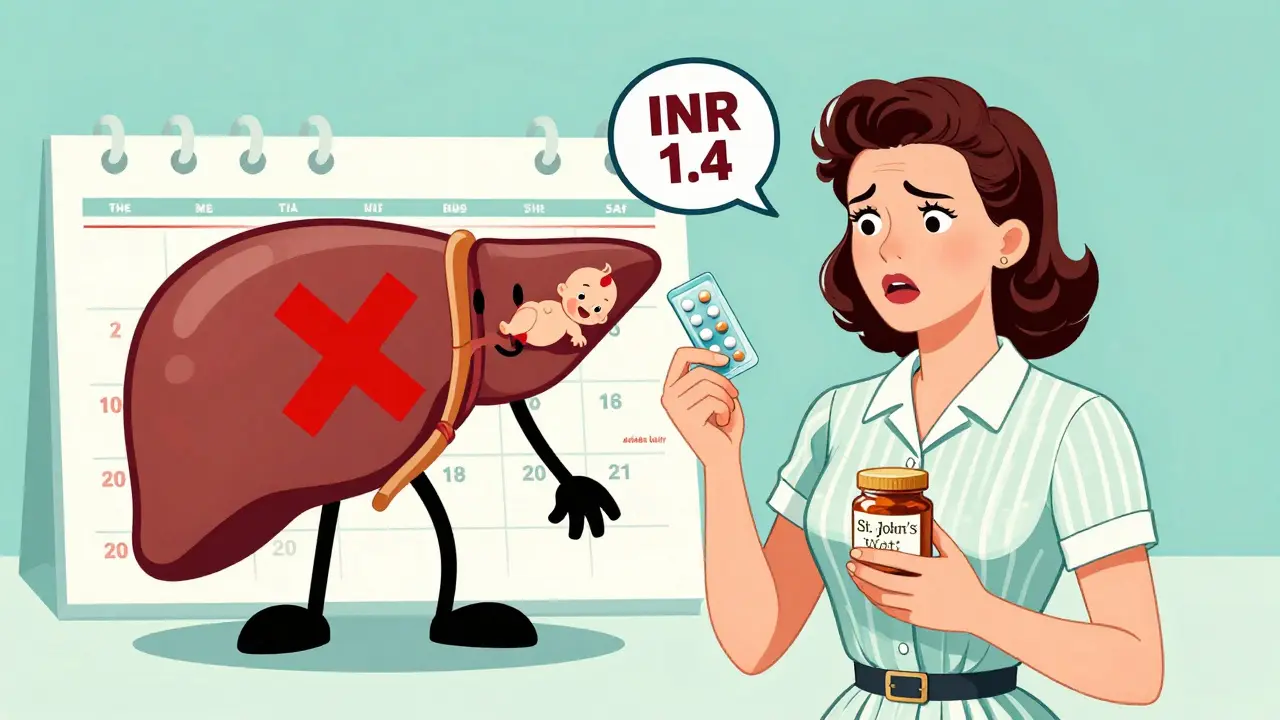
- Birth control pills: A 2006 study found that women taking St. John’s Wort had a 30% higher chance of unintended pregnancy. The herb lowers estrogen levels enough to stop ovulation from being blocked. There are dozens of real-world cases of women getting pregnant while on the pill and taking St. John’s Wort - even when they took both exactly as directed.
- Anticoagulants like warfarin: One patient’s INR (a measure of blood clotting time) dropped from 2.5 to 1.4 in 10 days after starting St. John’s Wort. That’s a major drop in blood thinning. They nearly had a stroke.
- Antidepressants like SSRIs (sertraline, fluoxetine) and SNRIs (venlafaxine): Mixing St. John’s Wort with these can cause serotonin syndrome - a rare but deadly condition where your brain gets flooded with serotonin. Symptoms: high fever, rapid heartbeat, confusion, muscle rigidity. It’s an emergency.
- Pain meds like oxycodone, methadone, and tramadol: St. John’s Wort reduces their effectiveness. Patients report sudden, unexplained pain returning after starting the herb.
The European Medicines Agency says St. John’s Wort should never be used with any drug that has a narrow therapeutic index - meaning the difference between a safe dose and a toxic one is tiny. That includes most of the drugs listed above.
Why People Don’t Realize the Risk Until It’s Too Late
Here’s the problem: the effects don’t show up right away. It takes about 10 days for your liver to ramp up enzyme production. And once you stop taking St. John’s Wort, the effects linger for up to two weeks. So if you start the herb and your transplant starts failing two weeks later, or your birth control fails a month after you began taking it - you won’t connect the dots.
Most people don’t think of herbal supplements as drugs. They see them as “natural,” so they assume they’re safe. A 2017 study found that patients took an average of 3 to 6 weeks before they noticed something was wrong - and even then, they blamed their illness, not the herb.
And here’s the kicker: many St. John’s Wort products in the U.S. don’t even list these interactions clearly on the label. The FDA doesn’t require pre-market approval for supplements. So unless you’re reading the fine print on a European product - which must warn about 12 specific drug classes - you might never know.
Who’s Most at Risk?
It’s not just people on complex meds. Anyone taking more than one prescription is at risk.
- Transplant patients: 100% of documented cases show reduced drug levels.
- Women on birth control: 17% of user complaints on Drugs.com mention unplanned pregnancy.
- People with depression: Many start St. John’s Wort because they’re unhappy with their prescription’s side effects - then add it on top, not realizing they’re doubling down on risk.
- Older adults: Over 65s are less likely to use it, but that’s because they’re often on 5-10 medications. The risk is too high.
- Younger women (35-54): This group has the highest usage rate (8.2%) in the U.S., often for mood support - and they’re the most likely to be on birth control or antidepressants.
Even if you think you’re “just taking it for a little low mood,” if you’re on any of these medications, you’re playing Russian roulette with your health.
What to Do Instead
If you’re considering St. John’s Wort for depression, here’s what you need to do before you take a single pill:
- Make a full list of every medication, supplement, and even over-the-counter drug you take - including vitamins, sleep aids, and heartburn pills.
- Take that list to your pharmacist. Not your doctor - your pharmacist. They’re trained to spot these interactions. Ask them: “Does any of this interact with St. John’s Wort?”
- If you’re already taking it, don’t stop suddenly. Talk to your doctor. Abruptly stopping St. John’s Wort can cause withdrawal symptoms like dizziness or irritability.
- Ask about alternatives: SAM-e and 5-HTP have far fewer interactions. They’re not as well-studied for depression, but they’re much safer if you’re on other meds.
- If you’re on a life-saving drug like an immunosuppressant or HIV med - don’t take it at all. The risk isn’t worth it.
The Bigger Picture: Why This Keeps Happening
St. John’s Wort is still one of the most popular herbal supplements in Europe - especially in Germany, where it makes up about 20% of all antidepressant use. But in the U.S., sales have dropped 37% since 2000. Why? Because more people are dying from the interactions.
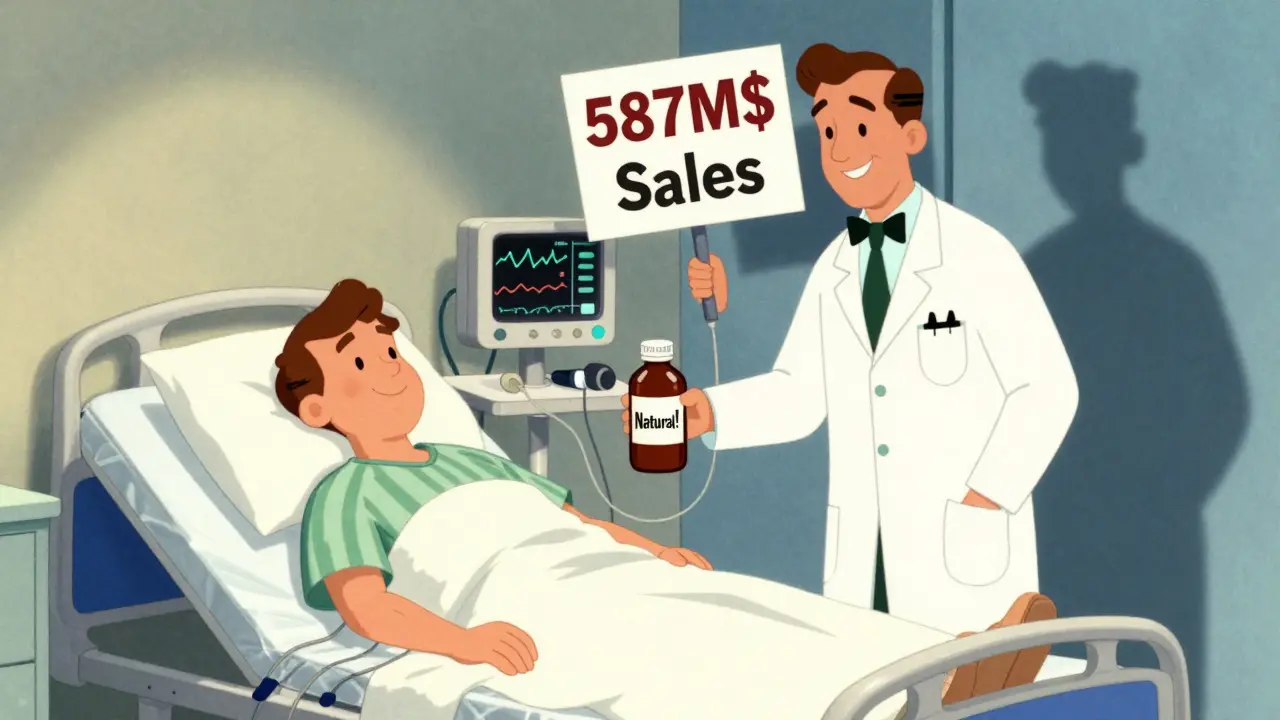
Drug companies can’t patent herbs. So there’s no big push to warn people. The supplement industry makes billions off this product - $587 million in 2022 alone. But the FDA only issued a public advisory in 2000. No recall. No ban. Just a warning.
Meanwhile, research is moving forward. A 2022 study showed that low-hyperforin versions of St. John’s Wort reduce enzyme induction by 90%. That could mean safer versions in the future. But for now, the product on your shelf is the same one that caused organ rejection in transplant patients.
There’s no magic bullet here. St. John’s Wort works for mild depression - but only if you’re not on anything else. If you are, the cost is too high.
Final Warning
St. John’s Wort isn’t just another supplement. It’s a potent drug that changes how your body handles other drugs. It doesn’t matter if it’s “natural.” Natural doesn’t mean safe. It means unregulated. Unstudied. Unmonitored.
If you’re taking any prescription medication - even something as simple as a blood pressure pill or a thyroid med - talk to your pharmacist before touching St. John’s Wort. If you’re already taking it, don’t ignore sudden changes in how you feel. Your body might be telling you your meds aren’t working anymore.
There are safer ways to manage mild depression. Don’t risk your life for a supplement that could be quietly undoing everything your doctor prescribed.
Can St. John’s Wort cause serotonin syndrome?
Yes. St. John’s Wort increases serotonin levels in the brain. When taken with SSRIs, SNRIs, or other serotonergic drugs like tramadol or triptans, it can cause serotonin syndrome - a potentially fatal condition. Symptoms include high fever, rapid heart rate, confusion, muscle stiffness, and seizures. If you experience these after combining St. John’s Wort with antidepressants, seek emergency care immediately.
How long does St. John’s Wort stay in your system after you stop taking it?
The enzyme-inducing effects of St. John’s Wort can last up to two weeks after you stop taking it. This means even if you quit the herb, your body will still break down medications faster during that time. If you’re switching from St. John’s Wort to a prescription antidepressant, wait at least 14 days before starting the new drug to avoid dangerous interactions.
Does St. John’s Wort affect birth control?
Yes. St. John’s Wort reduces estrogen levels by increasing liver metabolism of the hormone. This can cause ovulation to occur, making birth control pills, patches, and rings less effective. There are documented cases of unplanned pregnancies in women who took both. If you’re on hormonal contraception, avoid St. John’s Wort entirely - or use a non-hormonal backup method like condoms or an IUD.
Is St. John’s Wort safe if I’m not on any medications?
For people not taking any prescription drugs, St. John’s Wort is generally considered safe for short-term use in mild depression. Studies show it can be as effective as some low-dose antidepressants. However, it can still cause side effects like dry mouth, dizziness, GI upset, and increased sun sensitivity. Always start with a low dose and monitor how you feel. Even without other meds, it’s not risk-free.
Are there safer herbal alternatives to St. John’s Wort?
Yes. SAM-e and 5-HTP are two alternatives with far fewer drug interactions. SAM-e has minimal interactions (mainly with MAO inhibitors) and shows promise for mood support. 5-HTP is a serotonin precursor but doesn’t strongly induce liver enzymes. Neither has the same depth of research as St. John’s Wort for depression, but they’re much safer if you’re on other medications. Always check with your pharmacist before starting any supplement.
Why is St. John’s Wort still sold if it’s so dangerous?
In the U.S., herbal supplements are regulated as food, not drugs. The FDA can’t ban them unless they prove harm after they’re already on the market. St. John’s Wort is legal because it hasn’t been proven deadly in enough cases to trigger a ban - even though dozens of life-threatening interactions are documented. Europe has stricter rules and requires warning labels. The U.S. does not. That’s why you need to be your own advocate.
Can I take St. John’s Wort with vitamins or over-the-counter meds?
It depends. Common OTC drugs like ibuprofen, acetaminophen, or antihistamines usually don’t interact. But some cold and allergy meds contain dextromethorphan - which can increase serotonin risk. Also, many multivitamins contain iron or calcium, which can reduce absorption of St. John’s Wort. The safest approach: assume any supplement or OTC drug could interact, and check with your pharmacist before combining them.
Harriet Hollingsworth
This is absolutely unacceptable. People are dying because some company thinks 'natural' means 'no warning labels'-and the FDA just sits there like a bump on a log. If you're taking birth control and this herb, you're not just risking pregnancy-you're risking your LIFE. And don't even get me started on transplant patients. This isn't a 'maybe'-it's a murder waiting to happen.
Someone needs to sue these supplement companies into oblivion. Natural doesn't mean safe. It means unregulated. And that's a crime.
I'm telling every woman I know: if you're on the pill, don't even look at St. John's Wort. Period.
Chandreson Chandreas
Man… I read this and just sat back. It’s wild how we treat herbs like they’re harmless candy. 🌿
St. John’s Wort isn’t magic-it’s a biochemical wrench thrown into a精密 machine. Your body doesn’t care if it’s from a tree or a lab-it just reacts.
Kinda reminds me of how we think ‘organic’ food is always better… until you find out organic pesticides can be worse than synthetic ones. 🤷♂️
Respect the science. Talk to your pharmacist. Don’t be the person who says ‘but it’s natural’ after their transplant fails.
Peace out, and stay safe, y’all.
Kayla Kliphardt
I’ve been on sertraline for 5 years. I never thought about herbal supplements interacting with it. I thought they were just… safer.
This article made me check my supplement cabinet. I had a bottle of St. John’s Wort from last winter-thought it would help with winter blues. I tossed it today.
Thank you for writing this. I didn’t know. Now I do. And I’ll tell my sister too.
Pharmacists should be the first stop, not the last.
John Chapman
THIS IS A PUBLIC HEALTH EMERGENCY AND NO ONE IS TALKING ABOUT IT 😤
My cousin had a kidney transplant. She took this 'natural mood booster' because she was 'stressed'-guess what? Her body rejected the organ. She was in the ICU for weeks. They didn’t even connect it until her doctor asked about supplements.
STOP LETTING PEOPLE DIE BECAUSE THEY THINK HERBS ARE HARMLESS.
Every pharmacy should have a big sign: 'ST. JOHN’S WORT = DEATH RISK WITH PRESCRIPTIONS'-like cigarette warnings. I’m starting a petition. Anyone with me? 🙌
And yes-I’m calling my mom right now to tell her to throw hers out.
Urvi Patel
Why are we even having this conversation in the US. In Europe they ban this shit. Germany requires labels. The FDA is a joke. You think your vitamins are safe? They’re not. You’re a guinea pig. The supplement industry is a pyramid scheme built on ignorance. If you’re on meds and taking this you’re not just dumb-you’re dangerous to yourself and others. End of story.
anggit marga
You people are so scared of everything. In Nigeria we use herbs for everything and we live longer. Why do you think your medicine is better? Maybe your body is weak because you eat processed food and sit all day. This herb works. Your pills are poison. You just don’t want to admit it. I take St. John’s Wort with my blood pressure pill and I feel better. Your science is biased.
Joy Nickles
Okay so I took this for 3 months last year and I was on Lexapro and birth control and I didn’t know… and I got pregnant. And I had a panic attack. And I thought I was crazy. And then I read this article and I was like OH MY GOD I’M A MONSTER. I didn’t even know it could do that. I feel so guilty. I’m so sorry to anyone who’s been through this. I’m telling everyone. Please. Please. Don’t be like me. Talk to your pharmacist. I didn’t. I thought it was ‘just a herb’. It’s not. It’s a weapon. I’m crying right now. I’m so sorry.
Marilyn Ferrera
St. John’s Wort induces CYP3A4. That’s the enzyme responsible for metabolizing 50% of all prescription drugs.
It also induces P-glycoprotein, which reduces drug absorption in the gut.
That’s not speculation. That’s pharmacokinetics 101.
If you’re on cyclosporine, tacrolimus, warfarin, SSRIs, or hormonal contraception-you are at risk.
Pharmacists are trained to catch this. Doctors often aren’t.
Don’t ask your doctor. Ask your pharmacist.
And if you’re not on meds? Still, don’t take it long-term. Sun sensitivity. GI issues. Withdrawal. It’s not harmless.
Science > folklore.
Robb Rice
I appreciate this detailed breakdown. As someone who works in healthcare, I see this too often.
Patients assume 'natural' = 'safe' and 'over-the-counter' = 'no interaction'.
It’s not just St. John’s Wort-ginkgo, garlic, green tea extract, even grapefruit juice can be dangerous.
The real issue? We don’t educate people about supplement risks early enough.
Pharmacists should be routinely asked about supplements during every med review-not just when something goes wrong.
And yes, the FDA’s regulatory gap is a failure. But until that changes, we need patients to be their own advocates.
Thank you for the clarity. This should be required reading for anyone on chronic meds.