
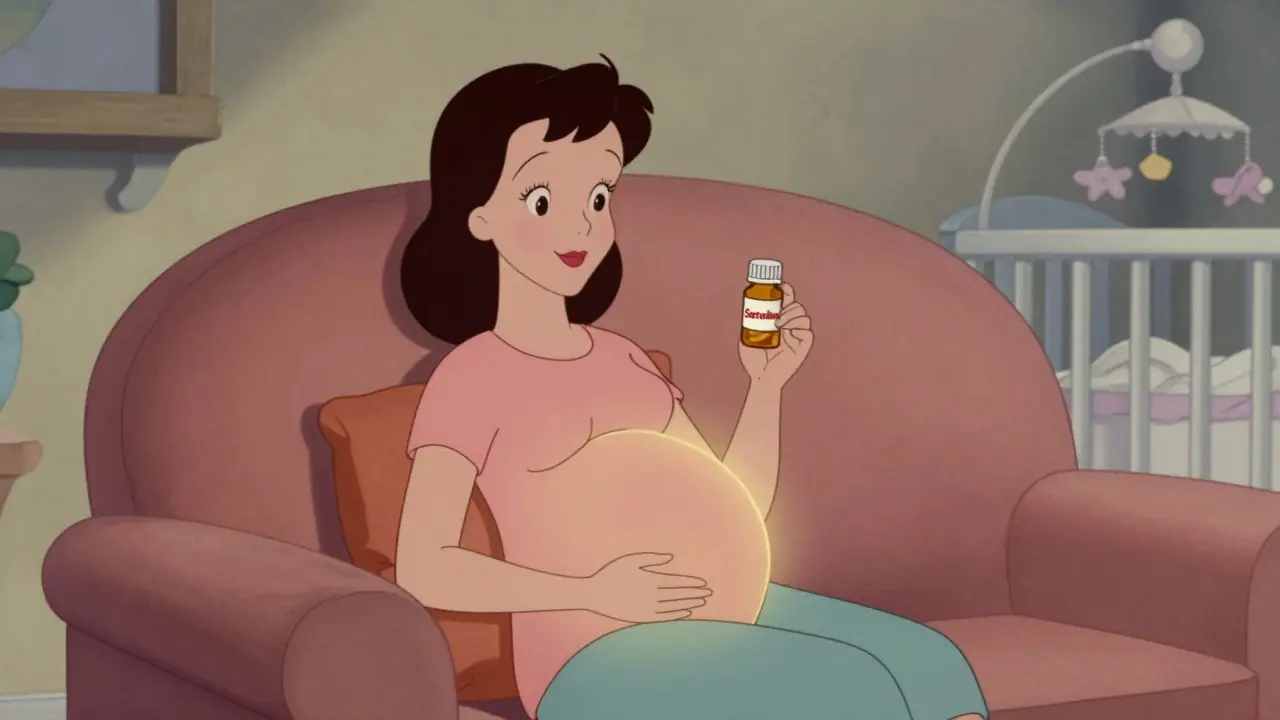
When you’re pregnant and struggling with depression or anxiety, the question isn’t just whether to take an SSRI-it’s whether not taking one could be riskier. Every year, 1 in 7 pregnant women experience depression severe enough to need treatment. But the fear of harming the baby often leads women to stop their medication, even when it’s been working. The truth? For many, staying on an SSRI is safer than stopping it.
Why SSRIs Are Commonly Used in Pregnancy
SSRIs-like sertraline (Zoloft), citalopram (Celexa), and escitalopram (Lexapro)-are the go-to antidepressants for pregnant women because they’ve been studied more than any other class of psychiatric drugs. They work by boosting serotonin, a brain chemical that helps regulate mood. Unlike older antidepressants, they don’t cause dangerous interactions with other meds and have fewer side effects. That’s why doctors reach for them first. The biggest reason to keep taking them? Untreated depression is dangerous. In the U.S., suicide is the leading cause of death among pregnant and new mothers, accounting for 20% of all pregnancy-related deaths, according to CDC data from 2022. Depression also increases the risk of preterm birth, low birth weight, and poor bonding with the baby. One study found that women with untreated depression were more than twice as likely to give birth early. And postpartum depression? It’s 3 times more likely if you were depressed during pregnancy and didn’t get treatment.The Real Risks: Numbers That Matter
Let’s cut through the noise. When people say SSRIs “increase birth defect risk,” they’re often quoting outdated or poorly controlled studies. Large studies tracking nearly 2 million births in Nordic countries found no meaningful increase in major birth defects from SSRIs. The absolute risk of a serious heart defect from paroxetine-the only SSRI with a clear link-is about 1 in 100, not 1 in 50. That’s a small rise from a baseline of 0.5% to 0.7-1.0%. The most talked-about risk is PPHN-Persistent Pulmonary Hypertension of the Newborn. It’s rare. In the general population, it affects 1-2 out of every 1,000 babies. With SSRI use in the third trimester, that number rises to 3-6 per 1,000. That sounds scary, but here’s the context: 99.4% of babies exposed to SSRIs in late pregnancy do not develop PPHN. And when you control for how severe the mother’s depression was, the risk drops even further. Other concerns-like preterm birth or low birth weight-also show up in studies, but again, it’s not clear if it’s the drug or the illness causing it. Women with severe depression are more likely to smoke, skip prenatal care, or have poor nutrition. When researchers adjust for these factors, the difference in outcomes shrinks to nearly nothing.The Bigger Risk: Stopping Your Medication
Here’s the hard truth: stopping SSRIs during pregnancy is far riskier than staying on them for most women with moderate to severe depression. A 2022 JAMA Psychiatry trial showed that 92% of women who stopped their SSRI relapsed into depression, compared to just 21% who stayed on it. That’s not a typo. Four out of five women who quit ended up worse off. Relapse doesn’t just mean feeling sad. It means inability to eat, sleep, or care for yourself. It means missing doctor appointments. It means withdrawing from family. It means thinking about ending your life. And those behaviors? They directly harm the baby. One study found that women who stopped SSRIs were more likely to use alcohol or drugs during pregnancy-25% versus 8% in those who stayed on treatment. That’s a huge difference. And the bond with your baby? It starts before birth. Babies of mothers with untreated depression show lower levels of oxytocin, the bonding hormone, even at birth.Which SSRI Is Safest?
Not all SSRIs are the same. Sertraline is the most recommended. It crosses the placenta less than others, has the lowest risk of PPHN, and has the most data supporting its safety. Most experts start with 25-50 mg daily and adjust up to 150-200 mg if needed. It’s effective, well-tolerated, and has been used safely by hundreds of thousands of pregnant women. Citalopram and escitalopram are also good options. Fluoxetine (Prozac) lasts longer in the body, which can be helpful for women who struggle with daily dosing-but it can build up in the baby’s system, potentially causing temporary withdrawal symptoms after birth. Avoid paroxetine. It’s linked to a small but real increase in heart defects when taken in the first trimester. If you’re on it and planning pregnancy, switch to sertraline before conception. Your doctor can help you do that safely.
What About Breastfeeding?
Good news: most SSRIs are safe during breastfeeding. Sertraline passes into breast milk in tiny amounts-so little that infant blood levels are often undetectable. The American Academy of Pediatrics considers it compatible with breastfeeding. Citalopram and escitalopram are also low-risk. Fluoxetine is less ideal because it sticks around longer and can accumulate in the baby, potentially causing irritability or sleep issues. If you’re breastfeeding and worried, ask your doctor to check your baby’s weight gain and sleep patterns. Most infants show no side effects at all.What If You Want to Stop?
If you’re thinking about quitting, don’t stop cold turkey. Abruptly stopping SSRIs can cause withdrawal symptoms-dizziness, nausea, “brain zaps,” anxiety, and insomnia. One study found that 73% of women who quit suddenly experienced these symptoms. Instead, work with your doctor to taper slowly over 4-6 weeks. Monitor your mood with a simple tool like the PHQ-9 questionnaire. If your score climbs above 10, you may need to slow down the taper or restart the medication. Many women who stop prematurely end up back on higher doses after birth, because their depression returns worse than before.Long-Term Effects on the Child
This is where things get complicated. Some studies suggest children exposed to SSRIs in utero may have slightly higher rates of anxiety or depression by age 15. One Columbia University study found 28% of exposed children developed depression by adolescence, compared to 12% of children whose mothers had depression but didn’t take SSRIs. But here’s the catch: those same children’s mothers had more severe depression. When researchers compared children of mothers who took SSRIs to children of mothers with equally severe depression who didn’t take SSRIs, the difference disappeared. That means the risk may come from the illness, not the medicine. A 2021 study in The Lancet, which looked at siblings-one exposed, one not-found no increased autism risk. That’s powerful evidence. If genetics or family environment were the main drivers, both siblings would be equally affected. They weren’t. Still, some experts recommend monitoring kids for mood changes starting at age 12. Annual check-ins using the PHQ-9 (with a lower threshold of 5 for kids) can catch problems early.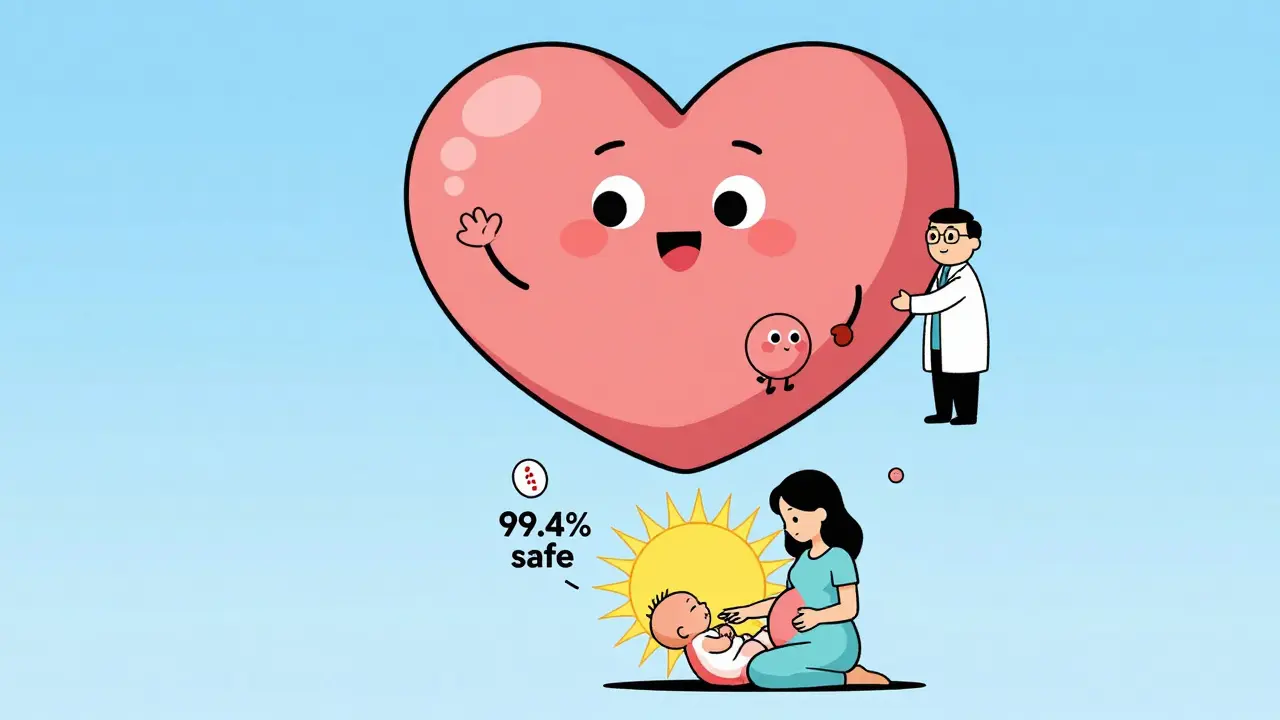
What Doctors Recommend Now
The American College of Obstetricians and Gynecologists (ACOG) and the Society for Maternal-Fetal Medicine (SMFM) both say this clearly: if you were taking an SSRI before pregnancy and it helped, keep taking it. Don’t switch unless there’s a good reason. Use the lowest dose that works. Sertraline is the first choice. Avoid paroxetine. They also say: if you’re newly diagnosed with moderate to severe depression during pregnancy, starting an SSRI is often the best option. Therapy alone isn’t enough for many women. Medication + counseling is the gold standard. The FDA hasn’t changed its stance either. Despite some public alarm, they maintain that the absolute risks are low-and far outweighed by the dangers of untreated illness.What You Can Do Right Now
If you’re pregnant and on an SSRI:- Don’t stop without talking to your provider.
- Ask for sertraline if you’re on paroxetine or unsure which one you’re taking.
- Get your depression screened monthly using the PHQ-9.
- Track your baby’s movements and report any sudden changes.
- Plan for postpartum support-your risk of relapse is highest in the first 3 months after birth.
- Don’t wait until you’re in crisis to ask for help.
- Therapy (CBT or interpersonal therapy) is helpful, but not always enough.
- Medication is not a failure-it’s a tool.
- You’re not alone. One in seven women feel this way.
Celia McTighe
Wow, this is such a needed conversation. I was on sertraline during both my pregnancies and honestly? I don’t know how I would’ve made it without it. My anxiety was so bad I couldn’t even hold my baby without crying. Stopping wasn’t an option - not for me, not for them.
And yes, the PPHN stats sound scary until you realize it’s still 99.4% safe. We’re scared of numbers that don’t even add up to a rounding error in the grand scheme.
Also, breastfeeding? My kids are 8 and 10 now. One’s a straight-A student, the other’s a pro gamer. No brain zaps, no developmental delays. Just two healthy kids with a mom who didn’t break.
ANA MARIE VALENZUELA
Let’s be real - if you’re taking SSRIs while pregnant, you’re already choosing convenience over consequence. The ‘risk’ numbers are manipulated by pharma-funded studies. The real danger? You’re conditioning your baby to need chemicals just to feel okay. That’s not medicine, that’s chemical dependency by default.
Debra Cagwin
ANA MARIE, I hear your fear - I really do. But the data doesn’t support that narrative. Untreated depression doesn’t just affect you - it affects your baby’s brain development, their stress response system, their ability to bond. SSRIs aren’t a crutch; they’re a bridge.
And if you’re worried about long-term effects? Look at the sibling studies. When you control for genetics and environment, the meds disappear as a factor. The illness doesn’t.
You’re not failing by taking care of yourself. You’re succeeding.
oluwarotimi w alaka
USA thinks they know everything. In Nigeria we don't take pills for sad feelings. We pray. We go to church. We drink bitter herbs. You people are weak. Your kids are lab rats. SSRIs? More like SSR-Idiots. I heard they cause autism. I saw it on YouTube. 100% true.
James Hilton
So let me get this straight - we’re supposed to believe a 0.7% increase in heart defects is ‘low risk’… but 92% relapse rate is just ‘bad luck’?
Also, ‘sertraline is safest’? Cool. So what’s the second safest? The one that doesn’t make you cry in the Target parking lot? Because that’s the one I need.
Payton Daily
Think about it - if you’re depressed during pregnancy, you’re already living in a state of chronic stress. Cortisol is flooding your baby’s system. SSRIs? They’re not poisoning the baby - they’re calming the storm.
It’s like putting a bandaid on a bullet wound and calling it ‘dangerous.’ The bullet was the depression. The bandaid? That’s your sanity.
And yes, I’ve been there. I cried every day for 8 months. Took sertraline. Had a baby who smiles at 3 a.m. and calls me ‘Mommy’ like it’s a sacred word. No brain zaps. Just love.
Teresa Marzo Lostalé
I used to think mental health was a luxury. Then I got pregnant and realized: you can’t pour from an empty cup.
My therapist said, ‘Your baby doesn’t need a perfect mom. They need a present one.’
I took Lexapro. I cried less. I held my daughter longer. She’s 4 now. Talks a mile a minute. Loves dinosaurs. Doesn’t flinch at loud noises.
Maybe the real risk isn’t the pill. Maybe it’s believing you have to suffer to be a good mom.
Ryan Touhill
It’s fascinating how modern medicine has reduced the existential crisis of motherhood to a pharmacological equation. We’ve turned the sacred act of nurturing life into a risk-benefit spreadsheet.
Yes, the data is compelling - but at what cost to the soul? Are we so afraid of discomfort that we’ve outsourced our emotional resilience to a capsule?
Perhaps the real question isn’t ‘Is it safe?’ - but ‘What are we becoming when we choose chemical calm over human struggle?’
Mimi Bos
omg i just read this whole thing and i’m crying. i was on zoloft during my pregnancy and my mom kept saying ‘you’re poisoning your baby’ and i felt so alone. thank you for saying this. i didn’t know i was doing the right thing. i just knew i couldn’t keep crying every night. my son is 2 and he hugs me so tight. i think he knows.
Kelsey Youmans
While the statistical evidence presented is indeed compelling and aligns with current clinical guidelines from ACOG and SMFM, one must not overlook the ethical imperative of informed consent. The long-term neurodevelopmental outcomes, even if statistically neutral in sibling cohort analyses, remain incompletely characterized.
It is therefore incumbent upon clinicians to engage in prolonged, nuanced, and non-coercive dialogue with patients - ensuring that pharmacological intervention is not merely presented as the path of least resistance, but as a deliberate, consciously chosen therapeutic strategy.
Bradly Draper
I just wanted to say thank you. I was scared to take anything. My doctor said ‘it’s safer than not taking it’ and I didn’t believe her. But I did. And now I’m here. My baby is fine. And so am I. You’re not alone.