
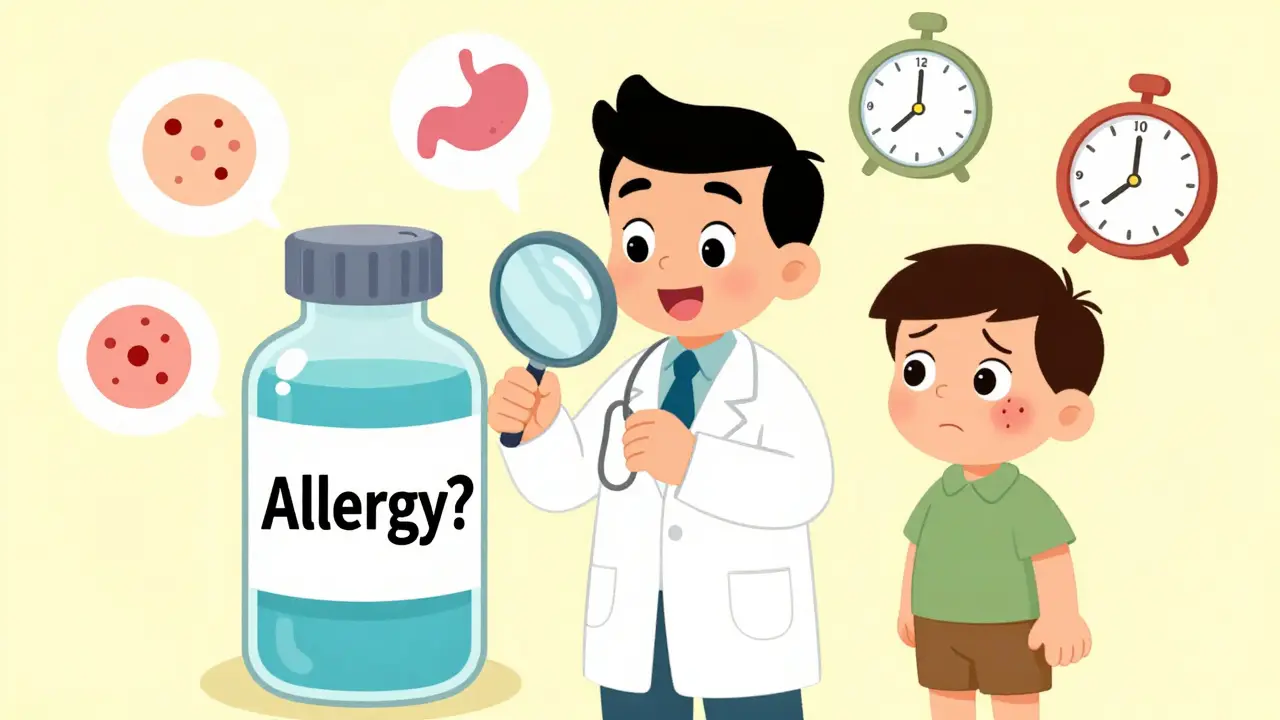
More than 1 in 10 people say they’re allergic to penicillin. But here’s the truth: 9 out of 10 of them aren’t. That’s not a typo. It’s a dangerous myth that’s putting lives at risk-not because of the drug, but because of what happens when doctors can’t use it.
Penicillin is one of the oldest, cheapest, and most effective antibiotics ever made. It’s the go-to for strep throat, ear infections, pneumonia, and even life-threatening conditions like endocarditis. But because so many people think they’re allergic, doctors are forced to use broader, more expensive, and often less safe alternatives. The result? More antibiotic resistance, longer hospital stays, and higher rates of deadly infections like C. difficile and MRSA.
What a Penicillin Allergy Really Means
A true penicillin allergy is an immune system reaction. It’s not just a stomachache or a headache. It’s your body mistaking the drug for a threat and attacking it. That reaction can show up in two main ways: immediately or days later.
Immediate reactions happen within an hour. These are the scary ones. Think hives, swelling of the lips or throat, trouble breathing, a drop in blood pressure, or even passing out. This is anaphylaxis-and it can kill if not treated fast with epinephrine. These reactions are IgE-mediated, meaning your immune system has made specific antibodies against penicillin.
Delayed reactions are more common, but often misunderstood. A rash that shows up 3 to 5 days after taking penicillin? That’s not always an allergy. It could be a viral rash, a side effect, or a mild immune response that doesn’t mean you’re allergic for life. Severe delayed reactions like Stevens-Johnson Syndrome or DRESS are rare but dangerous. They involve blistering skin, fever, and organ damage. These need urgent care.
Most People Are Misdiagnosed
Let’s be clear: if you were told you’re allergic to penicillin as a kid because you got a rash after taking it, you probably aren’t. Studies show that 90% to 95% of people who report a penicillin allergy can safely take it again.
Why? Because the immune system forgets. After 10 years without exposure, 80% of people with a true IgE-mediated allergy lose their sensitivity. That rash you had at age 7? It likely meant nothing. And even if it did, your body may have moved on.
Many people confuse side effects with allergies. Nausea? Diarrhea? Headache? Those aren’t allergies-they’re side effects. Allergies involve your immune system. Side effects are just how your body reacts chemically. Mixing them up leads to unnecessary fear and worse treatment.
How to Find Out If You’re Really Allergic
If you’ve been labeled allergic, you have options. You don’t have to live with that label forever.
The gold standard is a two-step test:
- Penicillin skin testing. A tiny amount of penicillin and its breakdown products is placed under your skin. If you’re truly allergic, a red, itchy bump appears within 15 to 20 minutes.
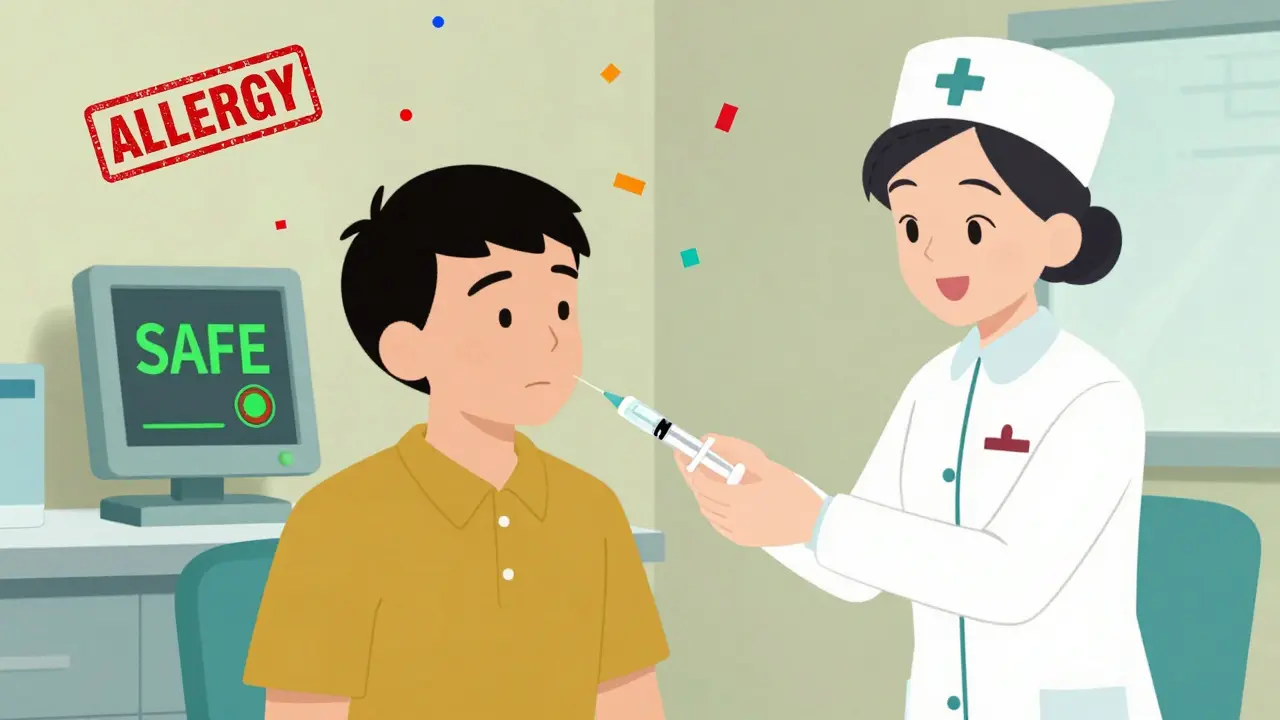
- Oral challenge. If the skin test is negative, you take a small dose of amoxicillin (usually 250 mg) under medical supervision. You’re watched for at least an hour. If nothing happens, you’re cleared.
When both tests are negative, your risk of anaphylaxis drops to the same level as someone who’s never claimed to be allergic. Zero. That’s not a guess. That’s science backed by the CDC and the American Academy of Allergy, Asthma & Immunology.
For low-risk patients-those with only a mild rash from years ago, or vague symptoms like nausea-doctors may skip the skin test and go straight to the oral challenge. It’s safe, fast, and accurate.
Who Should Avoid Penicillin
Not everyone can be cleared. Some people have real, confirmed allergies. You’re in the high-risk group if you’ve had:
- Anaphylaxis within the last 10 years
- Stevens-Johnson Syndrome or Toxic Epidermal Necrolysis after penicillin
- DRESS syndrome with organ involvement
- Severe reaction within 6 hours of taking the drug
If any of these apply to you, don’t take penicillin again without seeing an allergist. And don’t assume you’re safe just because it’s been years. These reactions can come back.
For moderate-risk patients-those with recent hives, swelling, or a rash within the last five years-testing is strongly recommended before any beta-lactam antibiotic is given. That includes amoxicillin, ampicillin, and even some cephalosporins.
What About Other Antibiotics?
Here’s something many people don’t know: if you’re not IgE-mediated allergic, you can often take other antibiotics in the same family. Third- and fourth-generation cephalosporins (like ceftriaxone or cefdinir) and carbapenems (like meropenem) are generally safe for people with no history of IgE-mediated reactions.
Even some first-generation cephalosporins like cefazolin are low-risk for people with low-risk histories. That’s important because cefazolin is the top choice for surgical infection prevention. If you’re allergic to penicillin and can’t get cefazolin, doctors may use vancomycin or clindamycin instead-drugs that are more expensive, harder on your gut, and linked to more antibiotic-resistant infections.
One study found that for every 112 to 124 patients with a penicillin allergy label who get tested, one surgical site infection is prevented. That’s not just a statistic. It’s a real person avoiding a hospital readmission, a second surgery, or worse.
What You Should Do Now
If you’ve ever been told you’re allergic to penicillin, here’s what to do:
- Check your medical records. Does it say “penicillin allergy” without details? That’s not enough. Ask for the full history-what happened, when, and how severe.
- Ask your doctor about testing. Don’t assume it’s too late or too complicated. Many clinics now offer penicillin allergy evaluation as a routine service.
- Don’t avoid penicillin out of fear. If you’ve never been tested, you’re likely not allergic. But you won’t know unless you find out.
- Update your records. If you pass the test, make sure your doctor changes your chart. Tell every new provider you see.
- Consider a medical alert bracelet. Only if you’ve had a confirmed, high-risk reaction. If you’ve been cleared, you don’t need one.
Why This Matters for Everyone
This isn’t just about you. It’s about all of us. When we mislabel penicillin allergies, we push doctors to use broader antibiotics. Those drugs kill off good bacteria along with bad ones. That’s how superbugs like MRSA and C. difficile spread. It’s how hospitals end up with outbreaks. It’s how antibiotics stop working for everyone.
Proper penicillin allergy evaluation could save the U.S. healthcare system over $1.2 billion a year. It reduces hospital stays, cuts down on resistant infections, and gets people better faster with safer drugs.
And the best part? It’s simple. A skin test takes 20 minutes. An oral challenge takes an hour. The risk is tiny. The payoff? Lifelong access to the best antibiotic we’ve got.
You don’t have to live with a label that doesn’t fit you. You don’t have to avoid penicillin because someone told you so when you were five. You deserve to know the truth. And now you do.
Can I outgrow a penicillin allergy?
Yes, most people do. About 80% of those with a true IgE-mediated penicillin allergy lose their sensitivity after 10 years without exposure. Even if you had a serious reaction as a child, it doesn’t mean you’re allergic for life. Testing is the only way to know for sure.
If I’m allergic to penicillin, am I allergic to all antibiotics?
No. Penicillin allergies are specific to the penicillin molecule. Most people with a penicillin allergy can safely take other classes of antibiotics like macrolides (azithromycin), fluoroquinolones (ciprofloxacin), or tetracyclines (doxycycline). Even many cephalosporins and carbapenems are safe if you haven’t had a severe IgE-mediated reaction.
Is penicillin allergy testing safe?
Yes, when done properly. Skin testing and oral challenges are performed under medical supervision with emergency equipment on hand. The risk of a reaction during testing is extremely low-far lower than the risk of using a less effective antibiotic. Most people experience no symptoms at all.
What if I had a rash after taking penicillin as a child?
A rash alone doesn’t mean you’re allergic. Many childhood rashes after penicillin are viral, not allergic. If it was a mild, non-itchy rash that lasted a few days and didn’t involve swelling or breathing trouble, your risk of a true allergy is very low. Testing can confirm this safely.
Can I take amoxicillin if I’m allergic to penicillin?
Amoxicillin is a type of penicillin. If you have a true penicillin allergy, you should avoid it. But if you’ve never been tested, you likely don’t have a true allergy. Many people labeled allergic to penicillin can safely take amoxicillin after a negative skin test and oral challenge. Don’t assume-you need to find out.
Melissa Melville
My mom was told she was allergic to penicillin in the 70s because she got a rash after amoxicillin. She took it again last year after testing and didn’t even break a sweat. Turns out she was fine. Why do we still carry these labels like they’re tattoos?
franklin hillary
Let me tell you something real. I used to be the guy who refused every antibiotic because I got a stomach ache once at 12. Then I got pneumonia and spent a week on vancomycin while my buddy got amoxicillin and was back on the golf course in three days. I got tested. Turned out I’m not allergic. I’m just dumb. Don’t be like me. Get tested. Your body will thank you. Your wallet will too.
Lilliana Lowe
It is profoundly concerning that the medical community continues to perpetuate the myth that penicillin allergy is a static, lifelong condition. The data, as cited by the CDC and AAAAI, is unequivocal: IgE-mediated sensitization wanes over time, and mislabeling contributes significantly to antimicrobial resistance. Furthermore, the conflation of side effects with true hypersensitivity reactions reflects a systemic failure in patient education. One must question the adequacy of primary care training in immunology when such misinformation persists at a population level.
vivian papadatu
I’m so glad this is getting attention. My sister had a rash after penicillin as a kid and was labeled allergic for 25 years. She ended up with C. diff after being given clindamycin for a sinus infection. After testing, they gave her amoxicillin for her next infection-and she healed faster than ever. Now she tells everyone. It’s not just about you. It’s about all of us. Please, if you’ve been told you’re allergic, get it checked. It’s one of the easiest life upgrades out there.
Jamie Allan Brown
I work in a rural clinic. We’ve started doing penicillin challenges in-house. It’s not complicated. Takes an hour. Costs next to nothing. And every time we do it, someone walks out with a new label: ‘not allergic.’ I’ve seen people cry because they finally feel free. If you’ve been avoiding penicillin your whole life because of a childhood rash, you’re not being cautious-you’re being misinformed. Let’s stop letting fear dictate our health.
Nicki Aries
Wait-so if I had a rash when I was five, and I’ve never had a problem since, and I’ve taken amoxicillin twice since then without issue, I’m probably not allergic? But my doctor still writes ‘penicillin allergy’ in my chart? Why? Why is this still a thing? Why do we let outdated paperwork override modern science? This is ridiculous. I’m going to demand a test next visit. No more excuses.
Ed Di Cristofaro
People are dumb. You get a rash, you think you’re allergic. You don’t know the difference between a side effect and an immune response. You go to the doctor, they don’t bother asking details, they just write ‘allergic’ and move on. Then you die of C. diff because they gave you vancomycin instead of a $0.50 pill. This isn’t rocket science. It’s basic biology. Stop being lazy. Get tested.
Deep Rank
Okay but like… have you ever thought about how many people are just… scared? Like, what if you get tested and you’re actually allergic? And then you die? And it’s your fault for being so stupid to get tested? Like… what if you’re one of those 10%? What if you’re the one who’s wrong? And then you’re dead? And your family blames you? And the doctor gets sued? And your kid has to grow up without a mom? I mean… is it really worth it? I’m not saying don’t get tested… I’m just saying… think about the consequences… like… really think about them… because life is fragile… and we’re all just… trying to survive…
Naomi Walsh
It’s frankly embarrassing that this is even a discussion. The science has been settled for over a decade. The CDC, WHO, and every major allergist association in the Western world agree: penicillin allergy labeling is a public health crisis fueled by ignorance. Yet here we are, in 2025, still treating patients like they’re medieval villagers who think the plague is caused by bad air. If your doctor doesn’t offer testing, fire them. And if your hospital doesn’t have a penicillin evaluation protocol, demand one. This isn’t activism-it’s basic medical competence.