
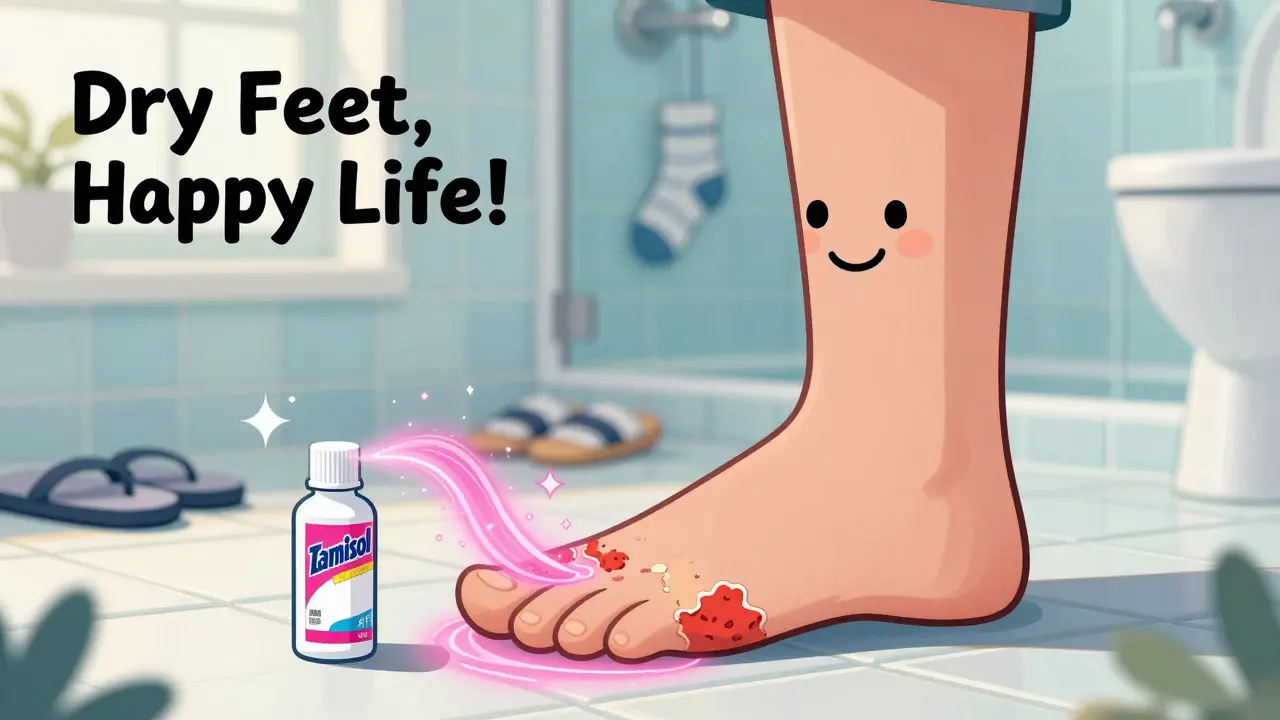
More than 1 in 5 people will deal with athlete’s foot at some point in their life. It’s not glamorous, but it’s common - and it doesn’t have to be a long struggle. Over-the-counter (OTC) antifungal treatments work well for most cases, but only if you use them right. Too many people buy the cream, apply it for a few days when the itching stops, and wonder why it comes back. That’s not how it works. Athlete’s foot is caused by fungi that live deep in the skin, and you need to kill them completely - not just calm the symptoms.
What Exactly Is Athlete’s Foot?
Athlete’s foot, or tinea pedis, is a fungal infection that loves warm, damp places. It usually shows up between the toes, on the soles, or around the edges of the foot. The fungus thrives in sweaty socks, closed shoes, locker rooms, and public showers. It’s not caused by poor hygiene alone - even clean feet can get infected if they’re trapped in moisture. You might see peeling skin, redness, itching, or even blisters. In worse cases, the whole sole turns dry, cracked, and scaly - this is called moccasin-type athlete’s foot. The most common culprit is Trichophyton rubrum, a fungus that’s stubborn and hard to fully eliminate without consistent treatment.
How OTC Antifungals Actually Work
Not all antifungal creams are the same. They fall into three main groups based on how they kill or stop the fungus:
- Fungicidal - kills the fungus outright. Terbinafine is the only OTC option in this category.
- Fungistatic - stops the fungus from growing, but doesn’t kill it. Clotrimazole, miconazole, and tolnaftate work this way.
- Barrier protectants - help keep moisture out. Undecylenic acid and talc-based powders fall here.
Terbinafine (sold as Lamisil AT) is the most effective. It kills the fungus within 24 to 48 hours. Studies show it cures 83% of cases, compared to 74% for clotrimazole and just 67% for tolnaftate. That’s why podiatrists and dermatologists recommend it as the first choice for uncomplicated cases.
Choosing the Right Product
Here’s a clear breakdown of what’s available and what works best:
| Active Ingredient | Brand Examples | Concentration | Application Frequency | Treatment Duration | Best For |
|---|---|---|---|---|---|
| Terbinafine hydrochloride | Lamisil AT | 1% | Once daily | 1-2 weeks | Most cases, especially mild to moderate |
| Clotrimazole | Lotrimin Ultra, Mycelex | 1% | Twice daily | 2-4 weeks | Mixed infections, yeast involvement |
| Miconazole nitrate | Dermazol, Micatin | 2% | Twice daily | 2-4 weeks | Itching and inflammation |
| Tolnaftate | Tinactin, Afta | 1% | Twice daily | 4 weeks | Interdigital infections, prevention |
| Undecylenic acid | Desenex, Foot Fresh | 25% (in powders) | Twice daily | 4+ weeks | Moisture control, prevention |
Price-wise, generics are just as effective. Tolnaftate (Tinactin) costs as little as $5.99, while Lamisil AT runs around $24.99. But the extra cost for terbinafine pays off - fewer applications, faster results, and less chance of recurrence. If you’re not sure which to pick, terbinafine is the safest bet for most people.
How to Apply It Right
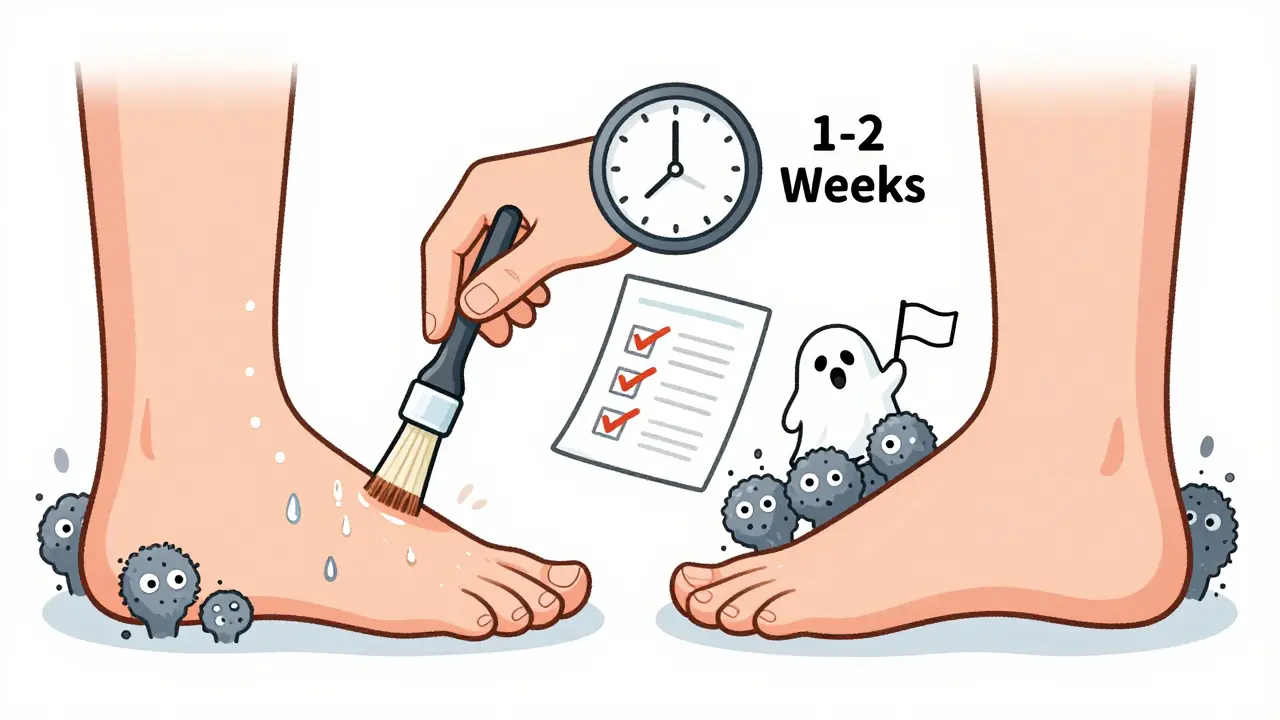
Applying the cream wrong is the #1 reason treatment fails. Here’s exactly what to do:
- Wash and dry thoroughly. Use soap and water, then dry your feet - especially between the toes. Use a hairdryer on cool setting if needed. Moisture is the enemy.
- Apply a thin layer. Don’t smear it on thick. A pea-sized amount covers both feet. Spread it over the infected area and extend it about one inch beyond the visible rash. Fungus hides just outside the obvious zone.
- Treat both feet. Even if only one foot looks infected, apply treatment to both. The fungus is likely already on the other foot.
- Keep going after symptoms fade. Stop too early, and it comes back. For terbinafine, keep applying for the full 1-2 weeks. For clotrimazole or tolnaftate, stick to the full 2-4 weeks.
- Don’t share towels. Use a separate towel for your feet and wash it daily.
Formulations Matter: Creams, Sprays, Powders
Not all infections are the same - and neither are the products.
- Creams work best for dry, scaly skin. They’re easy to spread and penetrate well. Best for moccasin-type infections.
- Sprays are great for hard-to-reach areas like between toes. They’re less messy and preferred by 78% of users in one survey for daily use.
- Powders are your best friend for prevention. They absorb sweat and keep feet dry. Use them daily in shoes and socks, even after the infection clears. Tolnaftate powder costs under $9 and cuts recurrence by over 60%.
- Gels and liquids are less common but useful for very thick skin or nail involvement.
For active people, combining a spray for convenience with a powder for daily moisture control is the smartest approach.
What to Avoid
These mistakes are more common than you think:
- Stopping early. 63% of treatment failures happen because people quit when itching stops - usually 4 days too soon.
- Applying too much. Thick layers don’t work better. They just make your skin sticky and increase the chance of irritation.
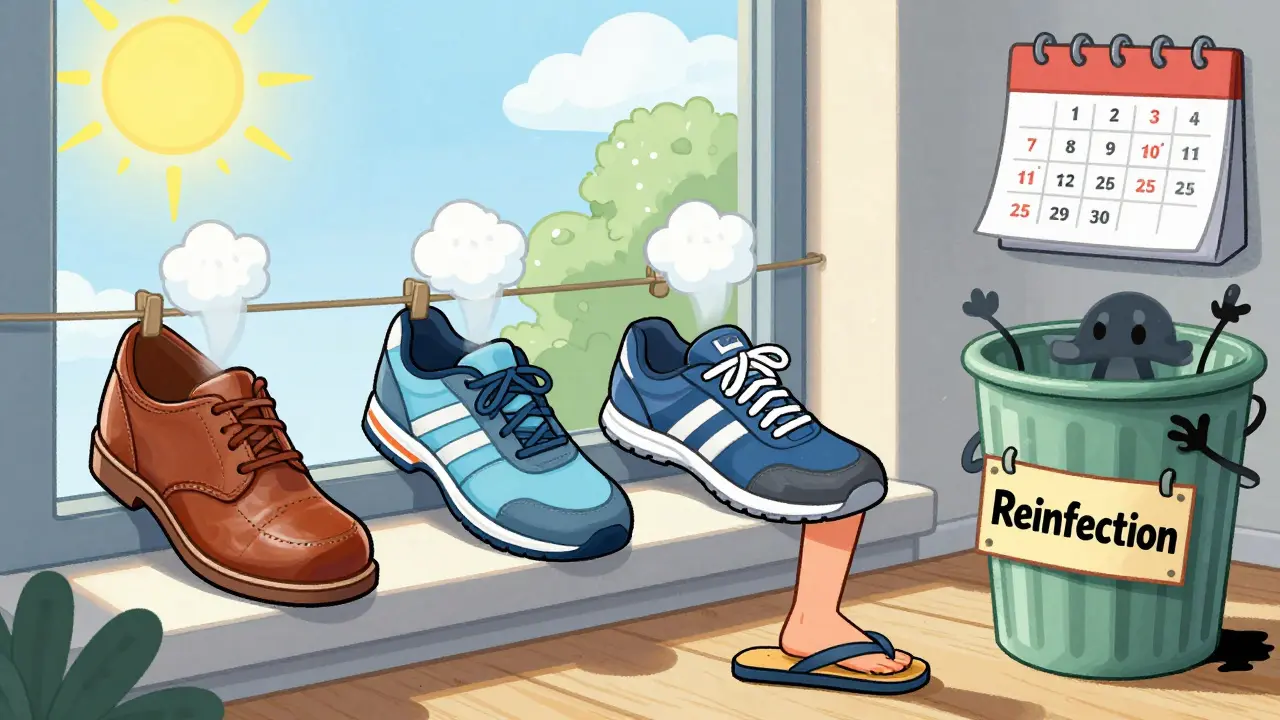
- Wearing the same socks or shoes. Fungus lives in fabric and leather. Change socks twice a day. Rotate shoes so each pair has 48 hours to dry out.
- Ignoring prevention. If you don’t keep your feet dry and clean after healing, you’ll get it again. In fact, 70% of recurring cases happen because people stopped using powder or wearing flip-flops in showers.
When to See a Doctor
OTC treatments work for 92% of mild to moderate cases. But if you see any of these, stop self-treating and see a provider:
- Pus, swelling, or increased pain - signs of a bacterial infection.
- The infection spreads beyond the foot to the toenails or hands.
- No improvement after 2 weeks of consistent use.
- You have diabetes, poor circulation, or a weakened immune system. Even a small fungal infection can turn dangerous.
Prescription options include oral terbinafine (250mg daily for 2 weeks), itraconazole, or topical ciclopirox. These are much stronger and used when OTC fails.
Prevention Is the Real Win
The best treatment is the one you never need. Here’s how to keep athlete’s foot away:
- Wear flip-flops in public showers, pools, and gyms.
- Change socks at least twice a day - cotton or moisture-wicking materials only.
- Use antifungal powder in shoes every day, even when you’re not infected.
- Let shoes air out for 24-48 hours between wears.
- Wash feet daily and dry completely, especially between the toes.
- Don’t share towels, shoes, or nail clippers.
Consistency matters more than the product you use. If you make these habits part of your routine, you’ll rarely - if ever - have to deal with athlete’s foot again.
Can I use OTC athlete’s foot treatments on my nails?
OTC creams and sprays are not strong enough to treat fungal nail infections. Nail fungus requires oral medication or prescription topical solutions because the fungus grows deep under the nail. If you suspect nail involvement, see a doctor.
Is terbinafine better than clotrimazole?
Yes, for most cases. Terbinafine kills the fungus, works faster, and requires only once-daily use. Clotrimazole is still effective but needs twice-daily application for longer. Terbinafine cures 83% of cases; clotrimazole cures about 74%. If you want the fastest, most reliable result, go with terbinafine.
Why does athlete’s foot keep coming back?
It usually comes back because the fungus wasn’t fully eliminated or because prevention habits stopped. Many people stop treatment early, reuse old socks or shoes, or skip antifungal powder. Fungus can survive in shoes for months. To break the cycle, treat both feet, replace old footwear, and keep using powder daily.
Can I use antifungal cream on a child?
Yes, most OTC antifungals are safe for children over 2 years old. Always check the label. Terbinafine and clotrimazole are commonly used in kids. Make sure to apply carefully and keep the area dry. If the infection doesn’t improve in 1-2 weeks, consult a pediatrician.
Do I need to throw away my shoes?
No, but you must disinfect them. Sprinkle antifungal powder inside each shoe daily. Let them air out for 48 hours between wears. You can also use UV shoe sanitizers or spray them with a 1:1 mix of vinegar and water. Discard shoes only if they’re old, damaged, or smell strongly of mildew despite cleaning.
Diane Croft
Consistency is everything with athlete’s foot. I used to quit treatment as soon as the itching stopped-classic mistake. Then I read the part about treating both feet even if only one looked bad, and it clicked. I stuck with terbinafine for the full two weeks, changed my socks twice a day, and started using tolnaftate powder in my shoes every morning. No recurrence in over a year. It’s not glamorous, but it works if you treat it like a marathon, not a sprint.
Chris Beckman
terbinafine is the only thing that works i tried like 3 diff creams and they all failed until i went with lamisil at
Callum Duffy
Thank you for this comprehensive guide. The breakdown of fungicidal versus fungistatic agents is particularly valuable. I’ve long suspected that inconsistent application was the root of recurring infections, and the emphasis on drying between the toes-especially with a hairdryer-is a detail many overlook. A well-researched, practical resource.
Deborah Dennis
Why is everyone so obsessed with terbinafine? It’s not magic. I used clotrimazole for six weeks, kept my feet bone-dry, wore sandals in the gym, and never looked back. You people act like one product is the holy grail. It’s hygiene, not chemistry, that cures this. And don’t get me started on the $25 price tag-$6 tinactin works just fine if you’re not lazy.
Betsy Silverman
I love how this post doesn’t just list products but explains why they work. I used to think athlete’s foot was just a ‘gross foot thing’-until I realized it’s a persistent fungal ecosystem. The part about treating both feet and using powder daily changed everything for me. I now use it like deodorant-no exceptions. No more itching. No more shame.
Jeff Card
I had this for years. Tried everything. Then I started using the spray in the morning and powder at night. Combined with washing my socks in hot water and rotating shoes, it’s been 18 months clean. The key isn’t the brand-it’s the ritual. Make it part of your morning and night routine, like brushing your teeth. It’s not hard. It’s just easy to skip.
Richard Elric5111
The fundamental error in contemporary self-treatment paradigms lies in the assumption that symptom suppression equates to eradication. Fungal mycelia are multicellular, hyphal networks capable of dormancy and reactivation. The clinical efficacy of terbinafine stems not from its potency alone, but from its ability to penetrate keratinized tissue and disrupt ergosterol biosynthesis at a molecular level. This is not merely topical therapy-it is targeted mycological intervention.
Jane Ryan Ryder
Of course the article pushes terbinafine-it’s owned by a big pharma company. Next they’ll tell you to buy UV shoe sanitizers for $120. Meanwhile, my grandpa cured his with vinegar and a sock he wore for a week. You don’t need science. You need common sense. And maybe not buying into every overpriced gimmick.
Diane Croft
Just wanted to say-I read Deborah’s comment and had to laugh. She’s right about the price, but she’s also missing the point. Terbinafine isn’t expensive because it’s branded-it’s expensive because it’s the only one that kills the fungus in days, not weeks. I saved money in the long run by not having to re-buy creams every few months. One tube, one cure. That’s the math.