
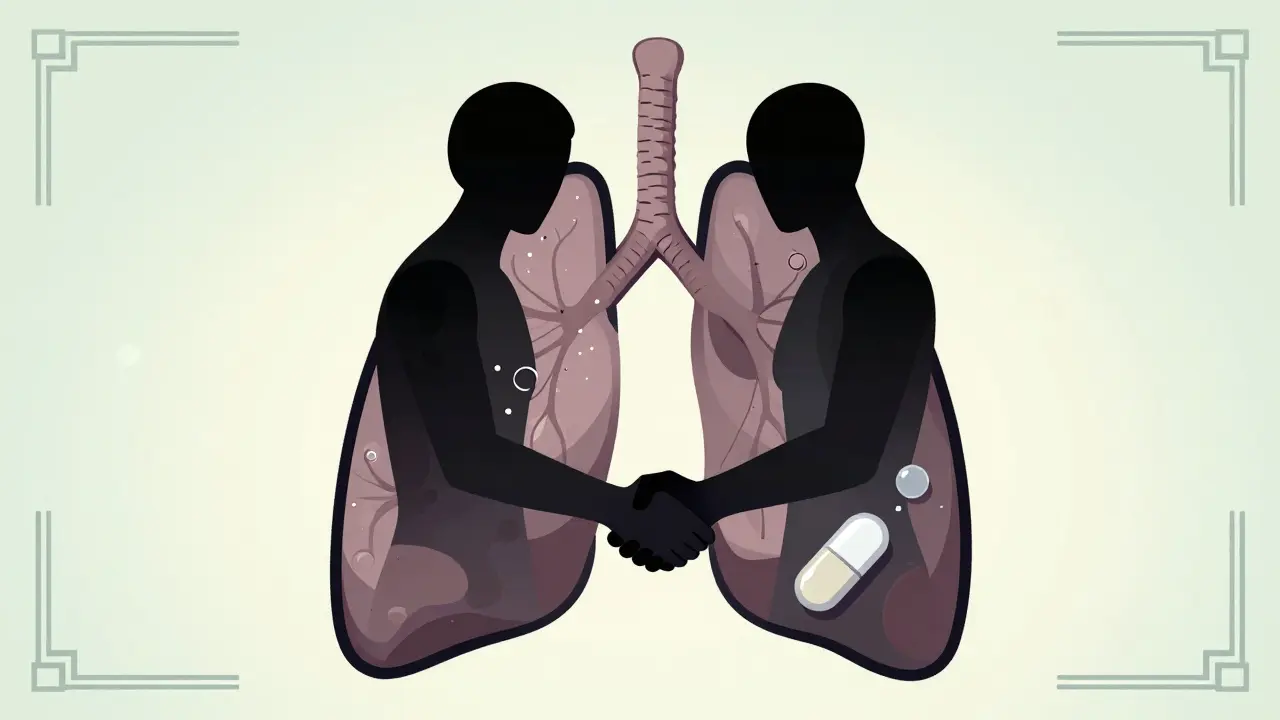
When opioids and benzodiazepines are taken together, they don’t just add up-they multiply. This isn’t a case of two medications working side by side. It’s a dangerous synergy that can shut down your breathing without warning. You might think if you’ve been on one of these drugs for years, you’re safe. You’re not. The body doesn’t build tolerance to the combined effect, and that’s what makes this interaction so deadly.
Why This Combination Stops Your Breathing
Opioids like oxycodone, fentanyl, or hydrocodone work by attaching to mu-opioid receptors in the brainstem. This area controls how hard and how often you breathe. When these receptors are overstimulated, breathing slows. Benzodiazepines like alprazolam, lorazepam, or diazepam do something different but just as dangerous: they boost the effect of GABA, a brain chemical that calms nerve activity. This includes the nerves that tell your lungs to expand and contract.
When you take both, they don’t just slow your breathing separately. They team up to crush your respiratory drive. A study cited in the Annals of Palliative Medicine found that 85% of people taking both drugs dropped their blood oxygen below 90%-a level that can cause brain damage. Only 45% of people taking opioids alone hit that danger zone. The combination doesn’t just make you sleepy. It makes you unable to wake up when your body needs oxygen the most.
Even worse, some opioids are broken down by the liver enzyme CYP3A4. Benzodiazepines like alprazolam block this enzyme. That means the opioid stays in your system longer, at higher levels, than expected. A dose that was once safe can suddenly become toxic. This isn’t rare-it’s predictable. And it’s why overdoses happen even when people take what they believe are correct doses.
The Numbers Don’t Lie
In 2020, nearly 16% of opioid overdose deaths in the U.S. also involved benzodiazepines. That’s not a coincidence. The CDC found that people using both drugs were 10 times more likely to die from an overdose than those using opioids alone. From 1999 to 2017, the death rate from this combination jumped from 0.6 per 100,000 people to 8.8 per 100,000. Even though rates have dipped slightly since, the risk remains dangerously high.
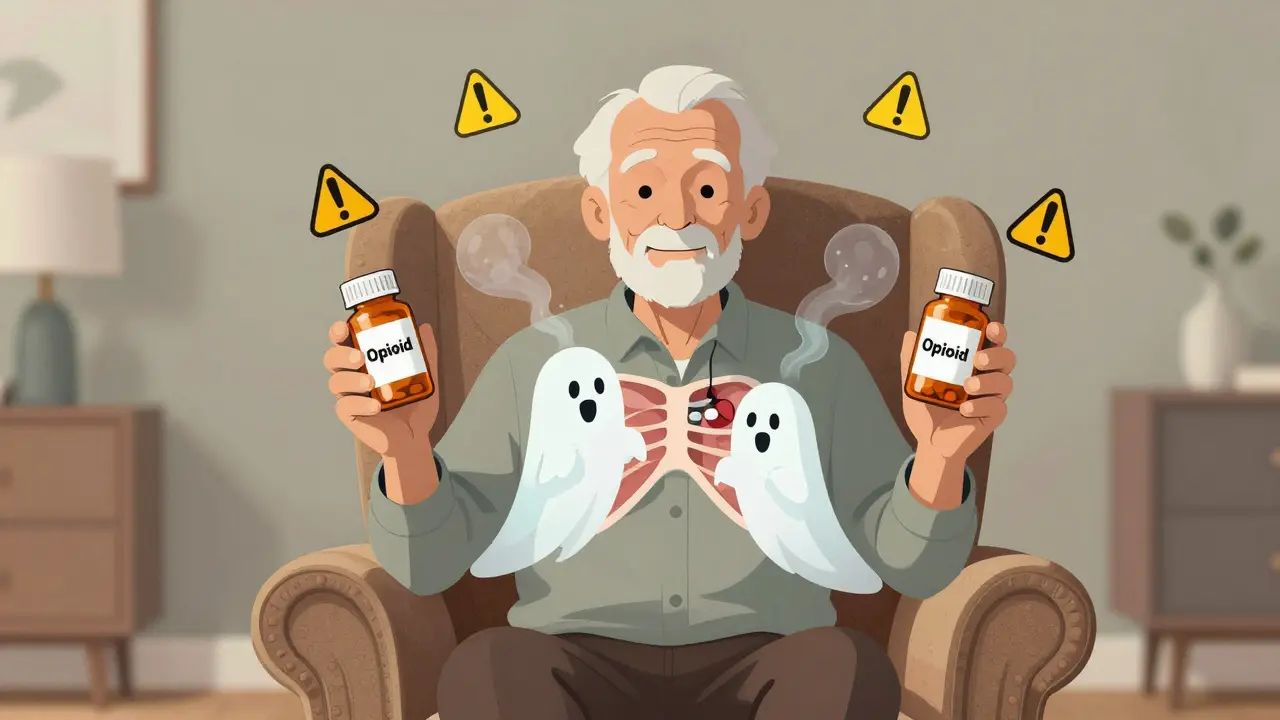
More than 220 Americans die every day from opioid overdoses. About 30% of those deaths include benzodiazepines. That’s one in three. And these aren’t just street drug users. A 2021 study in JAMA Network Open found that 15% of Medicare Part D patients on long-term opioid therapy were also prescribed benzodiazepines. Many of these were older adults, prescribed for anxiety or insomnia, without anyone connecting the dots.
The American Geriatrics Society lists this combination as “potentially inappropriate” for seniors. Why? Because older bodies process drugs slower. Their lungs are weaker. Their brains are more sensitive. A dose that seems small to a doctor can be fatal to a 70-year-old.
What Happens When You Take Both
The symptoms don’t always come fast. You might feel drowsy. Your speech might slur. You might feel dizzy. These are warning signs-not normal side effects. But many people dismiss them as “just being tired.” That’s when the real danger starts.
Respiratory depression doesn’t always look like gasping or choking. Often, it’s silent. Breathing becomes shallow. Each breath is too weak to refill the lungs. Oxygen drops. Carbon dioxide builds up. The brain doesn’t get the signal to wake up. You slip into unconsciousness. And if no one is there to notice, you stop breathing entirely.
Emergency rooms see this every day. Patients come in unresponsive, with pinpoint pupils, cold skin, and breathing so slow it’s hard to count. Some have been on these drugs for years. Some were just starting. The outcome is often the same: hospitalization, intubation, or death.
Doctors Know This Is Dangerous
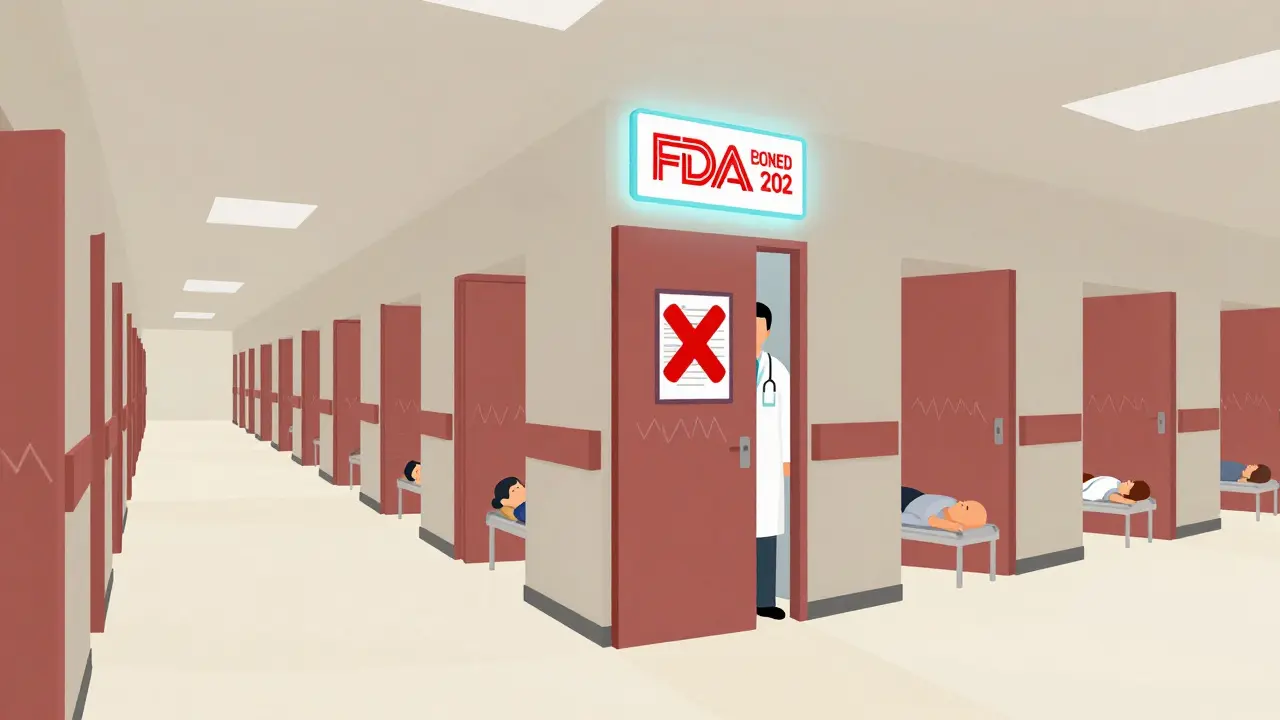
The FDA didn’t wait for thousands of deaths to act. In 2016, they issued their first warning. By 2019, they strengthened it. Now, all opioid and benzodiazepine labels carry a Boxed Warning-the strongest possible alert. It says clearly: “Combining these drugs can cause extreme sleepiness, slowed or difficult breathing, coma, or death.”
The FDA says this combination should only be used if no other option exists. Even then, doctors are told to start with lower doses. To monitor closely. To avoid prescribing opioid cough medicines to anyone on benzodiazepines. To warn patients and caregivers about the risks.
But warnings aren’t always followed. A 2022 study in the Journal of the American Medical Informatics Association found that when hospitals added electronic alerts to flag dangerous prescriptions, inappropriate co-prescribing dropped by 27%. That means doctors were prescribing this combo without realizing the danger. The system failed them. And patients paid the price.
What to Do If You’re on Both
If you’re currently taking opioids and benzodiazepines together, don’t stop suddenly. Withdrawal from either can be life-threatening. Opioid withdrawal causes intense flu-like symptoms. Benzodiazepine withdrawal can trigger seizures. Both require careful, supervised tapering.
Call your doctor. Ask: “Is this combination absolutely necessary?” If the answer is yes, ask: “What’s the lowest possible dose I can take?” Ask if there’s a safer alternative for your pain or anxiety. Maybe a non-opioid painkiller. Maybe cognitive behavioral therapy for anxiety. Maybe a different sleep aid that doesn’t depress breathing.
Make sure your family or roommate knows the signs of overdose: unresponsiveness, slow breathing, blue lips or fingernails. Teach them how to use naloxone if it’s available. Keep it in the house. Naloxone can reverse an opioid overdose-but it won’t help with benzodiazepine effects. It’s a partial safety net, not a full solution.
The Bigger Picture
This isn’t just about individual choices. It’s about how prescriptions are written, how doctors are trained, and how drug companies market these medications. Benzodiazepines are often prescribed for short-term anxiety, but many patients end up on them for years. Opioids are given for pain, but long-term use changes the brain’s pain system, leading to dependence.
Research is moving forward. The CDC awarded a $1.2 million grant in 2022 to UC Davis to study why this combination is so deadly and how to prevent it. Electronic health records are getting smarter. Some systems now block co-prescriptions unless a doctor overrides the alert with a reason.
But technology alone won’t fix this. Education will. Awareness will. Patients need to know: opioids and benzodiazepines together are not just risky-they’re deadly. And no one should be taking them together unless every other option has been tried-and even then, only under strict supervision.
What’s Safer?
For pain, non-opioid options like acetaminophen, NSAIDs, physical therapy, or nerve blocks often work just as well-with far less risk. For anxiety or insomnia, therapy, mindfulness, or non-benzodiazepine sleep aids like trazodone or melatonin can be effective. Some newer pain medications are being developed that don’t affect breathing at all. They’re not widely available yet, but they’re coming.
Until then, the safest choice is simple: don’t mix them. If you’re on one, ask before adding the other. If you’re already on both, talk to your doctor about getting off one-or both-safely.
Dina Santorelli
My grandma was on oxycodone for her arthritis and lorazepam for 'nerves.' Doctor never warned her. She stopped breathing one night and we found her blue. Naloxone didn't help. She was 72. No one ever told us about the combo. Now I scream at every pharmacist I see.
Stop prescribing this like it's coffee and sugar.
Danielle Vila
THIS IS A PHARMA SCAM. They know this kills people. That's why they push it. Big Pharma doesn't want you cured-they want you hooked on two drugs so you keep paying. The FDA? Bought and paid for. The CDC? In their pocket. They even made the warning labels so tiny you need a magnifying glass. And don't get me started on how they silence whistleblowers. I've seen the documents. It's all calculated. You think this is an accident? Nah. It's profit. Pure and simple.
They're selling death in pill form and calling it 'care.'
Thorben Westerhuys
I’ve been on both for 8 years… and I’m still here. But I don’t sleep. I don’t drive. I don’t trust anyone who says it’s 'fine.' I’ve had three near-misses. One time, I woke up gasping because my breathing had stopped. I didn’t even know. That’s the worst part. You don’t feel it coming. And your body? It doesn’t care how long you’ve been doing it. It just… stops. And no one warns you about that. Not really.
Laissa Peixoto
It’s not just about physiology-it’s about how we treat suffering. We’ve turned pain and anxiety into problems to be chemically erased instead of understood. We give people two drugs that silence their bodies instead of helping them find their voice.
The real tragedy isn’t the interaction-it’s that we’ve built a system where the only 'solution' is chemical suppression. We don’t ask: Why are you in pain? Why are you anxious? We just hand out the pills and call it medicine.
Maybe the real overdose is our collective refusal to sit with discomfort.
And yet… I get it. Sometimes, you just need to breathe.
Lana Younis
lol so many people on here acting like this is some new discovery. been saying this since 2017 when my aunt OD'd on xanax + vicodin. her dr prescribed both like it was a combo meal. 'oh you got anxiety? here's benzo. oh you got back pain? here's oxy.' no followup. no education. just prescriptions in a box.
my mom's 78 and still on both. i keep naloxone in her purse. like, next to her dentures. she thinks it's a vape pen. i don't have the energy to explain. just pray she doesn't fall asleep on the couch again.
tl;dr: doctors are lazy. families are scared. patients are confused. and we're all just waiting for the next quiet death.
Samantha Beye
If you’re on both, please talk to someone. Even if it’s just a nurse. Even if you’re scared. You’re not alone. There are safer ways. Therapy doesn’t fix everything, but it helps more than we admit. And tapering? It’s slow, but it’s possible. I helped two people get off benzos last year. One cried the whole time. The other thanked me with a handwritten note.
You don’t have to do this alone. Just ask.
Rene Krikhaar
I work in the ER and see this every weekend. Two pills. One breath. That’s all it takes. People think they’re being careful. They take their meds on time. They don’t drink. They don’t do coke. But they don’t know that the combo is the silent killer. No screaming. No struggle. Just… stillness. I’ve held hands while they flatlined. It’s not dramatic. It’s quiet. And it’s happening too often. We need better training. We need better systems. But mostly we need people to stop accepting this as normal.
Jennifer Aronson
The FDA's boxed warning is clear. The data is unequivocal. Yet institutional inertia persists. This is not an isolated clinical oversight-it is a systemic failure in risk communication and pharmacovigilance. Prescribers require mandatory continuing education on polypharmacology. Regulatory oversight must be enforced, not merely recommended.
Bella Cullen
i mean... i get it but like... people just need to stop being so dramatic? i know someone on both and they're fine. maybe it's just me but i think the fear is overblown. like, not everything is a death sentence.
Cullen Bausman
This country is weak. We let big pharma control our medicine. We let doctors prescribe without thinking. We let people take pills like candy. This isn't about science. It's about losing our backbone. In my day, you toughed out pain. You dealt with anxiety by working harder. Not popping pills and hoping you don't die in your sleep. This is what happens when you stop teaching discipline. You get corpses.
Cole Streeper
I’ve got proof the government is using this to cull the elderly. They don’t want to pay for Social Security. They don’t want to fund long-term care. So they quietly push benzos + opioids on seniors. Then when they die? 'Oh, natural causes.' No autopsy. No questions. Just a death certificate and a quiet funeral. I’ve seen the reports. They’re redacted. They’re buried. But I’ve got copies. And I’m not letting this slide.