
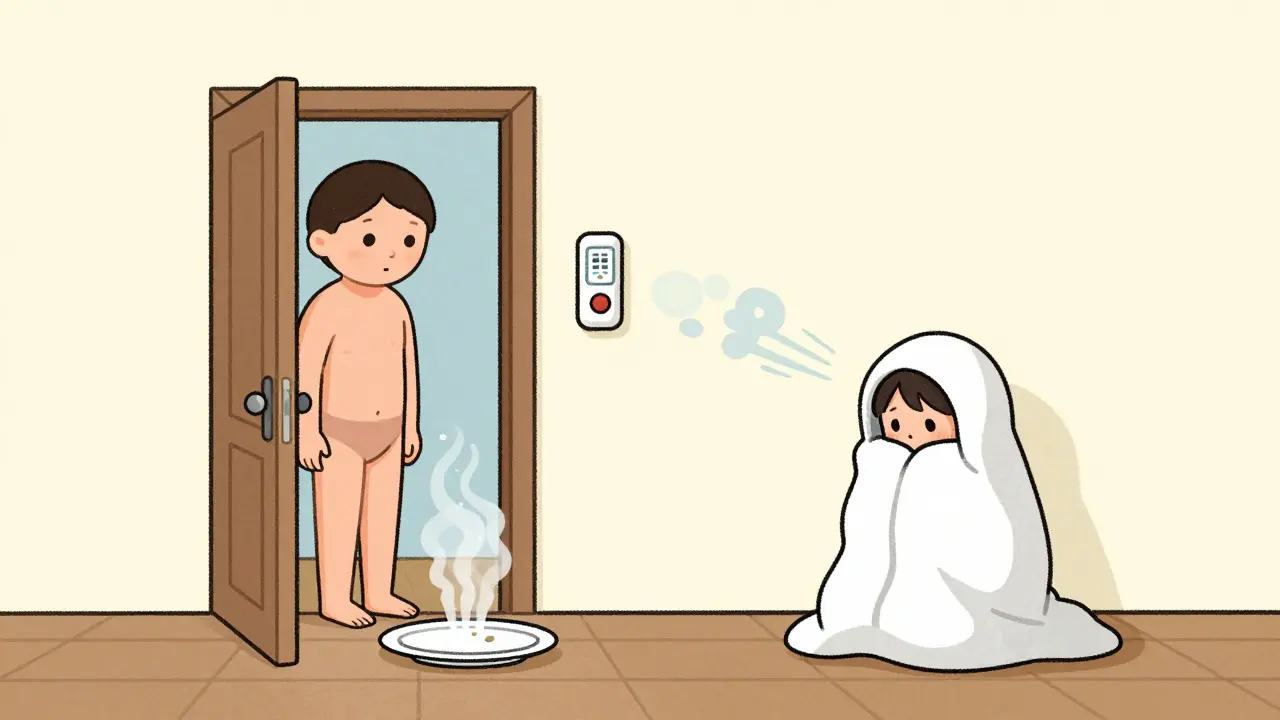
After losing weight, many people hit a wall. No matter how hard they try, the scale won’t budge. They eat less than ever, work out more, and still gain back what they lost. This isn’t just laziness or lack of willpower. It’s biology. And it’s called adaptive thermogenesis.
What Is Adaptive Thermogenesis?
Adaptive thermogenesis is your body’s way of fighting weight loss. When you cut calories, your metabolism doesn’t just slow down because you’re lighter. It drops even further-beyond what you’d expect based on your new body size. This isn’t a glitch. It’s a survival mechanism. Think of it like a thermostat. When you lose weight, your body senses a drop in energy supply and turns down the heat to conserve fuel. A 2016 study in the PMC found this happens even when you lose fat and muscle in predictable amounts. The extra drop in energy burn? That’s adaptive thermogenesis. It’s not rare. Research shows it occurs in nearly everyone who loses weight, whether they’re obese or lean. One landmark study on contestants from The Biggest Loser showed their metabolisms stayed suppressed six years after the show ended. Even though they lost over 100 pounds, their bodies were still burning hundreds of fewer calories per day than expected. That’s why most people regain the weight.How Much Does It Really Slow You Down?
The numbers are startling. A 2020 study found that after just one week of dieting, people burned an average of 178 fewer calories per day than predicted by their new body composition. That’s like skipping a daily 30-minute walk-without even realizing it. And it adds up fast. A drop of 100 calories per day translates to over 8,000 fewer calories burned in six weeks. That’s enough to stop weight loss dead in its tracks-or even cause regain. This isn’t just about resting metabolism. It affects everything: how many calories you burn at rest, during movement, and even while digesting food. Hormones like leptin, insulin, and thyroid hormones shift. Your nervous system quiets down. Brown fat, which helps burn calories for heat, becomes less active. Some studies suggest losing just 25 grams of active brown fat could account for the entire metabolic drop after weight loss.Why Some People Are More Affected Than Others
Not everyone experiences adaptive thermogenesis the same way. The 2020 study showed a range of -379 to +76 kcal/day. Some people’s metabolisms barely changed. Others plummeted. Genetics play a role. So does how you lost the weight. People who lose weight through bariatric surgery like gastric bypass tend to have less metabolic adaptation than those who diet. That’s partly because surgery changes gut hormones in ways that help maintain energy expenditure. But the biggest factor? Body composition. Losing muscle makes things worse. Muscle burns more calories at rest than fat. If you diet without strength training, you lose muscle-and your metabolism takes a bigger hit. Studies show preserving muscle during weight loss can reduce adaptive thermogenesis by up to 15%. That’s why two people losing the same amount of weight can have totally different outcomes: one keeps the weight off, the other gains it all back.
What Is Reverse Dieting?
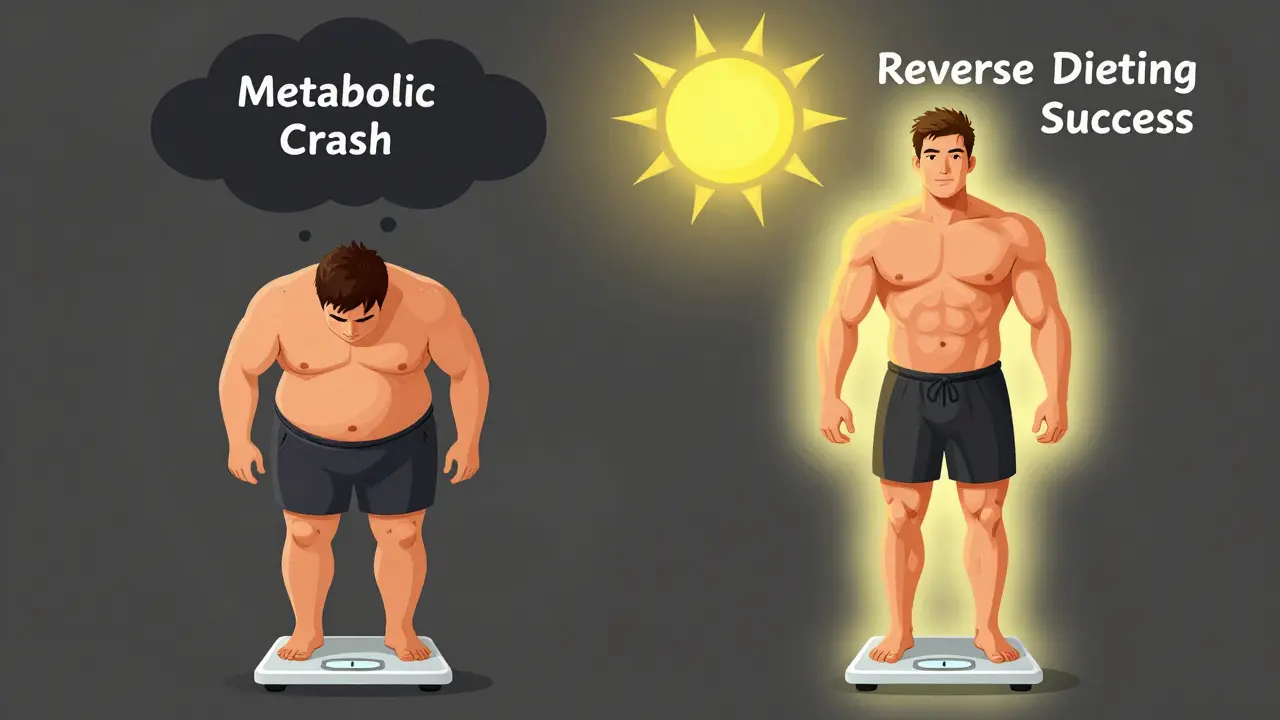
Reverse dieting is the strategy many people use to fight back. Instead of staying on a low-calorie diet forever, you slowly add calories back in-usually 50 to 100 per week-to help your metabolism recover. The idea is simple: if your body thinks it’s starving, give it more fuel. Slowly. This tells your body it’s safe to turn the thermostat back up. It’s not magic. You won’t instantly regain your old metabolism. But it can help. A 2022 survey of 1,200 MyFitnessPal users found that 42% tried reverse dieting. Of those, 73% reported better energy. 65% said they felt less hungry. And 31% successfully maintained their weight without regain. The key is patience. Most people need 3 to 6 months to fully reverse the drop. Jumping up calories too fast-say, adding 200 or 300 per week-often leads to weight gain. That’s because your body still thinks it’s in survival mode. It stores the extra energy as fat.How to Do Reverse Dieting Right
Here’s what works, based on real research and experience:- Start slow. Add 50-100 calories per week. If you’re a woman who was eating 1,400 calories, go to 1,450. Wait 1-2 weeks. If your weight stays stable, add another 50.
- Focus on protein. Aim for 1.6 to 2.2 grams of protein per kilogram of body weight. This protects muscle and keeps you full. For a 70kg person, that’s 112-154 grams of protein daily.
- Strength train. Do at least two full-body resistance sessions per week. Lift heavy enough that you can only do 6-10 reps per set. This signals your body to hold onto muscle.
- Track more than the scale. Pay attention to energy levels, sleep, hunger, and even your morning temperature. A drop of 0.5-1°C in your morning temperature can signal metabolic suppression. A return to normal is a good sign.
- Don’t rush. Reverse dieting isn’t a 4-week fix. It’s a 6-month reset. Rushing it defeats the purpose.
What Doesn’t Work
Many commercial programs sell reverse dieting as a quick fix. They promise you’ll “reset your metabolism” in 30 days. That’s misleading. Here’s what fails:- Adding too many calories too fast.
- Skipping protein or strength training.
- Expecting your metabolism to bounce back overnight.
- Believing reverse dieting will undo years of yo-yo dieting in a few weeks.
What Science Says About the Future
Researchers aren’t giving up. New studies are exploring ways to fight adaptive thermogenesis beyond diet and exercise. A phase 2 clinical trial is testing a drug that activates brown fat, showing a 42% reduction in metabolic adaptation. Another study is looking at whether high-protein diets during reverse dieting can preserve more metabolism-early results show an 18% advantage. Even gut health may play a role. In January 2024, scientists linked specific gut bacteria profiles to the severity of metabolic adaptation. That could lead to probiotic therapies in the future. But right now, the best tools are still simple: protein, lifting, patience, and time.Why This Matters Beyond Weight Loss
Adaptive thermogenesis isn’t just about the scale. It’s about energy. Mood. Sleep. Hunger. Many people who struggle with weight regain also feel tired, irritable, and obsessed with food. That’s not just psychological. It’s metabolic. Reverse dieting isn’t about gaining weight. It’s about restoring balance. It’s about letting your body trust food again. About feeling strong, not starved. The most successful people don’t just reverse their diet. They reverse their relationship with food. They stop viewing calories as enemies. They start seeing them as fuel.Final Thoughts
Your metabolism isn’t broken. It’s trying to keep you alive. Adaptive thermogenesis is real, powerful, and stubborn. But it’s not permanent. If you’ve lost weight and hit a plateau, don’t blame yourself. Don’t cut more. Don’t run harder. Start adding calories-slowly, wisely, and with strength training. Give your body time to recover. It won’t be fast. But it will be lasting.Is adaptive thermogenesis the same as a slow metabolism?
No. A slow metabolism from birth or due to conditions like hypothyroidism is different. Adaptive thermogenesis is a temporary, diet-induced drop in energy expenditure that happens after weight loss. It’s not your baseline-it’s your body’s reaction to calorie restriction.
Can you reverse adaptive thermogenesis completely?
Research suggests most of it can be reversed, but not always fully. Some studies show a small lingering effect even after long-term reverse dieting. The goal isn’t perfection-it’s enough recovery to maintain your weight without constant hunger or fatigue.
Does reverse dieting work for everyone?
It works best for people who lost weight through dieting, not surgery. It’s most effective when combined with strength training and high protein intake. People with a history of yo-yo dieting may need longer to see results. Success depends on consistency, not speed.
How long does reverse dieting take?
Typically 3 to 6 months. If you lost 50 pounds, you might need 5-6 months to add back 200-300 calories per week. Rushing it increases the risk of regain. Think of it like rehab for your metabolism.
Do I need to keep reverse dieting forever?
No. Once you reach your maintenance calories and your weight stabilizes for 4-6 weeks, you can stop adding calories. But you should maintain protein intake and strength training long-term to keep your metabolism stable. Maintenance isn’t a phase-it’s a lifestyle.
Melba Miller
I’ve been there. Lost 60 pounds, then my body turned into a furnace that only burns toast. I ate 1,200 calories a day and STILL gained back 15. It’s not me. It’s my damn biology. I started reverse dieting last year. Added 50 calories a week. No magic. Just protein, lifting, and patience. Now I eat 1,900 and don’t feel like a starving ghost. My energy? Back. My mood? Better. My scale? Stable. Stop blaming yourself. Your body isn’t broken. It’s just scared.
Katy Shamitz
Oh honey. You think this is hard? Try being a woman over 40 who’s been dieting since 2008. I’ve tried keto, intermittent fasting, veganism, and even that ‘eat one meal a day’ nonsense. Nothing works long-term. Reverse dieting? It’s the only thing that didn’t make me cry. I added 75 calories a week. Took 8 months. But now? I can eat a damn bagel without panic. And I lift. Every. Single. Week. If you’re not lifting, you’re just delaying the inevitable.
Neeti Rustagi
The scientific foundation presented here is commendable. Adaptive thermogenesis is a well-documented physiological phenomenon, and the proposed reverse dieting protocol aligns with current metabolic research. However, one must consider cultural and socioeconomic variables in dietary adherence. In many developing economies, access to high-quality protein and resistance training equipment remains limited. A universal solution must account for these disparities.
Dan Mayer
I’ve been doing this for 5 years and i can tell you the real secret is not protein or lifting its the damn thyroid. Everyone skips the thyroid. You think your metabolism is slow? Get your TSH, FT3, FT4 checked. I was at 4.8 TSH and my body was in hibernation. Once I got on low dose synthroid? Boom. 200 extra calories a day and no weight gain. Stop talking about brown fat. Talk about the gland that controls it.
Janelle Pearl
This post made me cry. Not because I’m sad. Because I finally feel seen. After losing 80 pounds, I was so tired. I’d nap after walking to the fridge. I thought I was lazy. Turns out, my body was begging for fuel. I started reverse dieting. Added 50 cals. Waited. Added more. Took 7 months. I didn’t get ‘skinny’ again. But I got myself back. I sleep. I laugh. I eat dessert without guilt. This isn’t about weight. It’s about coming home to your body.
Ray Foret Jr.
Bro this is legit 😍 I lost 40 lbs and was stuck at 1400 cals for 2 years. Started reverse dieting 6 months ago. Added 75 cals/week. Now I eat 1900 and I’m not gaining. I lift 3x a week. Protein is king. My energy? Night and day. I even started hiking again. Don’t overthink it. Just add calories slowly. Your body will thank you. 🙌
Samantha Fierro
The methodology outlined in this article is both clinically sound and practically applicable. I have observed in my practice that individuals who implement reverse dieting with structured resistance training and adequate protein intake demonstrate significantly improved metabolic resilience. The 3-6 month timeline is not arbitrary-it reflects the time required for hormonal recalibration and neural adaptation. Rushing the process undermines the very mechanism one seeks to restore.
Robert Bliss
I used to think metabolism was just about how much you eat. Then I lost weight and realized my body was on strike. Reverse dieting didn’t fix me overnight. But it helped me stop hating food. I started eating more. Not junk. Just… more. Protein. Eggs. Chicken. Lifted. Didn’t panic when the scale didn’t move. Now I eat like a normal person. And I don’t think about food 24/7. That’s the win.
Peter Kovac
This entire narrative is dangerously oversimplified. Adaptive thermogenesis is not a binary phenomenon. The 2020 study cited measured group averages-individual variance is extreme. Furthermore, reverse dieting lacks rigorous longitudinal validation. The MyFitnessPal survey is self-reported, non-peer-reviewed data. You’re promoting a lifestyle intervention with the credibility of a TikTok trend. Real science requires RCTs, not anecdotal testimonials.
APRIL HARRINGTON
I did reverse dieting for 10 months and I swear I gained 10 pounds and then lost 20 and then cried in the shower and then ate a whole pizza and then my boyfriend left me and then I started lifting again and now I’m back to 140 and I’m so happy and I just want to hug everyone and why is everyone so mean to each other on here
Leon Hallal
I’ve been doing this since 2016. I lost 120 pounds. Reverse dieting? I tried it. Didn’t work. I gained back 40. Because I didn’t stop eating junk. You can’t reverse a broken metabolism with chicken and squats. Your body remembers the famine. It’s not about calories. It’s about trauma. You need therapy. Not protein.
Judith Manzano
I’m curious-has anyone tracked their resting energy expenditure before and after reverse dieting with a DEXA or metabolic cart? I’ve read about people feeling better but I wonder if the actual metabolic rate really recovers or if it’s just hormonal relief and improved sleep. Would love to see real data.
rafeq khlo
You think reverse dieting is the answer? Wake up. This is all a corporate scam. Big Pharma and Big Fitness want you to believe you can fix your metabolism with protein shakes and gym memberships. The truth? Your body was designed to store fat. Dieting makes you fatter long term. Stop fighting nature. Embrace the fat. It’s your armor.
Morgan Dodgen
Let’s be real. Adaptive thermogenesis is just the tip of the iceberg. The real issue is mitochondrial dysfunction induced by chronic caloric restriction and circadian misalignment. The gut microbiome shifts toward Firmicutes dominance, reducing SCFA production, which downregulates UCP1 expression in brown adipose tissue. Add in cortisol dysregulation from sleep deprivation and insulin resistance from fructose overload-this isn’t a diet problem. It’s a systemic bioenergetic collapse. Reverse dieting? That’s just a placebo with extra steps. You need a 12-week phase-reset protocol with time-restricted feeding, cold exposure, and NAD+ boosters. Or you’re just wasting your time.