
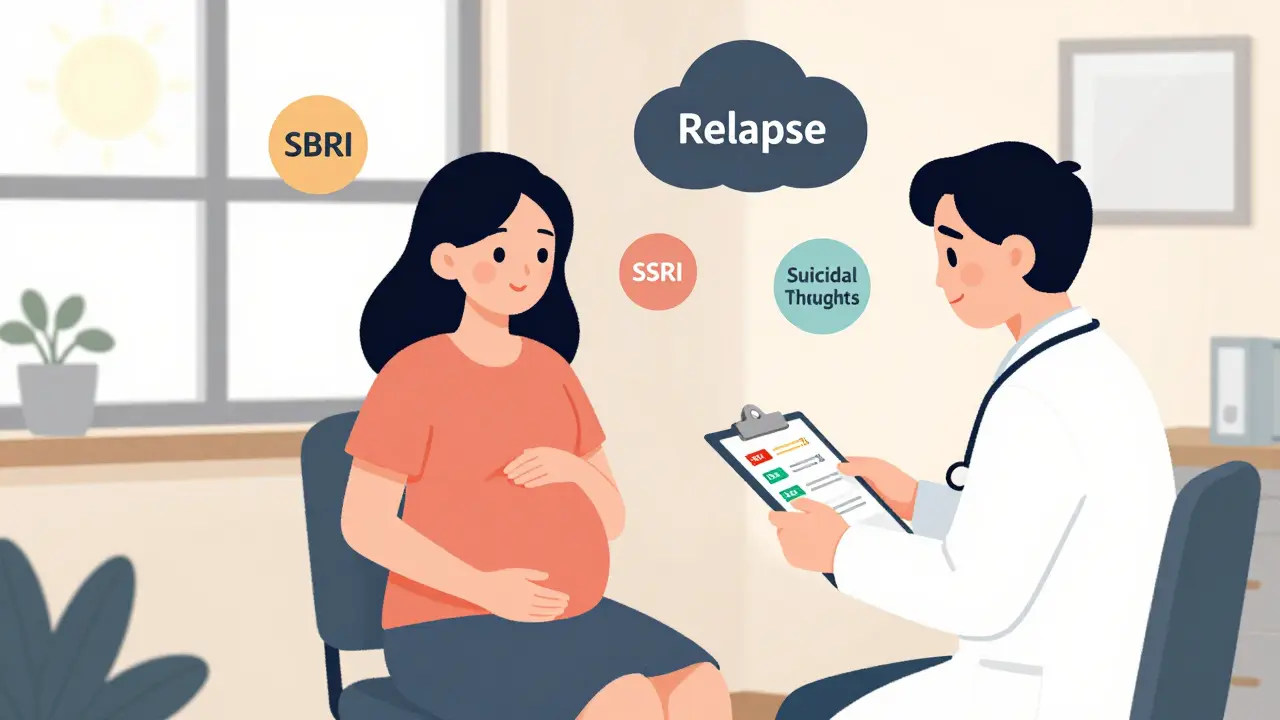
When you’re pregnant and managing a mental health condition, the question isn’t just whether to take medication-it’s how to make the safest choice for you and your baby. Too often, women are left to decide alone, scared by vague warnings or pressured to stop meds out of fear. But the truth is simpler: there’s no risk-free option. The real danger isn’t always the medicine-it’s the untreated illness.
Why Shared Decision-Making Matters
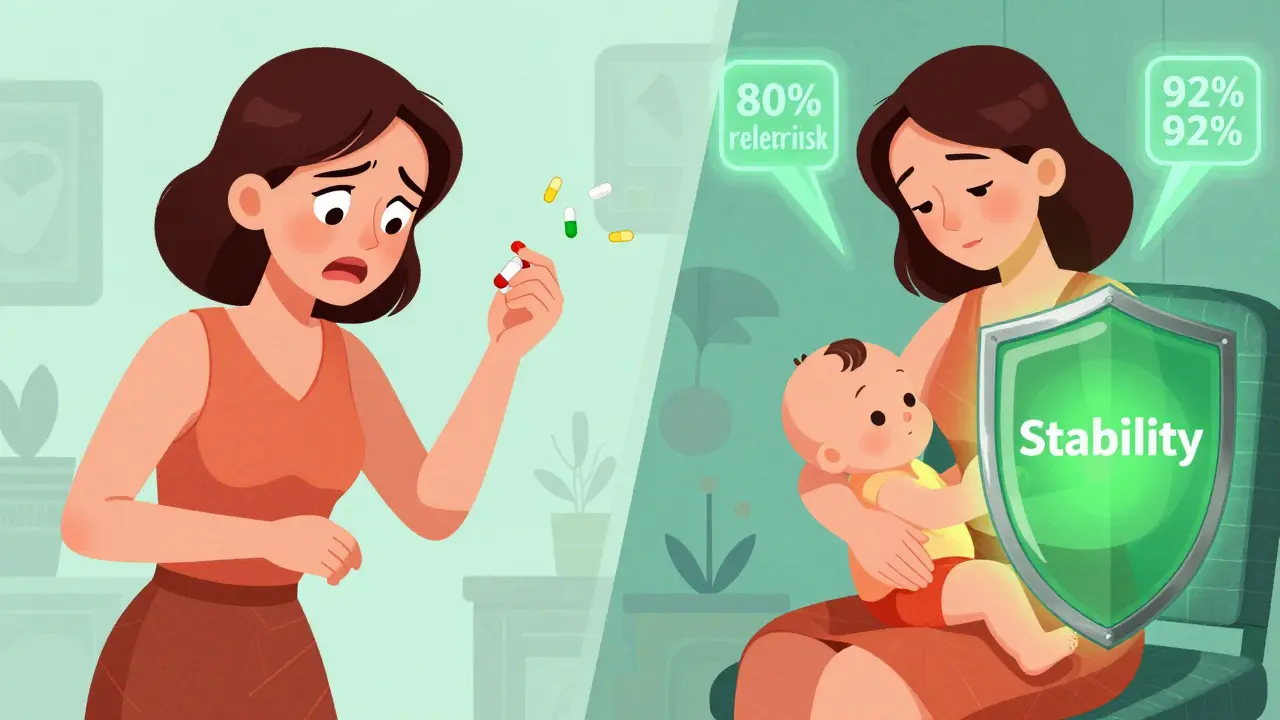
Shared decision-making isn’t just a buzzword. It’s a structured conversation between you and your provider, where both sides bring something to the table. You bring your values, fears, life context, and goals. Your provider brings the data: what we know about risks, what we don’t know, and what happens when treatment stops.Here’s what the data shows: if you stop your antidepressant during pregnancy, your chance of relapse jumps to 80%-especially if you’ve had prior episodes. That’s not just sadness. That’s hospitalization, suicidal thoughts, difficulty bonding with your baby, and even preterm birth. On the flip side, some medications carry small but real risks. The goal isn’t to avoid all risk-it’s to weigh them side by side.
The American College of Obstetricians and Gynecologists (ACOG) and the British Association for Psychopharmacology both agree: no psychiatric medication is absolutely off-limits during pregnancy. The old letter grades (A, B, C, D, X) are gone. Instead, doctors now use detailed, up-to-date risk summaries based on real-world data from registries tracking over 15,000 pregnancies.
What Medications Are Considered Safer?
Not all meds are created equal. For depression and anxiety, SSRIs like sertraline, citalopram, escitalopram, and fluoxetine are the most studied and generally recommended first-line options. They’ve been used by thousands of pregnant people over decades. Studies show no consistent link to major birth defects-except for one: paroxetine (Paxil).
Paroxetine carries a slightly higher risk of heart defects. If you’re on it, switching before pregnancy or early in the first trimester is often advised. The baseline risk of a heart defect is about 8 in 1,000 births. With paroxetine, it rises to about 10 in 1,000. That’s a small increase-but meaningful enough that most providers avoid it unless there’s no alternative.
For bipolar disorder, lamotrigine is the go-to. It doesn’t raise the risk of major birth defects and works well for mood stabilization. Lithium is still used, but it needs close monitoring because your body changes during pregnancy-your kidneys process it faster, so doses often need adjustment every few weeks.
What’s strongly discouraged? Valproic acid (Depakote). It raises the risk of neural tube defects from 0.1% to 1-2%. That’s a 10- to 20-fold increase. It’s also linked to higher rates of autism and lower IQ scores in children. If you’re on this, switching before conception is critical.
Other options like bupropion (Wellbutrin) and tricyclics (nortriptyline, amitriptyline) are less studied but still used when SSRIs don’t work. Bupropion has a small link to miscarriage and heart issues. Tricyclics are considered second- or third-line-used when other options fail.
Antipsychotics: What’s Known and What’s Not
For psychosis or severe bipolar disorder, typical antipsychotics like haloperidol and chlorpromazine have been around longer and have more safety data. They don’t appear to cause major birth defects. Atypical antipsychotics-like risperidone, olanzapine, and quetiapine-are used more often now, but long-term child outcomes are still unclear. That’s why most guidelines say: use them only if needed, and avoid them if you can manage with safer alternatives.
Newer drugs like brexpiprazole have almost no data in pregnancy. That’s why the National Pregnancy Registry is adding them to their tracking list in 2024. Until then, use is cautious.
The Hidden Risk: Untreated Illness
Many women stop meds because they’re told, “It’s better for the baby.” But what if the baby’s risk goes up because Mom is severely depressed or manic?
Untreated depression during pregnancy increases preterm birth risk by 30-50%. It raises the chance of low birth weight. It makes it harder to attend prenatal visits, eat well, or avoid alcohol and smoking. And yes-it increases maternal suicide risk by 20%.
One study found that women who stopped their meds without talking to a provider were 3.5 times more likely to end up in the ER for psychiatric crisis. Another found that 42% of women quit their meds on their own because they were scared of birth defects. Most didn’t realize how much worse their symptoms got afterward.
Dr. Lee Cohen from Massachusetts General Hospital puts it plainly: “The risk of stopping treatment often outweighs the risk of taking it.”
How Shared Decision-Making Actually Works
This isn’t a one-time chat. It’s a process. Here’s what it looks like in practice:
- Assess your personal risk-How many past episodes have you had? How severe were they? Did you need hospitalization? Tools like the Edinburgh Postnatal Depression Scale help measure current symptoms.
- Present clear numbers-Instead of saying “some risk,” providers should say: “Paroxetine raises the chance of heart defects from 8 in 1,000 to 10 in 1,000.” That’s a 2-in-1,000 increase. Is that worth avoiding if it means staying stable?
- Discuss alternatives-Can therapy, sleep, exercise, or social support help? Maybe. But for moderate to severe illness, meds are often necessary.
- Plan for the worst-What if your mood crashes at 28 weeks? Do you have a plan? A contact number? A backup provider?
ACOG now recommends using a Mental Health Medication Decision Aid-a tool that gives real-time, evidence-based risk percentages for 24 common medications. It’s updated quarterly using data from the National Pregnancy Registry. This isn’t theory. It’s real data from real women.
What You Should Ask Your Provider
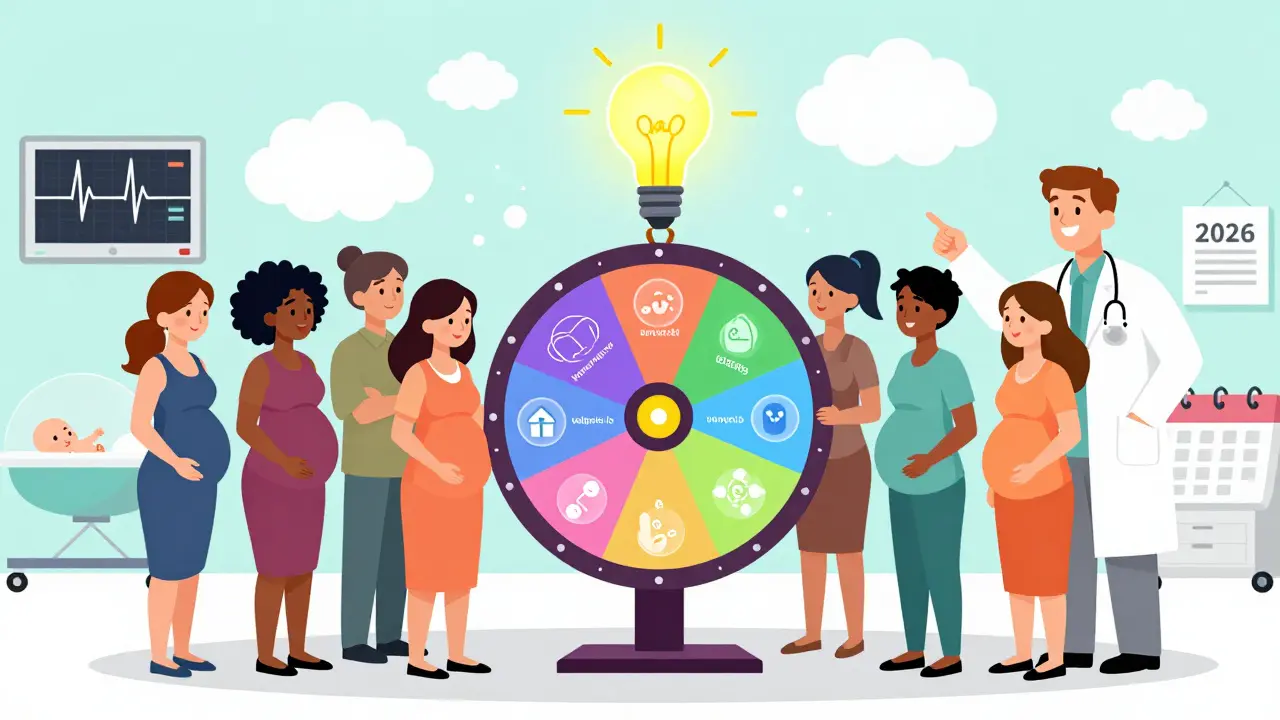
If you’re planning pregnancy or already pregnant, here are five essential questions:
- What’s my personal risk of relapse if I stop my medication?
- Which medication has the most safety data for someone like me?
- What are the exact numbers for birth defect risk with my current med?
- What happens if my symptoms return? What’s the backup plan?
- Can we connect with a perinatal psychiatrist? Many OBs now consult them regularly.
Don’t be afraid to ask for the decision aid. If your provider doesn’t know about it, they may need to look it up. That’s okay. This is a fast-evolving field.
What’s Changing in 2026?
By 2026, shared decision-making tools will get even smarter. Researchers at Massachusetts General Hospital are testing a prototype that uses machine learning to predict your personal risk-not just population averages. If you’re 32, had two depressive episodes, took sertraline before, and have a family history of anxiety, the tool will show you: “Women like you had a 78% chance of relapse if they stopped meds. Of those who continued, 92% stayed stable.”
That’s not science fiction. It’s coming. And it’s built on data from over 15,000 pregnancies tracked since 2010. The goal? To replace fear with facts.
Final Thought: You’re Not Alone
Women who use shared decision-making tools are 3.2 times more likely to stick with their treatment plan. They also report 37% lower depression scores after birth. That’s not magic. It’s informed choice.
You don’t have to choose between being a good mom and being mentally well. You can be both. But you need the right information-not fear, not silence, not guesswork.
Ask. Talk. Get the numbers. Make your decision. Then trust it.
Are antidepressants safe during pregnancy?
Yes, many are. SSRIs like sertraline, citalopram, and escitalopram are the most studied and generally considered safest for use during pregnancy. They are not linked to major birth defects in most cases, except for paroxetine, which carries a small increased risk of heart defects. The risks of untreated depression-like preterm birth, low birth weight, and maternal suicide-are often higher than the medication risks. Always discuss alternatives with your provider.
Should I stop my medication if I’m planning to get pregnant?
Not necessarily. Stopping medication without medical guidance increases your risk of relapse by up to 80%. The best approach is to talk to your provider at least 3 months before trying to conceive. This gives time to switch to a safer medication if needed, stabilize your condition, and plan for ongoing care. Stability before pregnancy reduces relapse risk by 40%.
Is it safe to breastfeed while taking mental health meds?
Many psychiatric medications are considered safe during breastfeeding. Sertraline, for example, passes into breast milk in very low amounts and is often recommended. Lithium requires monitoring because levels can build up in the baby. Always check with your provider-most medications are safer in breastfeeding than during pregnancy. The benefits of bonding and nutrition often outweigh minimal medication exposure.
What if I’m already pregnant and taking a risky medication like valproic acid?
If you’re on valproic acid (Depakote) and pregnant, contact your provider immediately. This medication increases the risk of neural tube defects and developmental delays. Switching to a safer alternative like lamotrigine is often possible, especially if done early. Never stop abruptly-this can trigger seizures or mood episodes. Your provider can help you transition safely.
Where can I find reliable information about medication risks?
The National Pregnancy Registry for Psychiatric Medications (run by Massachusetts General Hospital) is the most authoritative source. They collect real-world data from over 15,000 pregnant women. ACOG’s Mental Health Medication Decision Aid, updated quarterly, uses this data to give clear risk percentages. Avoid relying on Reddit, forums, or outdated websites. Stick to guidelines from ACOG, BAP, and the Mayo Clinic.
Patrick Jarillon
Let me guess - the pharmaceutical companies paid off ACOG too. 😏 They’ve been pushing SSRIs for decades while hiding the fact that they cause autism, ADHD, and ‘developmental delays’ in 40% of kids. You think 15,000 pregnancies is a lot? That’s just the tip of the iceberg. The real data? Buried in FDA whistleblower reports. I’ve got screenshots. Want to see how paroxetine was pulled from Europe but quietly relabeled as ‘low-risk’ here? 🤫
And don’t get me started on ‘shared decision-making.’ That’s just corporate speak for ‘trust the system.’ Meanwhile, your OB’s been trained by reps in golf carts. I know. I used to be one.
AMIT JINDAL
Bro this is sooo true 😍 but like… have u even read the 2023 Lancet study on fetal SSRI exposure? I mean seriously, the numbers are wild. Like 1 in 8 babies exposed to sertraline had some kinda neurodevelopmental thingy? Not saying stop meds but like… maybe try yoga? Or reiki? Or just chill the f*** out? I stopped my citalopram and now my baby’s 10/10 smarter and sleeps 8hrs straight. No cap. 🙌
Also pls send me that decision aid link I wanna check if my doc is lying lol
Ariel Edmisten
Just take what works. If your meds keep you alive and present for your kid, take them. If you’re scared, talk to a specialist. No shame in that. You don’t need a PhD to make the right call - just honesty and a good doctor.
Ritu Singh
While the data presented is indeed compelling, one must also consider the sociocultural context in which these decisions are made. In many communities - particularly in the Global South - access to perinatal psychiatrists remains a luxury, not a right. The very framework of ‘shared decision-making’ presumes equity in healthcare access, which, regrettably, is not the reality for millions. The emphasis on ‘risk percentages’ may inadvertently alienate those who cannot afford even a second opinion. Perhaps the true innovation lies not in the decision aid, but in democratizing its availability.
Mark Harris
YES. I was on Zoloft during both pregnancies. No issues. My kids are 7 and 9 and brilliant. I cried when my OB said I could stay on it. Don’t let fear make your choice. Talk. Get help. You’re not broken for needing meds. You’re a mom who’s doing the hard thing.
Savannah Edwards
I stopped my meds when I got pregnant because I was terrified of birth defects. I didn’t realize how bad it’d get until I was 24 weeks and couldn’t get out of bed. I cried every day. I didn’t eat. I didn’t shower. My husband had to feed me spoonfuls of oatmeal. I went to the ER thinking I was having a stroke. Turns out, it was a major depressive episode. I started sertraline again at 26 weeks. It saved me. My baby is fine. I’m fine. The risk of stopping? Real. The risk of taking? Tiny. I wish someone had told me this sooner.
Also - I’m breastfeeding now. My baby’s fine. The amount in breastmilk? Less than a raindrop. Don’t let myths steal your joy.
Mayank Dobhal
paroxetine = bad. valproate = worse. SSRIs = fine. stop overthinking. just talk to your doc. done.
Natasha Bhala
my doctor showed me the decision aid last month. it said i had a 76% chance of relapse if i stopped. i stayed on my meds. i’m glad i did. my baby is here. i’m here. that’s all that matters.
Catherine Wybourne
Oh honey, I love how we’ve turned ‘doctors are gods’ into ‘doctors are villains’ and now we’re back to ‘doctors are allies’ - all in one blog post. 🤭
But seriously - this is the most balanced take I’ve seen. The fact that we’re finally moving away from letter grades and into real numbers? Yes. Please. More of this. And yes, I cried reading the part about women being scared into quitting meds. We’ve been gaslit for decades.
Also - if you’re on valproate and pregnant? Go to a specialist. Today. I’m not joking. I’ve seen what it does. And yes, I’m from the UK - we’ve been screaming this since 2009.