
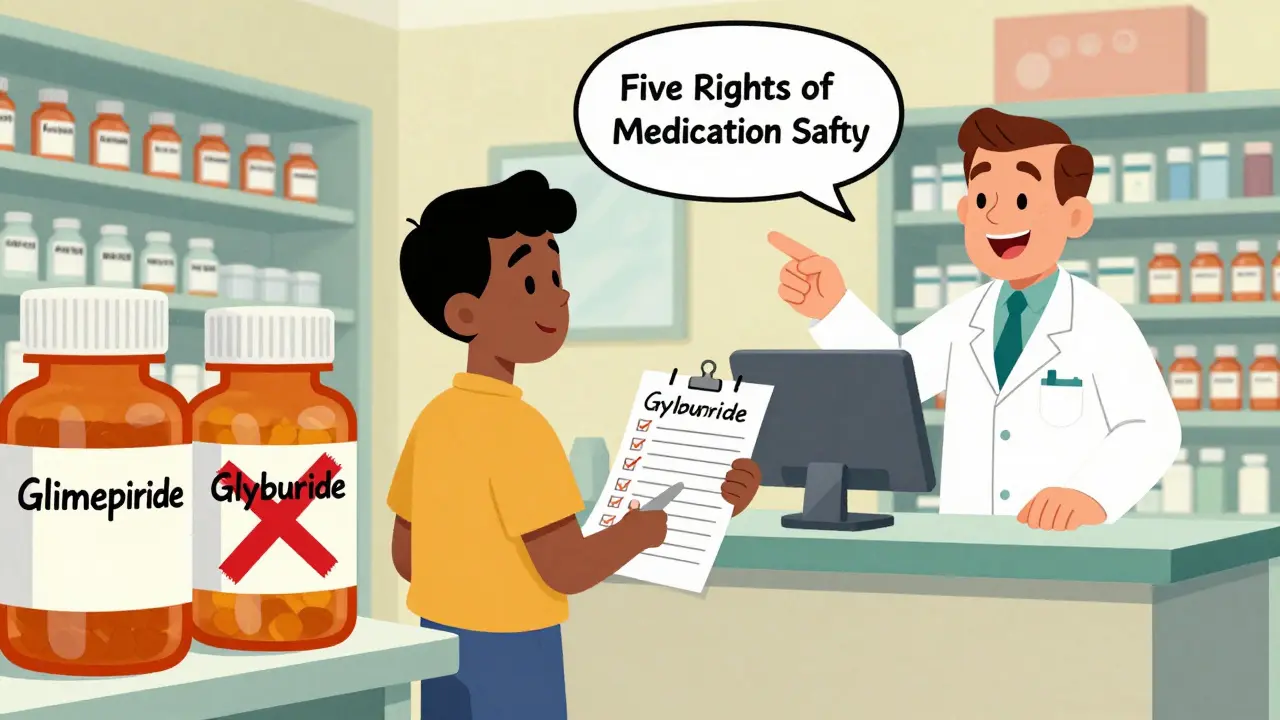
Every year, over 1.3 million people in the U.S. end up in the emergency room because of problems with their medications. Many of these cases aren’t accidents-they’re preventable. Whether you’re taking one pill a day or managing five different prescriptions, knowing how to use them safely isn’t optional. It’s essential.
Know Your Medications Inside and Out
You can’t manage what you don’t understand. Start by learning the name of each medication, why you’re taking it, and what it’s supposed to do. Don’t rely on the color or shape of the pill. Drugs can look identical but have completely different effects. For example, glimepiride and glyburide are both diabetes pills, but mixing them up can cause dangerous blood sugar crashes.The FDA recommends asking your doctor or pharmacist these eight questions for every new prescription:
- What’s the exact name of this drug?
- What’s the active ingredient?
- Why am I taking it?
- How much should I take, and when?
- What should it look like?
- When does it expire?
- What side effects should I watch for?
- Are there foods, drinks, or other meds I should avoid?
If you can’t answer these questions clearly, you’re at risk. Studies show that 39% of patients can’t even name the purpose of their own medications. That’s not just confusing-it’s dangerous.
Keep a Living Medication List
Your medication list isn’t something you fill out once and forget. It needs to be updated every time you see a provider, get a new prescription, or start an over-the-counter supplement. Many people forget about vitamins, herbal teas, or pain relievers like ibuprofen-but these can interact with your prescriptions.According to the CDC, half of all medication errors happen during care transitions-like when you leave the hospital or switch doctors. That’s because no one has the full picture. A 2022 ASHP survey found that only 58% of U.S. hospitals consistently track what patients are taking outside of prescriptions. That gap can kill.
Keep your list simple: write down the drug name, dose, frequency, and reason. Include the pharmacy name and your doctor’s contact info. Carry it in your wallet or save it on your phone. Bring it to every appointment. If your provider doesn’t ask to see it, offer it. That simple step cuts error rates by 20-45%.
Follow the Five Rights of Medication Safety
Healthcare workers use the “Five Rights” to avoid mistakes. You should use them too:- Right patient: Is this medicine really meant for you? Double-check your name on the bottle.
- Right drug: Does it match your list? Compare the label to your written record.
- Right dose: Is it the amount your doctor prescribed? Don’t guess.
- Right route: Is it meant to be swallowed, injected, or applied to the skin?
- Right time: Are you taking it at the right interval? Some meds need to be spaced 12 hours apart-others work best with food.
One study found that patients who checked all five rights before taking a pill reduced their risk of error by over 30%. It takes 10 seconds. That’s worth it.
Watch Out for High-Alert Medications
Some drugs are riskier than others. These are called “high-alert medications,” and they’re responsible for about 30% of serious medication errors. They include:- Insulin
- Warfarin (a blood thinner)
- Heparin (another blood thinner)
- Intravenous oxytocin (used in labor)
Even a small mistake with these can cause severe harm-like internal bleeding, coma, or death. If you’re on one of these, ask your pharmacist for extra guidance. Make sure you understand how to store it, how to recognize signs of overdose, and what to do if you miss a dose.
For example, insulin isn’t just “a shot.” Different types act at different speeds. Mixing them up-or injecting the wrong amount-can send your blood sugar into a tailspin. Always confirm the type and dose before you use it.
Use Tools to Stay on Track
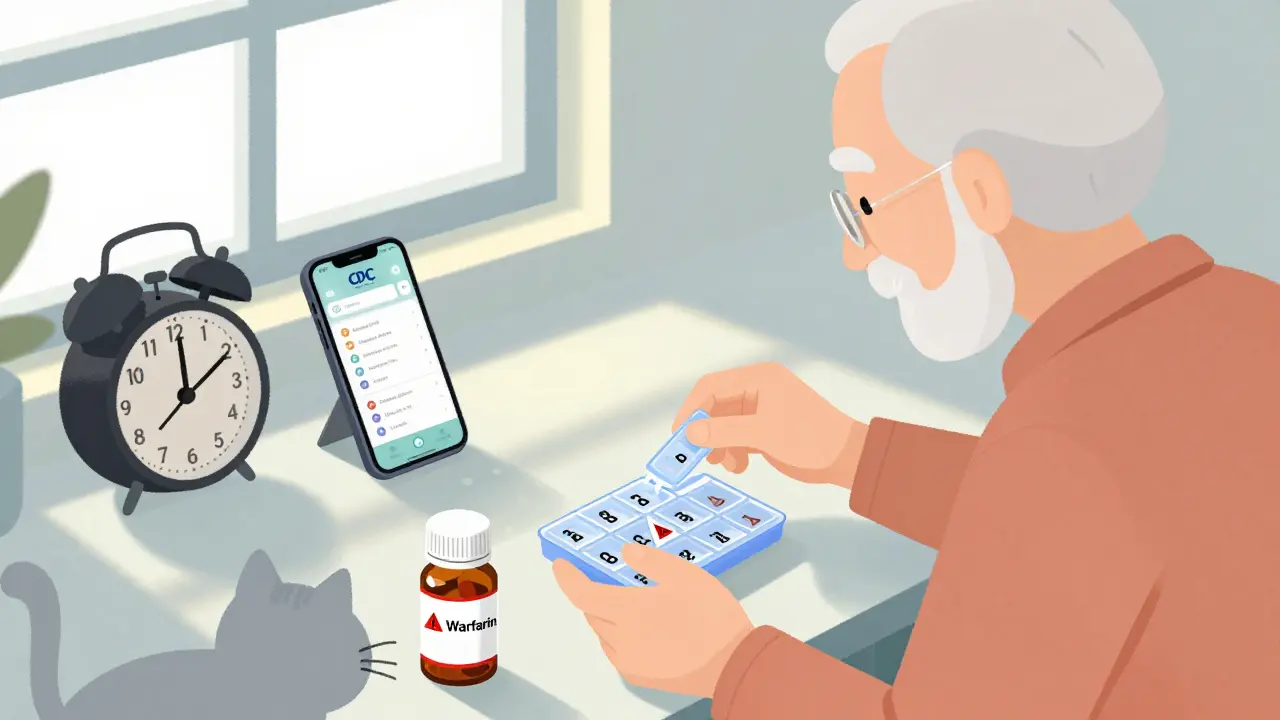
If you take multiple pills daily, your brain can’t be trusted to remember everything. That’s where tools help.Pill organizers are simple, cheap, and effective. A 2023 NIH study showed they reduced missed doses by 35% in older adults. Set up your organizer for the week, and check it every morning. Use smartphone alarms to remind you when it’s time to take something. Apps like the CDC’s Medication Safety Checklist (launched in January 2024) let you scan barcodes and get alerts for interactions.
Another trick? Always check the pill’s appearance when you refill. If it looks different-color, shape, markings-ask the pharmacist. Look-alike, sound-alike drugs are a major cause of errors. Tall Man Lettering (like predniSONE vs. predniSOLONE) helps pharmacists spot them, but you should too.
Never Skip or Stop Without Talking to Your Doctor
You might feel better after a few days and think you don’t need the rest of your antibiotics. Or maybe the side effects are annoying, so you quit. Don’t.Twenty-three percent of antibiotic treatment failures happen because people stop early. That doesn’t just make you sick again-it fuels drug-resistant bacteria. Same goes for blood pressure or mental health meds. Stopping suddenly can cause rebound effects, seizures, or worse.
If something isn’t working or you’re having side effects, call your provider. Don’t adjust the dose yourself. There’s almost always a safer way to fix the problem.
Clean Out Your Medicine Cabinet Regularly
Expired or unused meds are a hidden danger. They can be accidentally taken by kids, pets, or even yourself if you grab the wrong bottle. The Illinois Department of Public Health found that 38% of accidental poisonings in children come from expired medications in the home.Do a medicine cabinet clean-out twice a year. Toss anything that’s past its expiration date, smells weird, or looks changed. Don’t flush most pills down the toilet-check local drug take-back programs. Many pharmacies and police stations offer free disposal bins.
Ask for the Teach-Back Method
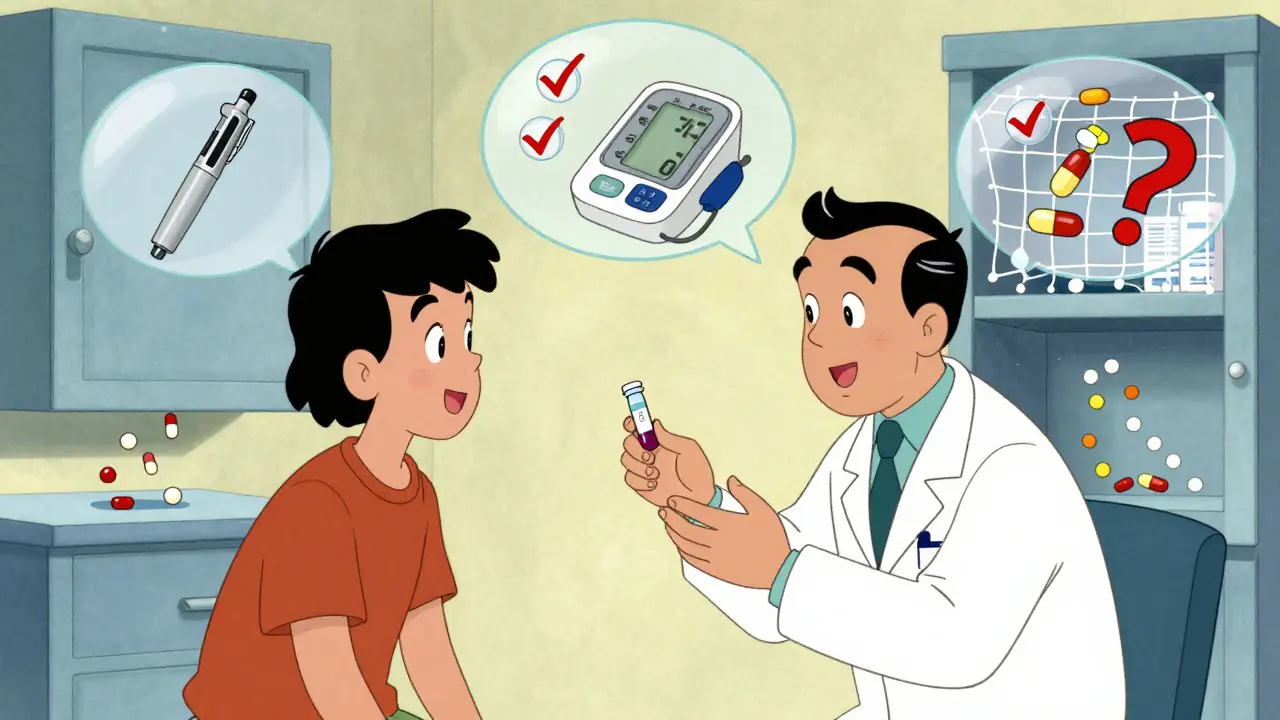
Good providers don’t just hand you a prescription and say, “Take one daily.” They make sure you understand. Ask them to use the “teach-back” method: after explaining your meds, they’ll ask you to repeat the instructions in your own words.This isn’t a test-it’s a safety net. A 2021 JAMA study found patients who went through teach-back had 40% better adherence and fewer errors. If your doctor doesn’t offer it, ask for it. You’re not being difficult-you’re protecting your health.
Pharmacists Are Your Secret Weapon
Most people think pharmacists just hand out pills. That’s not true. They’re trained medication experts. They catch drug interactions, spot dosage errors, and know how different meds work together.Studies show patients who talk to their pharmacist about a new prescription have 27% fewer errors. Don’t wait until you have a problem. When you pick up a new med, ask: “Is there anything I should watch out for? Does this interact with anything else I take?”
Pharmacists also know about patient assistance programs, generic alternatives, and how to reduce costs. They’re there to help-use them.
What If You Make a Mistake?
Everyone slips up sometimes. You forget a dose. You take two by accident. You mix up your pills.If you realize you made a mistake:
- Don’t panic.
- Don’t take another dose to “make up for it.”
- Call your pharmacist or doctor right away.
- Write down what happened: what you took, when, and how much.
Most errors don’t lead to disaster if caught early. But silence can make things worse. Being honest and quick saves lives.
It’s Not Just About You
Medication safety isn’t just a personal habit-it’s a system. Hospitals, pharmacies, and doctors all play a role. But you’re the last line of defense. No electronic system can replace your eyes, your questions, and your attention.When you take charge of your meds, you’re not just avoiding harm. You’re making the whole system work better. You’re reducing the $42 billion in annual costs from preventable errors. You’re helping your providers do their jobs more safely.
Start today. Make your list. Ask your questions. Check your pills. Talk to your pharmacist. You don’t need to be a medical expert to save your own life. You just need to be careful-and willing to speak up.
James Nicoll
So let me get this straight - we’re now treating adults like toddlers who can’t read the label on a cereal box? I mean, I get it, meds are scary, but if you can’t tell the difference between a blue pill and a white one, maybe don’t drive a car either. Also, who wrote this? A pharmacist who just got fired for yelling at people for taking Tylenol with bourbon? 😅
SWAPNIL SIDAM
I am from India. In my village, people take medicine like tea. No label. No doctor. Just ‘this one for pain, that one for sleep’. But I read this and I cry. Not because it is hard - but because it is true. We must learn. Even in small villages, we can write names on bottle. Even one step is good step.
Sally Dalton
OMG I LOVE THIS POST!!! 🥹 I just got back from my grandma’s house and she had like 17 different pill containers and was taking them all at once while watching Judge Judy. I made her a little color-coded chart with stickers and now she calls me every morning to say ‘Sally, I did it!!’ I cried. This stuff matters so much. Thank you for writing this!! 💖
Allie Lehto
People don’t need lists. They need accountability. The real problem isn’t ignorance - it’s entitlement. You think your body is a temple? Then stop treating it like a dumpster. If you can’t be bothered to read the damn label, why should your doctor care if you die? 🤷♀️
Dan Nichols
Five rights? That’s cute. The real five rights are: right doctor, right pharmacy, right insurance, right lawyer, right will. You think the system cares if you live or die? Nah. They just want you to sign the form and shut up. This post is feel-good fluff for people who think reading a pamphlet fixes capitalism
Renia Pyles
Ugh I’m so tired of this performative safety nonsense. You know what’s dangerous? Letting your 80-year-old aunt take her meds because ‘the doctor said so’ without asking what the hell they’re for. I had to drag my mom to the ER because she was on 4 blood thinners and no one told her they cancel each other out. So yeah - make lists. But also - FIRE THE DOCTORS WHO DON’T LISTEN
Shweta Deshpande
When I first started taking my diabetes meds, I was so scared I’d mess up. I set 5 alarms, wrote everything on my hand with a marker, and even made a little song to remember the times. Now I help other ladies at the temple do the same. It’s not about being perfect - it’s about being kind to yourself. You don’t have to be a genius to stay safe. Just be consistent. And ask. Always ask. ❤️
Aishah Bango
Why are we even talking about this? People who don’t read labels deserve to die. It’s not rocket science. If you can’t follow basic instructions, why are you even allowed to own a phone? This post is just enabling laziness. You don’t need a checklist - you need consequences.
Simran Kaur
My cousin in Mumbai died last year because he took his heart pill with grapefruit juice. He didn’t know. No one told him. I cried for weeks. Now I carry printed cards in my bag - one for each family member’s meds. I give them to doctors before they even speak. It’s not weird. It’s love. Please - don’t wait until it’s too late.
Jessica Knuteson
Statistically, 98% of medication errors occur in patients over 65. So why is this post targeting everyone? It’s not about safety - it’s about controlling behavior under the guise of education. The real solution? Reduce polypharmacy. Stop prescribing so much. But that’s too expensive for Big Pharma. So here we are. Another list. Another guilt trip. Another distraction.