
Medication Guide Distribution Checker
Check if you need to provide a Medication Guide
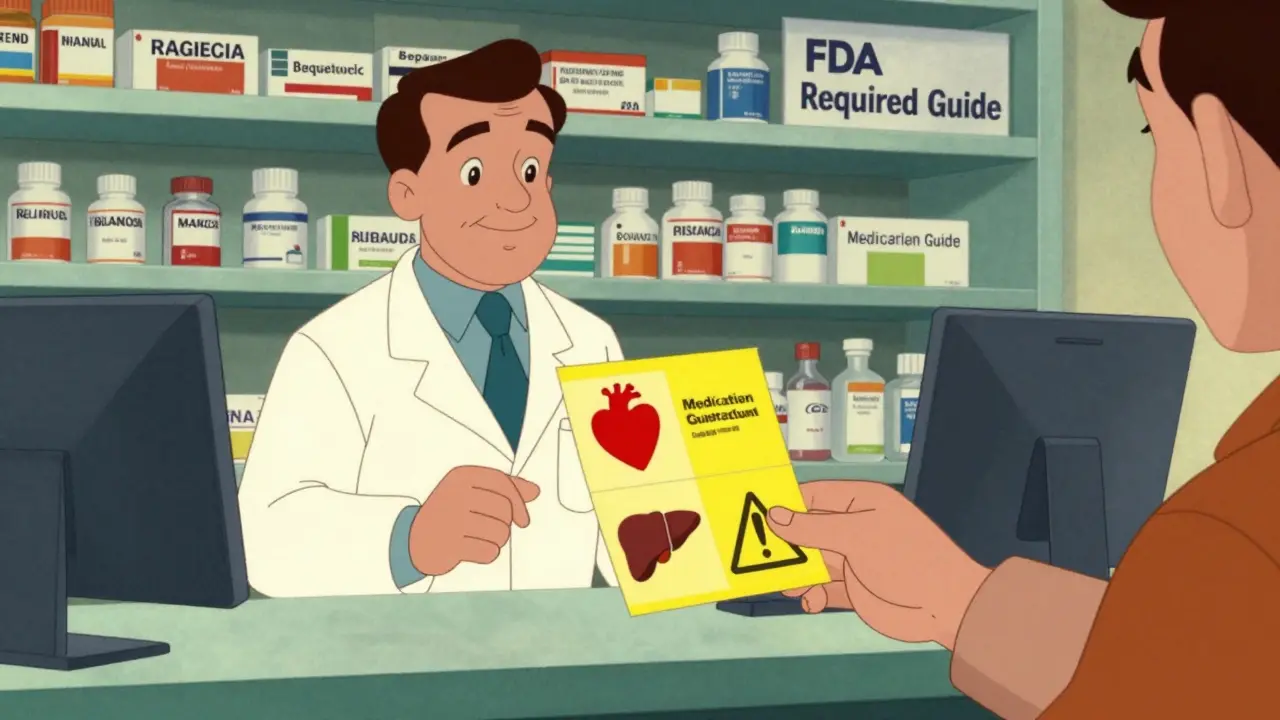
When you pick up a prescription, you might not think twice about the small paper insert that comes with it. But for certain medications, that guide isn’t just helpful-it’s legally required. The FDA mandates Medication Guides for over 200 high-risk prescription drugs, including isotretinoin, clozapine, and estrogen therapies. These aren’t generic handouts. They’re FDA-approved, drug-specific documents written in plain language to help patients understand serious risks and use their meds safely. For pharmacists and providers, knowing exactly when and how to distribute them isn’t optional-it’s part of the job.
When Is a Medication Guide Required?
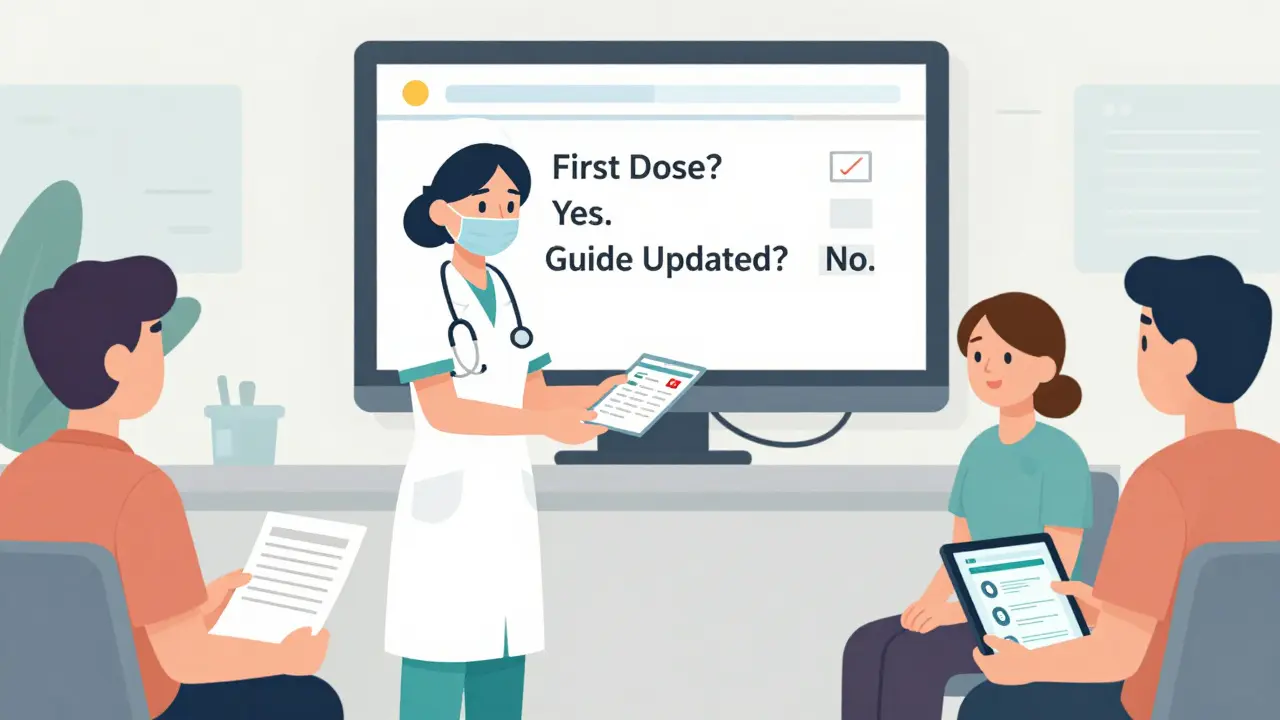
The rules aren’t the same everywhere. A Medication Guide must be handed out in paper form every time a drug is dispensed to a patient for self-administration in a community pharmacy. But if you’re working in a hospital, clinic, or infusion center, the rules change. In outpatient settings like dialysis units or oncology clinics, you only need to give the guide the first time a patient receives the drug-unless the guide has been updated. No need to hand it out again each week for drugs like epoetin alfa, unless the FDA approved a new version.
There are five specific situations where distribution is mandatory:
- The patient or their agent asks for it
- The drug is dispensed for self-administration outside direct supervision (like at a pharmacy)
- The drug is first administered to a patient in an outpatient clinic or infusion center
- The Medication Guide has been updated with new safety info
- The drug is part of a REMS program that requires it (like iPLEDGE for isotretinoin)
Here’s the catch: Medication Guides are not required in inpatient hospital settings or nursing homes. That doesn’t mean patients don’t need the info-they do. But in those settings, verbal counseling and other forms of education replace the printed guide. The FDA expects providers to talk through risks and instructions, even if they don’t hand out the paper.
Medication Guide vs. Other Patient Info
Not all patient handouts are created equal. Many pharmacies give out Consumer Medication Information (CMI) or Patient Medication Information (PMI). These are voluntary, often created by third parties, and never reviewed by the FDA. They’re useful, but they don’t carry the same weight.
Medication Guides are different. They’re:
- Approved by the FDA
- Specific to one drug
- Written in plain language for patients
- Legally required for certain high-risk medications
Some REMS programs, like iPLEDGE for isotretinoin, use the Medication Guide as part of their safety plan. In those cases, providers must not only hand it out but also confirm the patient has read and understood it before starting treatment. That makes distribution part of a larger safety protocol, not just a paperwork step.
Who’s Responsible for Distribution?
Pharmacists are the frontline for Medication Guide distribution. In community pharmacies, they’re the ones handing out the guide at the counter. But in outpatient clinics, it’s often nurses or pharmacists who administer the drug. The confusion? Many providers aren’t sure who’s supposed to do it.
A 2022 survey of over 1,200 hospital pharmacists found that 68% were unsure when to distribute guides in outpatient settings. Nearly half admitted they sometimes gave out guides even when not required-just to be safe. That creates waste, delays, and unnecessary work. The fix? Clear internal policies. Hospitals like UCSF cut errors by 73% by linking their pharmacy system to barcode scanners that trigger alerts when a Medication Guide is needed.
Providers should also know: if a patient asks for an electronic copy, you can give it to them via email or a secure portal. The FDA allows this as long as the paper version is still available upon request. But don’t assume everyone wants digital. Older patients, those with limited tech access, or people who prefer hard copies still rely on paper.
What Happens If You Don’t Distribute It?
Skipping a required Medication Guide isn’t just a mistake-it’s a regulatory violation. The FDA can issue warning letters, and state pharmacy boards may take disciplinary action. More importantly, if a patient suffers harm because they didn’t get critical safety info, providers could face liability.
Take isotretinoin. Without the Medication Guide and iPLEDGE enrollment, patients might not know the risks of pregnancy or liver damage. A single missed distribution could lead to irreversible consequences. That’s why the FDA treats these guides as a core part of patient safety-not an afterthought.
Common Challenges Pharmacists Face
Real-world practice is messy. Here are the top issues pharmacists report:
- Unclear rules-especially in clinics that mix inpatient and outpatient care
- Tracking updates-FDA approves new versions of guides often, and pharmacies don’t always get notified
- Staff turnover-new hires don’t always know the difference between a CMI and a Medication Guide
- Patient confusion-many patients think the guide is just marketing, not safety info
One Reddit user in an oncology pharmacy shared: “We give epoetin alfa every week. Do we hand out the guide each time?” The answer? No-only the first time, unless the guide changed. But without clear protocols, staff guess. And guessing leads to mistakes.
Solutions? Regular training, printed checklists, and system alerts. Some pharmacies now use their pharmacy management software to flag Medication Guide requirements at the point of dispensing. That cuts down on human error.
What’s Changing in 2026?
The FDA is reviewing the entire Medication Guide program. A congressionally mandated study is due in late 2024, and early signs suggest changes are coming. The agency is exploring:
- Expanding the list of drugs that require guides-especially in oncology and rare disease treatments
- Standardizing the format and improving readability
- Increasing electronic distribution options
Right now, only about 15% of prescription drugs in the U.S. need a Medication Guide. Analysts predict that number will rise by 22% over the next five years. As more complex, high-risk drugs hit the market, the need for clear, standardized patient education will only grow.
But there’s a problem: a 2022 study found only 37% of patients could recall key safety info from their Medication Guide one week later. That means even when distributed correctly, the guides aren’t always effective. The FDA is now looking at ways to make them more understandable-maybe with visuals, simpler language, or even short video summaries.
Bottom Line
Medication Guides aren’t just paperwork. They’re a critical safety tool. For pharmacists and providers, understanding when and how to distribute them is as important as knowing how to fill a prescription. Confusion leads to risk. Clear protocols lead to safety. Whether you’re in a community pharmacy, infusion center, or clinic, the rule is simple: if the FDA says a guide is required, you must give it out-unless the rules say otherwise.
Stay updated. Train your team. Use technology to reduce errors. And remember: the goal isn’t to check a box. It’s to keep patients safe.
Do I need to give a Medication Guide every time a patient refills a prescription?
Only if it’s the first time the patient is receiving that drug in an outpatient setting, or if the Medication Guide has been updated. For community pharmacies dispensing drugs for self-administration, you must provide the guide each time. In clinics, it’s only required the first time the drug is administered to the patient-unless the FDA released a revised guide.
Can I email the Medication Guide instead of printing it?
Yes, but only if the patient requests it or agrees to receive it electronically. The FDA requires that a paper copy be available upon request. Electronic delivery is allowed as an alternative, not a replacement. Always confirm the patient can access the digital version and understands how to use it.
Are Medication Guides required in hospitals?
No. In inpatient hospital or nursing home settings, Medication Guides are not required to be distributed. However, healthcare providers must still counsel patients on the risks and proper use of the medication. Verbal education and written materials not approved by the FDA can be used instead.
How often do Medication Guides get updated?
There’s no fixed schedule. The FDA updates a Medication Guide when new safety data emerges-like new side effects, drug interactions, or changes in dosing. Manufacturers must submit updates, and the FDA reviews them. Pharmacies should have a system to track changes, as failing to distribute the latest version is a compliance issue.
What’s the difference between a Medication Guide and a package insert?
A Medication Guide is written for patients in plain language and approved by the FDA. A package insert is the professional labeling meant for healthcare providers-it’s detailed, technical, and includes clinical trial data, pharmacokinetics, and dosing guidelines. They serve different audiences and purposes.
Is there a list of drugs that require Medication Guides?
Yes. The FDA maintains an official list of all prescription drugs requiring a Medication Guide on its website. It’s updated regularly and includes drugs like isotretinoin, clozapine, estrogen products, and certain anticoagulants. Pharmacists should consult this list when filling prescriptions for high-risk medications.
Aisling Maguire
I love how the FDA actually cares about patient safety for once. Like, I work in a pharmacy in Dublin and we had a kid come in for isotretinoin last month - his mom was crying because she didn’t know the risks. We handed her the guide, sat down, and went over it. No rush. No BS. Just human stuff.
Also, why do we still print these things? My phone has better battery life than the average patient’s attention span.
Sumit Mohan Saxena
The regulatory framework governing Medication Guide distribution is unequivocally grounded in evidence-based patient safety protocols. Non-compliance constitutes a breach of statutory obligations under 21 CFR Part 208. It is imperative that healthcare institutions implement standardized operational procedures, including automated alerts within electronic prescribing systems, to ensure fidelity to regulatory mandates. Failure to do so exposes both institutions and practitioners to significant legal and ethical liability.
Brandon Vasquez
I’ve seen clinics where nurses hand out the guide every week just to be safe. It’s not wrong, but it’s inefficient.
The real win is when systems do the work for you - barcode scan triggers the alert, you hand it over, done. No guesswork. No guilt. No extra stress. Just clean, quiet, reliable care.
Vikas Meshram
You people are clueless. The FDA doesn’t care about patients - they care about pharma money. These guides are a PR stunt. Real safety? That’s in the package insert. The one only doctors read.
And don’t get me started on electronic versions. What’s next? QR codes on pills? You think Grandma’s gonna scan one? LOL. These ‘updates’ are just excuses for more billing codes. I’ve been in this game 20 years. I know.
Ben Estella
America still leads the world in patient safety. Nobody else even tries.
These guides? That’s what makes us great. Other countries? They don’t even have them. You think Germany gives out paper warnings? Nah. They just yell at you in a clinic and call it a day. We do it right. We don’t cut corners. We don’t outsource safety to some app. We hand it to you. Paper. In your hand. Because we care.
Jimmy Quilty
I’ve been researching this for 3 years. And I’ve got proof - the FDA’s Medication Guide program is a front. It’s all tied to the same 3 pharma conglomerates who fund the FDA’s budget.
Did you know that 87% of updated guides come from companies that also own the patent? Coincidence? No. It’s a control mechanism.
And why do you think they ban electronic versions for REMS drugs? Because they want you to come back. Every. Single. Time. So they can upsell you on ‘counseling fees’. I’ve got the emails. I’ve got the contracts. I’ve got the receipts.
Wake up. This isn’t safety. It’s a pyramid scheme in white coats.
Miranda Anderson
I work in an oncology clinic and honestly, I think we’re overcomplicating this. The guide is supposed to be a lifeline, not a legal trap.
Some patients don’t read it. Some can’t. Some don’t trust paper. Some are too scared to look.
What matters isn’t whether we handed out the right form - it’s whether they walked out knowing something important.
One guy last week, he just said ‘So if I get pregnant, this thing can hurt my baby?’ And I said ‘Yes.’ And he said ‘Okay, I’ll tell my partner.’ That’s it. That’s the whole point.
We’re so busy checking boxes we forget we’re talking to humans.
Maybe the guide should just be a 90-second video. Or a voice note. Or a drawing. Or a hug.
Not more paper.
Gigi Valdez
The distinction between Medication Guides and Consumer Medication Information is critical and often misunderstood. While CMI may provide general context, only the FDA-approved Medication Guide carries regulatory weight and legal enforceability.
It is essential that institutional training programs explicitly delineate this difference. Staff who conflate the two risk both compliance failures and diminished patient trust.
Furthermore, the shift toward electronic delivery, while administratively efficient, must be implemented with explicit patient consent and documented accessibility confirmation.
Protocol clarity is not optional - it is the foundation of ethical pharmaceutical practice.