
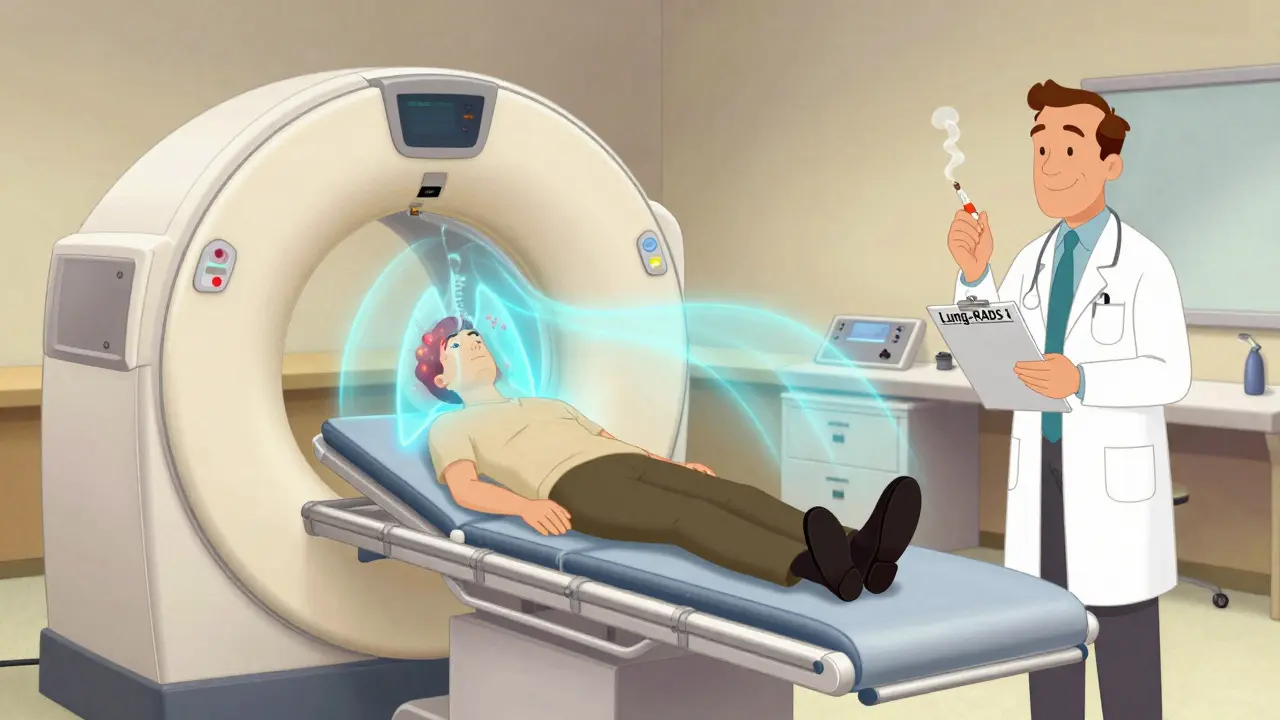
Every year, more people die from lung cancer than from colon, breast, and prostate cancers combined. And yet, many of those deaths are preventable-if you’re a current or former smoker and you’re eligible, lung cancer screening with low-dose CT (LDCT) could save your life. This isn’t theory. It’s science backed by over a decade of data from real patients. The question isn’t whether screening works-it’s whether you’re getting it, and if you’re not, why not.
Who Should Be Screened?
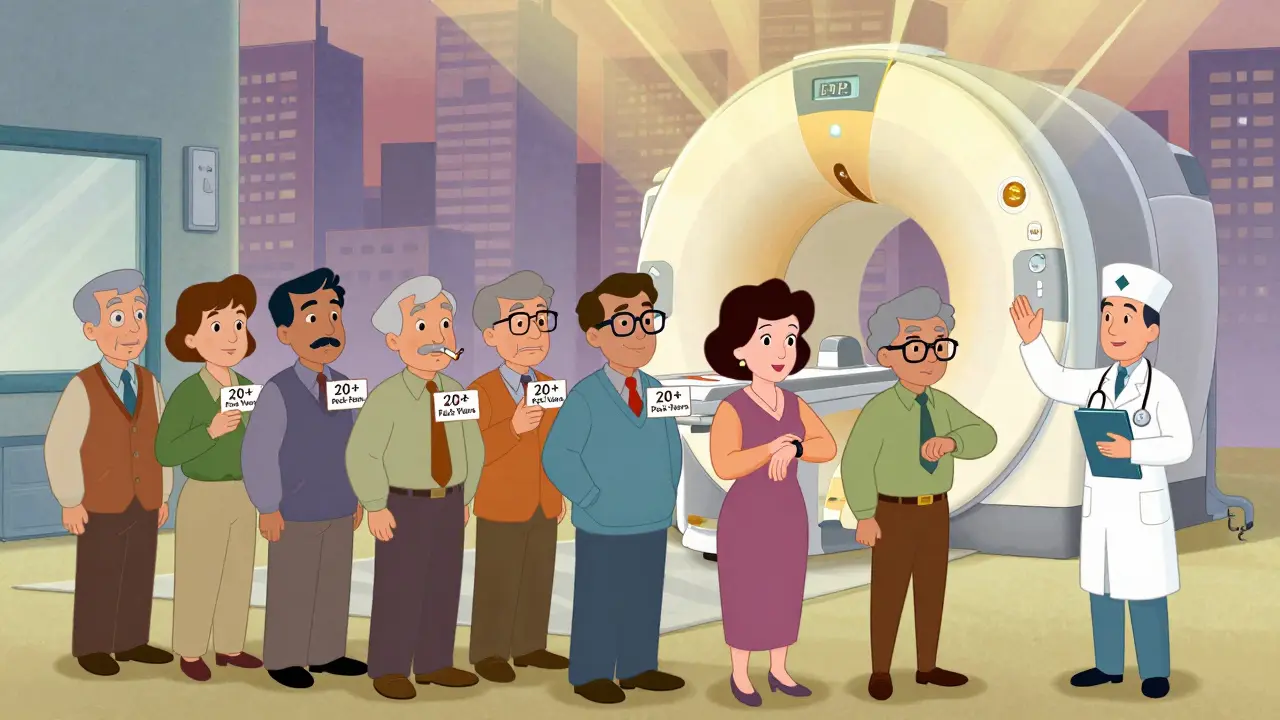
The rules changed in 2021, and they’re simpler now. If you’re between 50 and 80 years old, and you’ve smoked at least 20 pack-years, you qualify. A pack-year means smoking one pack a day for a year. So, if you smoked a pack a day for 20 years, or two packs a day for 10 years, you meet the threshold. Even if you quit smoking, you’re still eligible if you stopped within the last 15 years.
That’s a big shift from the old guidelines. Before 2021, you needed 30 pack-years and had to be at least 55. Now, millions more people are in the pool. In the U.S., the number of eligible people jumped from 8.2 million to 14.5 million. That’s not just a number-it’s real people who might have missed their chance before.
But screening stops when you’ve quit for 15 years or if your health is too fragile for surgery. That’s not about age-it’s about whether treatment would help. If you have heart failure, severe COPD, or other conditions that make surgery risky, screening might not be right for you. Talk to your doctor. Don’t assume.
How Does Low-Dose CT Work?
It’s quick. You lie on a table. The machine spins around you. In under 10 minutes, it takes hundreds of detailed images of your lungs. No needles. No fasting. No prep. The radiation dose is about 1.5 millisieverts-less than half of a standard chest CT and close to what you get from a mammogram.
This isn’t a chest X-ray. X-rays miss small tumors. LDCT catches them early. That’s why it works. The landmark National Lung Screening Trial (NLST) in 2011 showed that annual LDCT scans cut lung cancer deaths by 20% compared to X-rays. That’s not a small win. It’s life-saving.
What you’re looking for are nodules-tiny spots on the lungs. Most are harmless. But some grow. The system used to track them is called Lung-RADS. It grades findings from 1 (normal) to 4 (suspicious). If you get a 4, you’ll need follow-up scans or a biopsy. If you get a 1, you come back next year. Simple.
What Are the Risks?
Screening isn’t risk-free. About 1 in 7 people who get an LDCT scan will have a false positive-meaning something looks odd, but it’s not cancer. That leads to more scans, biopsies, anxiety, and sometimes unnecessary procedures. One study found that 37% of people with false positives had moderate to severe anxiety that lasted over six months.
Then there’s radiation. Yes, it’s low. But if you’re getting screened every year for 30 years, that adds up. It’s not enough to cause cancer on its own, but it’s not zero. That’s why screening stops at 80. The risks start to outweigh the benefits.
And there’s overdiagnosis. Some tumors grow so slowly they’d never hurt you. But once you find them, you treat them. That means surgery, radiation, or chemo for something that might not have mattered. That’s the trade-off. You’re trading a small chance of overtreating for a big chance of catching cancer early.
Why So Few People Get Screened?
Here’s the hard truth: only about 8% of eligible people in the U.S. are getting screened. That’s not because they don’t know about it. A 2022 survey found 68% knew they were eligible. But only 18.5% had actually done it.
The biggest reason? No one told them. Forty-two percent of people said their doctor never brought it up. That’s on providers. Screening isn’t automatic. You have to ask. Or your doctor has to offer.
Other barriers? Transportation. Cost. Fear. One Reddit user in r/lungcancer said they drove 127 miles to the nearest accredited center. Medicare covers it-but only if you have a provider order after a shared decision visit. That means a 20- to 30-minute talk about benefits and risks. Many clinics don’t have the staff or systems to do this well.
And then there’s equity. Black Americans have higher rates of lung cancer but 20% lower screening rates than White Americans. Why? Access. Trust. Provider bias. It’s not just about guidelines-it’s about who gets to use them.
What Happens After the Scan?
If your scan is clear, you come back in a year. That’s the rule. No skipping. No “I’ll do it next year.” Lung cancer grows fast. Annual screening is the minimum.
If something shows up, you’ll be called back. Maybe another scan in 3 months. Maybe a biopsy. The key is not to panic. Most nodules are benign. But if you delay follow-up, you risk missing the window.
Successful programs use nurse navigators, automated EHR alerts, and dedicated scheduling. One study showed clinics using these tools screened 35-40% of eligible patients. The national average? Just 5.7% in 2020. That gap isn’t about patient choice-it’s about system failure.
What’s New in 2026?
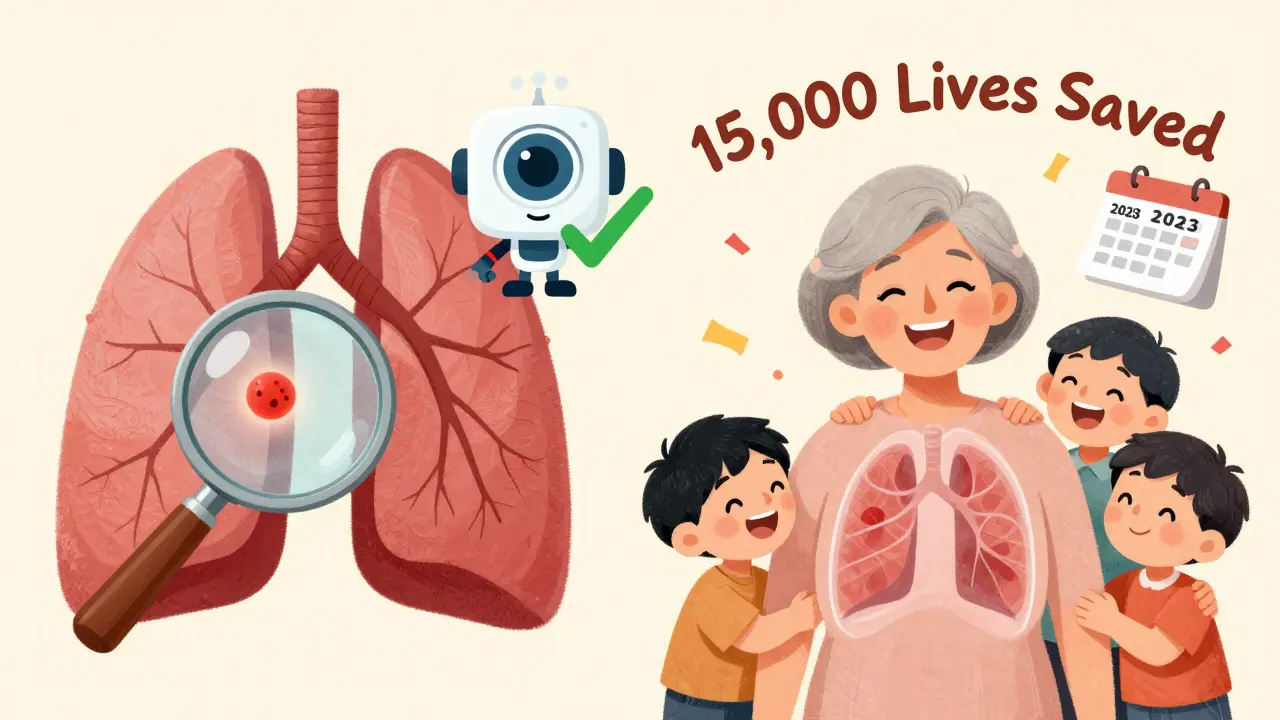
AI is here. In September 2023, the FDA approved the first AI tool for LDCT analysis-LungAssist by VIDA Diagnostics. In trials, it cut false positives by 15.2%. That means fewer unnecessary biopsies and less anxiety. It’s not replacing radiologists. It’s helping them.
Also, risk models are getting smarter. The PLCOm2012 model now factors in family history, education, and breathing symptoms-not just pack-years. That means in the future, screening might not be one-size-fits-all. Someone with 15 pack-years but a family history of lung cancer might still qualify. Someone with 30 pack-years but no other risks might not.
And the data keeps getting better. In 2023, researchers estimated the expanded criteria could prevent up to 15,000 more lung cancer deaths each year in the U.S. alone. That’s 15,000 people who might still be here, talking to their grandkids, going to work, living.
What Should You Do?
If you’re between 50 and 80 and you’ve smoked 20 pack-years or more-ask your doctor about LDCT screening. Don’t wait for them to bring it up. Say: “I’m eligible. Can we talk about screening?”
If you’re a provider: don’t assume your patient knows. Don’t assume they’re not interested. Ask. Every time. Even if they’ve quit. Even if they’re 78. Even if they think they’re fine.
If you’re worried about cost: Medicare covers it. Most private insurers do too. No copay. No deductible. Just a visit with your provider to talk it through.
If you’re scared of what you might find: that’s normal. But remember-the earlier you catch it, the better your odds. Stage 1 lung cancer has a 60-80% five-year survival rate. Stage 4? Under 10%. Screening turns a death sentence into a manageable condition.
One woman, age 53, got screened after 25 pack-years. She had stage 1 cancer. No symptoms. No cough. No pain. Just a spot on a scan. She had surgery. Five years later, she’s cancer-free. That could be you. Or your parent. Or your sibling.
Don’t wait for symptoms. By then, it’s too late.
Who qualifies for lung cancer screening with low-dose CT?
You qualify if you’re between 50 and 80 years old, have smoked at least 20 pack-years (e.g., one pack a day for 20 years), and currently smoke or quit within the past 15 years. Screening stops if you’ve quit for 15 years or have a health condition that limits life expectancy to under 10-15 years or makes surgery unlikely.
Is low-dose CT the same as a regular CT scan?
No. A low-dose CT (LDCT) uses about 1.5 millisieverts of radiation-much less than a standard chest CT, which can deliver 7-8 millisieverts. LDCT is designed specifically for lung screening and avoids contrast dye. It’s faster, safer for repeated use, and optimized to detect small lung nodules.
What if my scan shows a nodule? Does that mean I have cancer?
Not at all. Most nodules are benign-caused by old infections, scar tissue, or inflammation. The Lung-RADS system classifies findings from 1 (normal) to 4 (suspicious). A 4 might mean a follow-up scan in 3-6 months or a biopsy. Only a small percentage turn out to be cancer. The goal is to catch real cancer early, not to overreact to harmless spots.
Why aren’t more people getting screened if it saves lives?
Mainly because providers don’t offer it. A 2022 study found 42% of eligible patients weren’t told about screening. Other barriers include lack of access to accredited centers, transportation issues, fear of results, and unawareness-even among those who know they’re eligible. Screening rates in the U.S. are still under 10%, despite guidelines being in place for years.
Does Medicare cover low-dose CT screening?
Yes. Medicare covers annual LDCT screening for people aged 50-77 who meet the smoking criteria (20+ pack-years, current or quit within 15 years). You need a doctor’s order after a shared decision-making visit. No copay or deductible applies. Some private insurers also cover it, but always check with your plan.
Are there any new technologies improving lung cancer screening?
Yes. In 2023, the FDA approved the first AI tool, LungAssist by VIDA Diagnostics, which helps radiologists interpret scans. In trials, it reduced false positives by 15.2%. New risk models like PLCOm2012 now include family history and breathing symptoms-not just pack-years-making screening more precise. These tools help avoid unnecessary procedures and target high-risk individuals better.
Steven Pam
Just got my LDCT scan last week after 28 pack-years. No nodules. Zero symptoms. I thought I was fine. Turns out, I was just lucky. This post? Lifesaver. Seriously. If you smoke or smoked? Do it. No excuses. Your future self will thank you.
Spenser Bickett
Oh great. Another ‘screening saves lives’ pep talk. Let me guess-next you’ll tell me brushing my teeth prevents colon cancer. People think a scan is a magic bullet. Meanwhile, 37% of false positives get anxiety that lasts SIX MONTHS. And you call that ‘saving lives’? Nah. You’re just selling fear wrapped in a CT machine.
Timothy Haroutunian
Look, I get the science. The NLST trial, Lung-RADS, the 20% mortality drop-all solid. But let’s be real: the system is broken. My uncle got screened in 2022. Had a nodule. Got called back three times. Had a biopsy. Turned out to be a granuloma from a childhood case of histoplasmosis. He’s 72. Had a pacemaker installed last year. Was he even a candidate? Did his PCP even read the guidelines? Or did they just check the box because ‘Medicare covers it’? No one’s talking about the emotional and financial toll of false alarms. We’re turning screening into a bureaucratic nightmare. And for what? A 20% reduction in a disease that’s still gonna get most of us eventually?
Erin Pinheiro
They say ‘ask your doctor’ like it’s that easy. My mom’s doctor told her ‘you’re fine, you don’t cough’ after 30 pack-years. She didn’t push back. She trusted him. Now she’s stage 3. And I’m sitting here wondering-how many others are just… not told? It’s not ignorance. It’s negligence. Providers need to be held accountable. Not just ‘reminded.’ Held. Accountable.
Christopher Brown
Screening only works if you’re white, insured, and live near a city. Rural America? Forget it. My cousin drove 200 miles, waited 6 weeks, then got a ‘maybe’ result. No follow-up. No navigator. No help. This isn’t healthcare. It’s a luxury.
Sanjaykumar Rabari
LDCT is government mind control. They want you to get scanned so they can track you. The radiation? It’s not low. It’s a trap. AI? They’re using it to build your health profile for insurance companies. Next thing you know, they’ll charge you more because you had a nodule-even if it was benign. Don’t fall for it.
Kenzie Goode
I lost my dad to lung cancer at 56. He never got screened. He said he didn’t want to ‘find out.’ Now I tell everyone I know: don’t wait for symptoms. Don’t wait for permission. Don’t wait for your doctor to bring it up. Ask. Even if you’re scared. Even if you quit 10 years ago. Even if you think you’re ‘too old.’ You’re not. You’re still here. And that matters.
Dominic Punch
AI tools like LungAssist are a game-changer-not because they’re perfect, but because they reduce human error. Radiologists are overworked. Nodules get missed. False positives pile up. This isn’t about replacing humans-it’s about giving them better tools. And the PLCOm2012 model? Finally. We’re moving from ‘pack-years only’ to actual risk profiling. That’s precision medicine. Not one-size-fits-all. If you’re eligible, get screened. But if you’re a provider? Stop assuming. Start asking.
Valerie Letourneau
While the data presented is compelling and aligns with current clinical guidelines, I would respectfully suggest that the emphasis on individual responsibility-‘ask your doctor’-overlooks structural inequities in access. In Canada, where universal healthcare exists, screening uptake is higher not because of patient initiative, but due to systematic outreach, integrated EHR alerts, and provincial screening programs. The U.S. model, reliant on provider initiative and insurance coverage, inherently excludes vulnerable populations. A policy shift toward automated, population-level screening protocols-not just individual awareness-is what will truly close the gap.