

Using a pill organizer seems simple: dump your meds into compartments, and you’re done. But if you’ve ever accidentally taken two doses of blood pressure medicine because you couldn’t tell which compartment was for morning or afternoon, you know it’s not that easy. In fact, pill organizer misuse is linked to a 23% increase in overdose risk among older adults, according to a 2022 study in the Journal of the American Geriatrics Society. The tool meant to protect you can become a danger if used wrong.
Why Pill Organizers Can Cause Overdoses
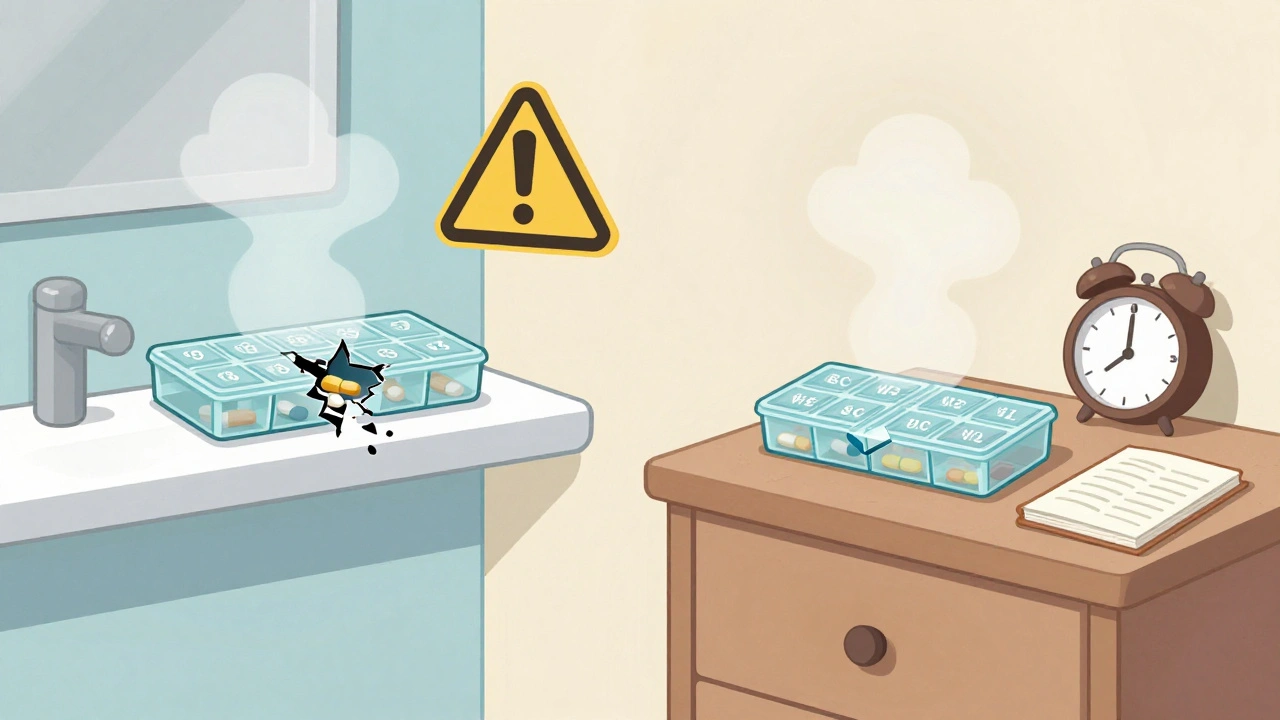
Pill organizers aren’t magic boxes. They’re tools-and like any tool, they can hurt you if you don’t use them right. The biggest danger? Mixing up scheduled pills with "as needed" meds. People often put painkillers, sleep aids, or anxiety meds into daily compartments alongside their regular prescriptions. That’s a recipe for disaster. If you’re feeling unwell and grab what you think is your morning blood pressure pill, but it’s actually your painkiller you took yesterday, you could end up doubling your dose. Another common mistake is filling the organizer with outdated labels. You switch from 10mg to 5mg of your cholesterol med, but you keep refilling the organizer using the old bottle. No one checks the new prescription. Result? You’re taking twice the dose you’re supposed to. A 2023 WebMD survey found that 28% of medication errors happen this way. And then there’s storage. Keeping your pill box in the bathroom? Bad idea. Humidity from showers can soften pills, make them stick together, or break down the coating. That changes how your body absorbs the drug. Kaiser Permanente warns that moisture can degrade medication up to 47% faster. Store it in a cool, dry place-like a bedroom drawer, not the medicine cabinet above the sink.What Medications Should NEVER Go in a Pill Organizer
Not all pills are made equal. Some should never leave their original containers. Here’s what to avoid:- PRN (as-needed) medications-like oxycodone, alprazolam, or zolpidem. These should stay in their original bottles with clear labels. Putting them in a daily compartment makes it too easy to take them by accident.
- Refrigerated drugs-insulin, some antibiotics, or biologics. Room temperature ruins them. No organizer can replace a fridge.
- Chewable, dissolvable, or soft gel capsules-they stick together, crumble, or leak. Think of Omeprazole capsules or melatonin gummies. They belong in their original blister packs.
- Medications that react with each other-some pills can interact even when stored together. If your pharmacist says to keep two meds separate, they mean it.
According to Memorial Sloan Kettering Cancer Center, 92% of solid oral pills are safe to store in organizers for up to 30 days-but only if they’re not on this list. Always check with your pharmacist before moving anything.
The 5-Step Safe Filling Protocol
To use your pill organizer without risk, follow this proven method from the NHCHC Health Management Toolkit and Memorial Sloan Kettering:- Verify your current medication list-Grab your most recent prescription printout or a list from your pharmacy app. Cross-check every pill you plan to put in. If you’re unsure, call your pharmacy. Don’t guess.
- Wash your hands-Use soap and water for at least 20 seconds. Dirty hands can transfer residue or contaminate pills.
- Organize by time of day-Group pills by when you take them: morning, noon, evening, bedtime. Don’t mix them. Use organizers with clearly labeled compartments (AM, PM, etc.).
- Fill one medication at a time-This is the most important step. Don’t dump all your pills in. Take one bottle, open it, count the pills, place them in the correct compartment, then close the bottle. Move to the next. This cuts double-dosing errors by 63%, according to Dr. Jane Smith, Chief Pharmacist at Memorial Sloan Kettering.
- Triple-check before sealing-Look at your list. Look at the bottle. Look at the organizer. All three must match. Do this before you close the lid.
Set aside 15 minutes for this process. Add 5 more minutes for every extra medication beyond five. Rushing is how mistakes happen.
How to Avoid Common Mistakes
Most people think they’re safe because they’ve been using the same organizer for years. But habits kill. Here are the top mistakes-and how to fix them:- Mistake: Using the same organizer for months without checking expiration dates.
Fix: Replace your organizer every 6 months. Plastic gets brittle. Compartments crack. Pills can stick or leak. A degraded organizer is a hidden risk. - Mistake: Not keeping original bottles nearby.
Fix: Always leave your pill bottles within sight when filling or taking meds. If you’re unsure what’s in a compartment, check the bottle. 68% of errors happen because people don’t cross-reference. - Mistake: Taking pills without looking.
Fix: Always open the compartment and visually confirm the pill before swallowing. 31% of overdoses happen because people assume they know what’s inside. - Mistake: Using organizers without child safety locks.
Fix: If kids or pets are around, use organizers with ASTM F3130-15 child-resistant features. Otherwise, lock them in a high cabinet. - Mistake: Filling on random days.
Fix: Pick one day each week-Sunday morning, for example-and stick to it. Consistency prevents missed doses and confusion.
Smart Organizers and Tech Help
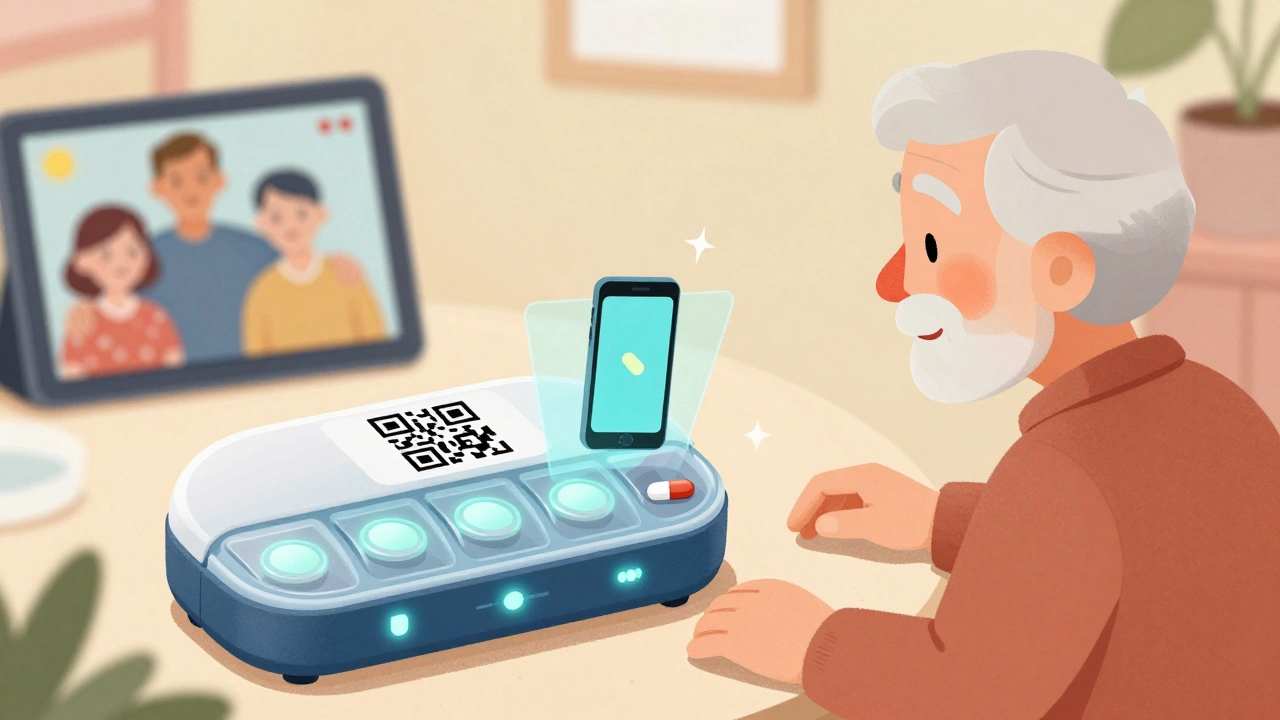
If you forget doses often or manage 6+ medications, consider upgrading. Electronic pill organizers with alarms are worth the investment. Models from Hero Health or MedMinder send alerts, track when you open the compartment, and even notify family members if you miss a dose.Some newer devices have weight sensors that detect if you took the full dose-or too much. Pfizer’s 2024 pilot program added QR codes to compartment lids. Scan one with your phone, and it plays a short video showing the correct pill and dosage.
Medicare now covers these smart organizers for beneficiaries with four or more chronic conditions. If you qualify, ask your pharmacist. The devices cost $25-$100, but with insurance, you might pay nothing.
What to Do If You Think You’ve Overdosed
If you took the wrong pill or too many, don’t wait. Call Poison Control at 1-800-222-1222. They’re available 24/7 and can tell you if you need to go to the ER. Don’t rely on Google or a friend’s advice. Time matters.If you’re caring for someone else, keep a written log: date, time, what was taken, what was missed. This helps doctors spot patterns. A simple notebook beats memory.
When to Ask for Help
You don’t have to do this alone. Most pharmacies now offer free pill organizer filling services. A pharmacist will sort your meds, check for interactions, label everything clearly, and even give you a printed checklist. In 2023, 68% of U.S. pharmacies started offering this-up from just 22% five years ago.If you’re struggling with memory, vision, or dexterity, talk to your doctor about occupational therapy. They can recommend organizers with larger labels, Braille, or color-coded systems. The CDC’s National Overdose Prevention Strategy calls proper pill organizer use a Tier 1 intervention. That means it’s a top priority for public health.
Using a pill organizer safely isn’t about being perfect. It’s about being careful. One extra minute checking your pills can save your life-or someone else’s.
Can I put all my pills in one organizer?
No-not all pills are safe to store together. Avoid putting PRN medications (like painkillers or sleep aids), refrigerated drugs (like insulin), chewable pills, or soft gels in organizers. Always check with your pharmacist before moving any medication. Some pills can degrade or interact when stored together.
How often should I refill my pill organizer?
Refill your organizer once a week on the same day-most people choose Sunday. This creates a routine and reduces the chance of missing doses or double-dosing. Never refill using old bottle labels. Always use your current, up-to-date medication list from your pharmacy.
Is it safe to store a pill organizer in the bathroom?
No. Bathrooms are too humid. Steam from showers can damage pills, making them stick, crumble, or lose potency. Store your organizer in a cool, dry place like a bedroom drawer or kitchen cabinet. Kaiser Permanente and Hero Health both warn against bathroom storage due to accelerated drug degradation.
What should I do if I accidentally take two doses?
Call Poison Control immediately at 1-800-222-1222. Don’t wait for symptoms. Some overdoses take hours to show signs. Keep your medication list handy when you call so you can tell them exactly what you took and how much. If you feel dizzy, nauseous, or confused, go to the ER.
Are pill organizers covered by insurance?
Yes-if you qualify. Medicare Part D now covers smart pill organizers for beneficiaries with four or more chronic conditions. Many private insurers also cover them under durable medical equipment benefits. Ask your pharmacist or insurance provider. Some pharmacies offer free filling services, which can be just as helpful.
Final Checklist Before You Fill
Before you start filling your organizer, ask yourself:- Do I have my most current medication list? (Not the old one!)
- Are all the pills I’m putting in solid oral tablets or capsules? (No gummies, liquids, or refrigerated drugs.)
- Is this organizer child-safe and stored away from kids/pets?
- Am I filling one medication at a time?
- Do I have the original bottles nearby to double-check?
- Will I check the compartment visually before taking each pill?
If you answered yes to all, you’re doing it right. If not, pause. Get help. Medication safety isn’t optional-it’s essential.
Brian Perry
bro i put my xanax in the am slot and took it at 3am bc i was panicking and now i feel like a dumbass. why is this so hard?? 😭
Paul Corcoran
This is such a vital guide. I’ve seen too many elderly relatives mix up meds and end up in the ER. The 5-step protocol? Non-negotiable. Even if you’re busy, take those 15 minutes. Your future self will thank you. 🙌
Stacy Natanielle
I'm not sure I can trust any of this. The study cited? Journal of the American Geriatrics Society? That's a low-impact journal. And Kaiser Permanente? They're a for-profit HMO. Also, why are we assuming everyone has access to a pharmacy that fills organizers? Not everyone lives near a CVS. 🤔
kelly mckeown
i’ve been using a pill box for 4 years and never thought about humidity... i keep mine in the bathroom. 🥲 thanks for pointing that out. gonna move it tonight. also, i always forget to wash my hands before filling. gonna start doing that. small changes, right?
Tom Costello
Solid breakdown. The key takeaway is intentionality. Most people treat pill organizers like a kitchen gadget - something you grab and use without thought. But meds aren’t cereal. Treat them like your life depends on it - because they do.
Akash Sharma
I’ve been using a pill organizer for my mom since she got diagnosed with hypertension and diabetes and honestly, it’s been a game-changer - but only after I learned the hard way. Once I accidentally gave her her nighttime blood pressure pill in the morning because I didn’t check the bottle. She got dizzy and fell. That was the wake-up call. Now I do the 5-step method religiously. I also write the date on the box with a Sharpie so I know when it was last filled. It’s not glamorous, but it works. And yes, I keep the bottles right next to it - if I’m not sure, I look. No assumptions. Ever.
Justin Hampton
So let me get this straight - we’re being told to trust a guide written by a hospital that probably sells these organizers? And now Medicare’s covering them? Sounds like a profit scheme to me. Who’s behind this? Pharma? The pill box manufacturers? This feels like another way to make us dependent on gadgets instead of teaching us to manage our own health.
Pooja Surnar
you people are so naive. you think putting pills in a plastic box makes you safe? what about the fact that your pharmacist might have mislabeled your meds? or that the drug company changed the pill color without telling you? you’re just trusting plastic and paper. dumb. you should just keep them in bottles. period.
Sandridge Nelia
I work in a senior center and this is 100% accurate. We had a resident take 4 doses of her thyroid med because she didn’t check the label. She ended up in the ICU. Since then, we do weekly organizer checks with a nurse and a family member present. Also - YES to the QR code idea. My grandma uses a Hero Health box and her daughter gets alerts if she misses a dose. Lifesaver. 💙
Adrianna Alfano
i didn’t even know you shouldn’t put gummies in organizers... i’ve been putting my melatonin and vitamin d gummies in there for years. they always stick together. now i feel gross. also, why is no one talking about how hard it is to open those little compartments if you have arthritis? i need one with big flaps. anyone know any brands?
Casey Lyn Keller
i think this whole thing is a distraction. if you’re taking so many pills you need a box, maybe you should be on fewer. why not just reduce meds instead of buying gadgets? also, who has time to wash hands before every dose? this feels like medical theater.
Jessica Ainscough
i refill every sunday too. i use the same organizer for 6 months then replace it. i never thought about plastic getting brittle. good to know. also, i keep my meds in the kitchen cabinet now - way drier than the bathroom. small things, but they matter.
May .
just put all your pills in one bottle and take them at the same time
Sara Larson
I just got my smart organizer through Medicare and it’s a miracle. It beeps, texts my daughter, and even has a little light that turns green when I open the right compartment. I used to forget if I took my heart med. Now I don’t even think about it. I’m 78. This isn’t tech for kids - it’s tech for survival. 💪❤️
Ethan McIvor
It’s funny how we’ve turned something so simple - taking medicine - into a ritual with checklists, QR codes, and alarms. We used to just trust our memory and our doctors. Now we need apps and sensors to remind us not to kill ourselves. Maybe the real problem isn’t the pill box... it’s that we’re all so overwhelmed we’ve outsourced our own survival to plastic and code.