
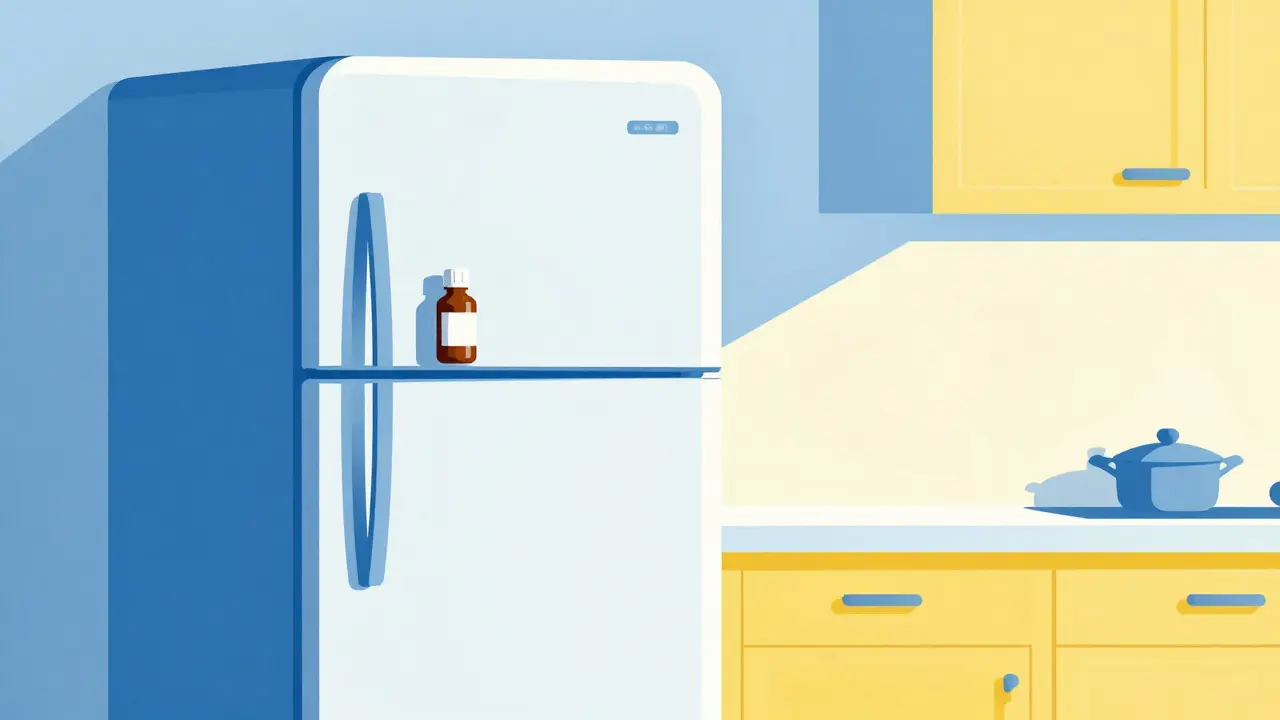
You've just picked up a prescription for your child, and the pharmacist handed you a liquid medication that they mixed from a powder. Now you're home and wondering: Does this actually need to go in the fridge, or is the kitchen counter fine? It sounds like a small detail, but liquid antibiotics storage is actually a critical part of the treatment. If the temperature is wrong, the medicine can break down, meaning the infection might not clear up, and your loved one stays sick longer.
| Storage Type | Ideal Temperature | Common Example | Key Risk |
|---|---|---|---|
| Refrigerated | 2°C to 8°C (36°F to 46°F) | Many Penicillins | Potency loss if too warm |
| Room Temperature | 20°C to 25°C (68°F to 77°F) | Specific stable suspensions | Degradation if too hot |
| Avoid Entirely | Freezing or Direct Sunlight | All liquid meds | Chemical structure change |
Understanding Reconstituted Suspensions
First, let's get the terminology straight. Many antibiotics come as a dry powder. When the pharmacist adds sterile water to that powder, it becomes a Reconstituted Suspension a pharmaceutical preparation where the active drug is dispersed throughout a liquid vehicle. Because the drug is now in a liquid state, it is much more susceptible to environmental changes than the powder was.
Why does this matter? Because the stability of these drugs is measured in days, not years. While a pill in a bottle might last two years, a liquid version often expires in 10 to 14 days. This is why you'll see a "beyond-use date" written on the bottle by the pharmacy. That date is based on stability testing required by the FDA the U.S. Food and Drug Administration, which regulates pharmaceutical stability and purity to ensure the drug retains its strength from the first dose to the last.
To Fridge or Not to Fridge?
The biggest mistake people make is assuming all liquid meds belong in the refrigerator. While many do, some actually break down faster when chilled. You have to follow the specific instructions on your label, but here are the general patterns.
For many penicillin-based drugs, like Amoxicillin a broad-spectrum penicillin antibiotic used to treat various bacterial infections, refrigeration is often preferred. It keeps the molecules stable and extends the shelf life. However, if you're in a pinch, some versions of amoxicillin can stay stable at room temperature (between 20°C and 25°C) for a short period. The real danger is when you have combination drugs. For example, in a mixture of amoxicillin and clavulanate, the clavulanate part is much more sensitive to heat than the amoxicillin. If you leave a combination drug on the counter for more than five days, you might still have the amoxicillin, but the part that fights resistant bacteria could be gone.
On the flip side, some liquid antibiotics are designed to be stored at room temperature. Putting these in the fridge can cause the medication to crystallize or break down chemically, effectively ruining the dose. Always check the label for phrases like "Do not refrigerate" or "Store at room temperature.");

Environmental Traps to Avoid
It's not just about the fridge versus the counter. Where exactly you put the bottle in your house matters. Many people keep medications on the kitchen counter or a windowsill for convenience, but this is a recipe for failure. Direct sunlight can heat the liquid rapidly and trigger chemical reactions that destroy the active ingredients.
Then there's the "car trap." Leaving a bottle of antibiotics in a parked car during a New Zealand summer or a freezing winter is dangerous. Extreme heat degrades the medicine, and freezing can permanently change the structure of the drug, making it unstable. If you're traveling, don't just throw the bottle in a bag. Use an insulated pouch or a small cool pack to keep the temperature steady.
How to Administer and Handle Your Medication
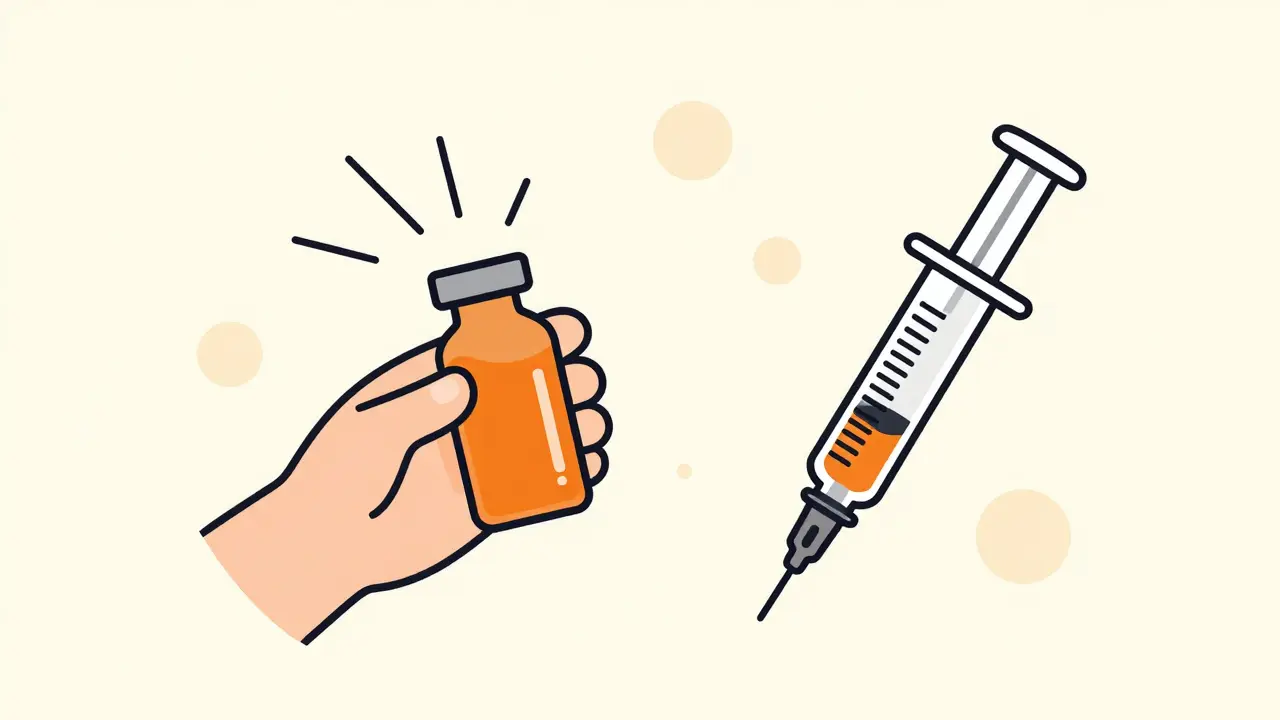
Storage is only half the battle; how you handle the drug before dosing also affects its efficacy. Since these are suspensions, the medication naturally settles at the bottom of the bottle over time. If you don't shake it well, the first few doses will be too weak, and the last few doses will be dangerously concentrated.
To get the right dose every time, avoid using household spoons. They are notoriously inaccurate and can lead to under-dosing, which contributes to antibiotic resistance. Instead, use the oral syringe, dropper, or calibrated measuring spoon provided by the pharmacy. To make the process easier, try to give the dose at the same time every day. If the medication upsets the patient's stomach, it's generally fine to give it with food unless your doctor specifically told you otherwise.
Signs Your Medication Has Gone Bad
If you accidentally left the medicine out overnight or it's past its beyond-use date, how do you know if it's still good? While some degradation is invisible, there are red flags to watch for:
- Color Changes: If a milky-white suspension turns yellow or brown, the chemical structure has likely shifted.
- Unexpected Texture: If you see clumps or crystals that won't dissolve after shaking, the drug may have "crashed out" of the solution.
- Smell: While some antibiotics smell naturally strong, a new or pungent odor can indicate spoilage.
If you notice any of these, don't risk it. A degraded antibiotic won't kill the bacteria efficiently, which can lead to a relapse of the infection or the development of bacteria that are harder to treat.
Can I freeze liquid antibiotics to make them last longer?
No, you should never freeze liquid antibiotics. Freezing can change the chemical composition of the medication and cause the active ingredients to separate or degrade, making the medicine ineffective.
What happens if I forget to put my antibiotic in the fridge for a few hours?
For most antibiotics, a few hours at room temperature won't ruin the batch, provided the room isn't excessively hot. However, if it's a combination drug like amoxicillin-clavulanate, prolonged room temperature exposure (beyond 5 days) can significantly reduce its potency.
Is it okay to use a liquid antibiotic if it's one day past the date on the bottle?
It is generally recommended to discard medication once it hits the beyond-use date. The pharmacy sets this date based on known stability data. After this point, there is no guarantee that the drug is still at full strength.
Why do I have to shake the bottle before every dose?
Liquid antibiotics are suspensions, meaning the drug particles are suspended in liquid but not fully dissolved. They settle at the bottom over time. Shaking ensures the drug is evenly distributed so you get the exact dose prescribed.
Can I store my antibiotics in the bathroom cabinet?
The bathroom is actually one of the worst places to store medication because of the heat and humidity from the shower. This moisture can seep into bottles and accelerate the breakdown of the drug.
Next Steps for Caregivers
If you are managing medications for a child or an elderly family member, create a simple checklist. Note the storage requirement (Fridge vs. Room Temp) and the exact discard date on a visible calendar. If you're traveling, pack your medications in a separate small cooler bag to avoid the temperature swings of a car or plane cabin.
If you ever find yourself unsure about whether a medication is still safe to use, don't guess. Call your pharmacist; they have the specific stability data for the exact brand and formulation you were dispensed and can tell you if the drug is still viable or if you need a fresh bottle.