
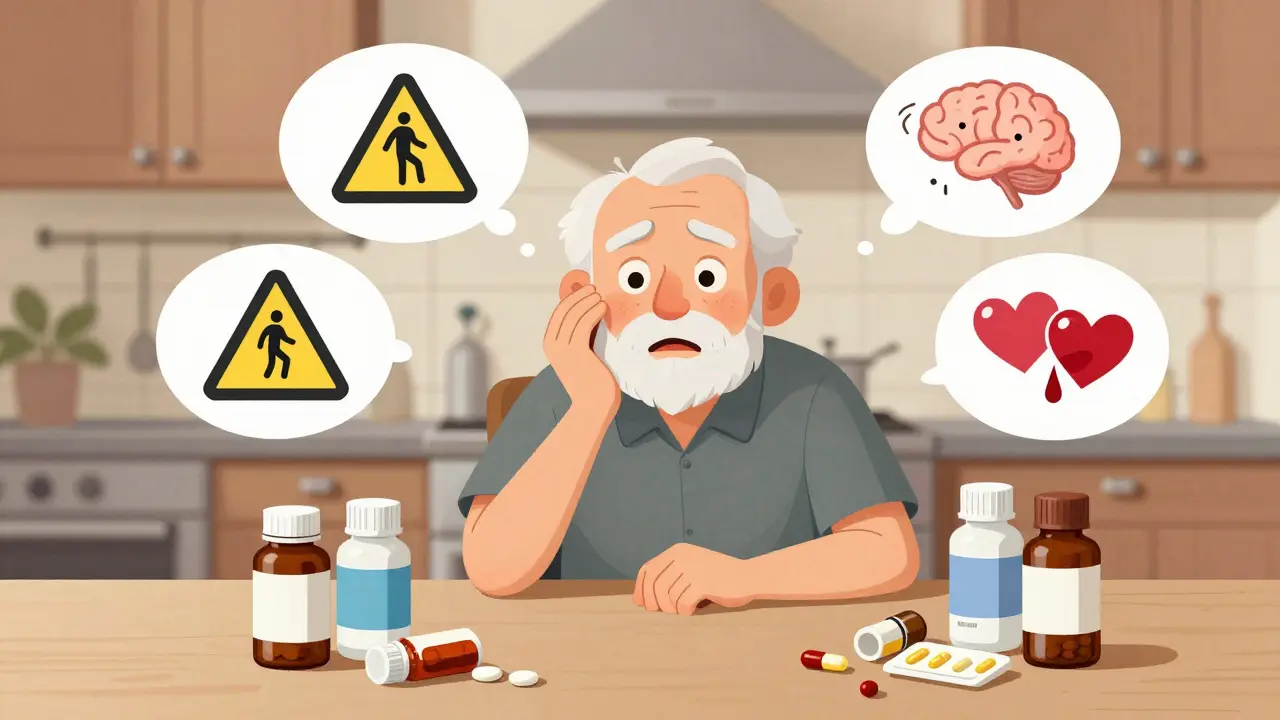
Older adults are at a higher risk of dangerous drug-drug interactions simply because they take more medications. About 40% of people over 65 in the U.S. are on five or more prescription drugs. Add in over-the-counter pills, vitamins, and herbal supplements, and it’s easy to see why mistakes happen. These interactions can lead to falls, confusion, kidney damage, or even hospital stays. But the good news? Many of these problems are preventable with the right approach.
Why Older Adults Are More at Risk
As we age, our bodies change in ways that affect how drugs are processed. The liver doesn’t break down medications as quickly. The kidneys don’t flush them out as efficiently. Fat and muscle balance shifts, which changes how drugs spread through the body. These changes mean that even a normal dose can become too strong. Studies show seniors are up to 50% more likely to have an adverse drug reaction than younger adults.Another big issue? Polypharmacy. That’s just a fancy word for taking too many meds at once. When someone is on seven or more drugs, the chance of a harmful interaction jumps sharply. The most dangerous combinations often involve drugs that affect the heart or the brain. For example, mixing a blood thinner like warfarin with an NSAID like ibuprofen can cause dangerous bleeding. Or combining a sedative with an antihistamine like diphenhydramine (found in Benadryl) can lead to dizziness, confusion, or falls.
The Tools That Help: Beers Criteria and STOPP
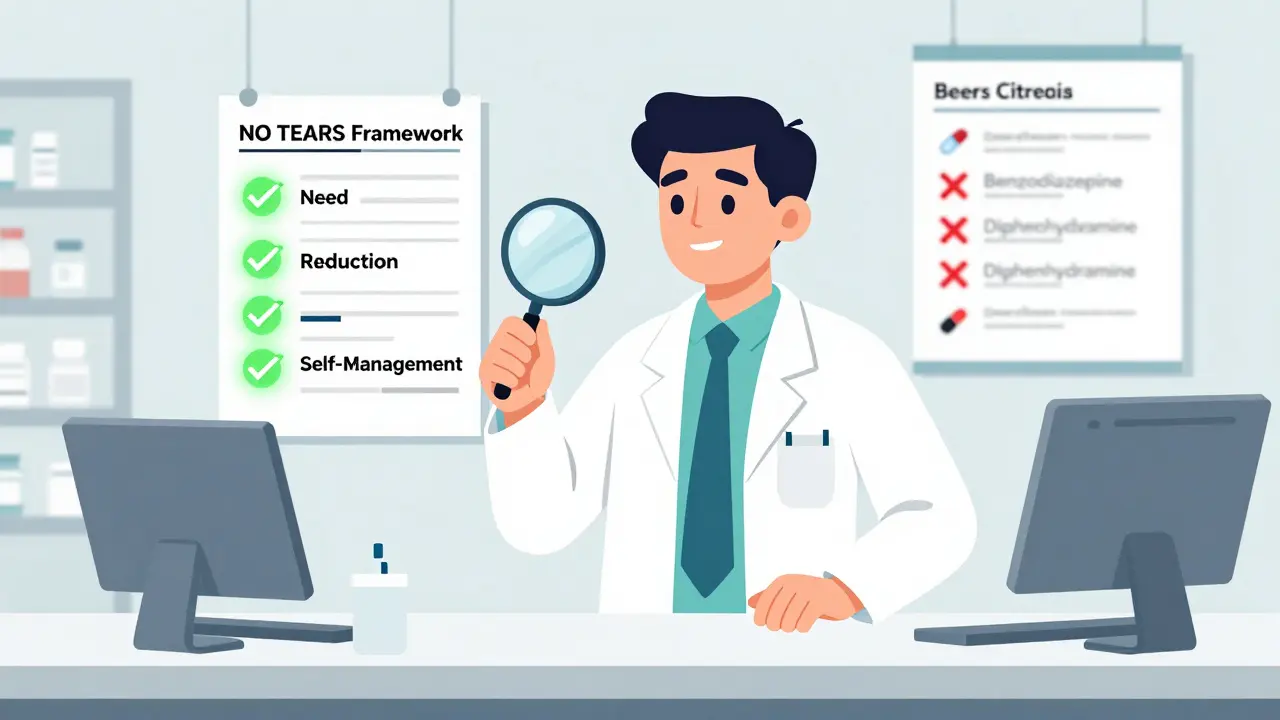
Two of the most trusted guides for spotting risky medications in older adults are the Beers Criteria and the STOPP criteria. Both are updated regularly based on real-world data.The American Geriatrics Society’s Beers Criteria, last updated in 2023, lists 30 types of medications that should generally be avoided in seniors - like benzodiazepines for sleep or certain anticholinergics for overactive bladder. It also flags 40 drugs that need lower doses because of kidney function. A 2022 study in JAMA Internal Medicine found that hospitals using the Beers Criteria saw a 17.3% drop in hospital admissions related to medications.
STOPP (Screening Tool of Older Persons’ Potentially Inappropriate Prescriptions) goes even further. It’s got 114 specific red flags across 22 body systems. For example, it warns against prescribing a proton pump inhibitor (like omeprazole) for more than eight weeks without a clear reason, or using a long-acting insulin in someone with a history of low blood sugar. When STOPP was used during hospital discharge planning in a 2021 study, it cut inappropriate prescribing by 34.7% and reduced readmissions by 22.1%.
The NO TEARS Framework for Medication Review
Instead of just checking off a list, clinicians are now using a smarter, patient-centered tool called NO TEARS. It’s not just about what’s on the list - it’s about what matters to the person.Here’s how it works:
- Need: Is this medication still necessary? Sometimes a drug was started years ago for a condition that’s now resolved.
- Optimization: Is the dose right? Many seniors need lower doses because of how their bodies process drugs.
- Trade-offs: Do the benefits outweigh the risks? A statin might lower heart attack risk, but if it’s causing muscle pain that limits mobility, is it worth it?
- Economics: Can the patient afford it? A $500-a-month pill might be clinically perfect - but if they skip doses to save money, it’s useless.
- Administration: Are they taking it correctly? Pill organizers, vision problems, or swallowing difficulties can make even the right meds ineffective.
- Reduction: Can we stop one? Every medication you stop is one less chance for an interaction.
- Self-management: Does the patient understand why they’re taking each drug? If they can’t explain it, they’re at risk.
Using NO TEARS isn’t just about safety - it’s about dignity. It turns medication reviews from a checklist into a conversation.
Communication Breakdowns Are a Major Cause
One of the biggest reasons for dangerous interactions isn’t a lack of knowledge - it’s a lack of communication. More than two-thirds of older adults see multiple doctors and use different pharmacies. A cardiologist might prescribe a new beta-blocker. A primary care doctor might add a diuretic. The pharmacist, unaware of both, doesn’t catch the interaction. A 2023 study found that 42% of preventable drug problems happen during care transitions - when patients move from hospital to home, or from one doctor to another.Even worse? Many seniors don’t tell their doctors about supplements. A Merck Manual survey showed 68% of older adults don’t mention herbal products like ginkgo, garlic, or St. John’s wort. But these can seriously interfere with blood thinners, blood pressure meds, and antidepressants.
What You Can Do: Practical Steps
If you or a loved one is on multiple medications, here’s what actually helps:- Keep a current list. Write down every pill, patch, liquid, and supplement - including doses and times. Update it every time something changes.
- Bring it to every appointment. Don’t rely on memory. Show it to the doctor, pharmacist, and nurse.
- Ask: “Can we stop any of these?” Don’t assume everything is still needed. Ask if any meds can be discontinued.
- Use one pharmacy. This lets the pharmacist see all your prescriptions and flag interactions.
- Review meds every six months. Even if nothing feels wrong, a routine check can catch hidden risks.
- Know the red flags. Watch for new dizziness, confusion, fatigue, or unexplained bruising. These can be signs of a bad interaction.
The Role of Technology and Future Changes
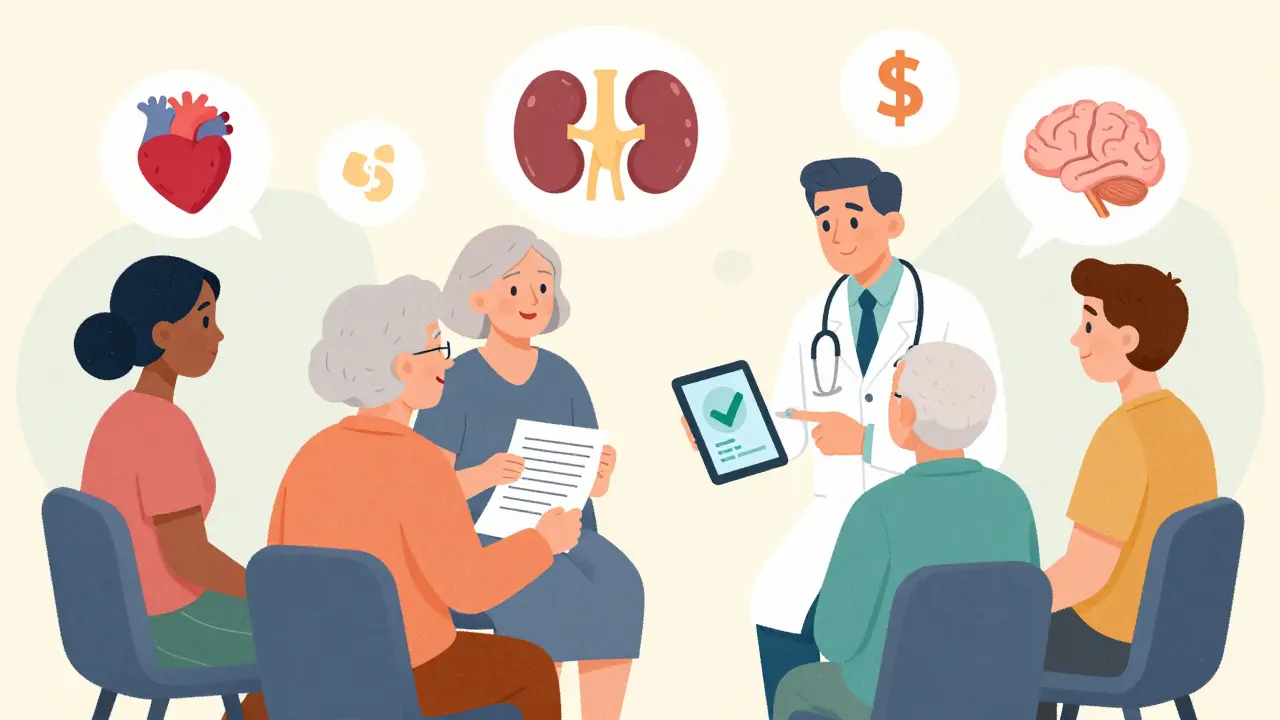
Technology is starting to help. Over 47% of U.S. hospitals now use AI-powered clinical decision tools that alert doctors to potential interactions in real time. These systems cross-check prescriptions against the latest Beers and STOPP lists, and even factor in kidney function and age.But progress is slow. Despite older adults making up 40% of patients using many medications, they’re rarely included in clinical trials - only about 5% of participants in Phase 3 trials are over 65. That means we’re often guessing how drugs will behave in seniors. The FDA is pushing for more geriatric data, especially for people over 75, and expects to see a 300% increase in this data by 2027.
Meanwhile, the 2025 update to the Beers Criteria is in the works. It will add more drug-disease interactions and adjust dosing for 15 more medications based on kidney function. That’s a step in the right direction.
Final Thought: Less Is Often More
There’s a myth that more meds mean better care. In reality, the opposite is often true. Every pill adds risk. The goal isn’t to treat every little symptom - it’s to keep people safe, mobile, and independent. Sometimes the best medicine is stopping one.What are the most common dangerous drug interactions in elderly patients?
The most dangerous interactions involve drugs that affect the heart and brain. Examples include combining warfarin (a blood thinner) with NSAIDs like ibuprofen (risk of bleeding), mixing benzodiazepines with antihistamines like diphenhydramine (increased drowsiness and fall risk), or using multiple drugs that lower blood pressure together (leading to dangerously low readings). Another common issue is combining multiple anticholinergic drugs - found in some allergy, bladder, and sleep meds - which can cause confusion, memory loss, and urinary retention.
How often should elderly patients have their medications reviewed?
At least once every six months. But if someone has recently been hospitalized, started a new medication, or is taking seven or more drugs, a review should happen every three months. Medicare’s Medication Therapy Management program offers free reviews for eligible beneficiaries, and many pharmacies now offer free medication therapy checks.
Are over-the-counter medications safe for seniors?
Not always. Many OTC drugs are risky for older adults. For example, diphenhydramine (Benadryl) and dimenhydrinate (Dramamine) are strong anticholinergics linked to dementia risk. NSAIDs like ibuprofen and naproxen can cause kidney damage or stomach bleeding, especially with long-term use. Even common supplements like St. John’s wort, ginkgo, or garlic can interfere with blood thinners, blood pressure meds, and antidepressants. Always check with a pharmacist before taking anything new.
Can stopping a medication cause problems?
Sometimes, but not usually - and often the risks of continuing outweigh the risks of stopping. For example, stopping a long-term PPI (like omeprazole) might cause temporary heartburn, but continuing it for years increases the risk of bone fractures and infections. Similarly, stopping a medication that’s no longer needed (like a cholesterol drug after a bypass surgery) can reduce side effects without harming health. Always taper off under medical supervision - don’t quit cold turkey.
What role do pharmacists play in preventing drug interactions?
Pharmacists are frontline defenders. They’re trained to spot interactions that doctors might miss, especially when patients use multiple pharmacies. They can flag dangerous combinations, suggest safer alternatives, and help with dosing adjustments based on kidney function. Medicare now covers Medication Therapy Management (MTM) services - a free, one-on-one review with a pharmacist - for people on multiple chronic medications. Using this service can reduce hospitalizations by 15% or more.
Amber Gray
STOPP? Beers? LOL we got a whole government committee just to tell us not to give grandma Benadryl?? 🤦♀️ I’ve seen seniors on 12 meds and they’re still walking around like they’re in a superhero movie. Just stop giving them so much crap in the first place. 🍎💊 #LessIsMore
Danielle Arnold
Wow. A 12-page essay on how doctors are bad at their jobs. Groundbreaking. 🙃
James Moreau
I work in geriatrics and this is actually one of the most balanced takes I’ve seen. The NO TEARS framework is gold. Real talk-most seniors don’t need 7 pills. They need someone to sit down with them, ask what they actually care about, and cut the noise. 🙏
J. Murphy
pharmas make bank off polypharmacy no one wants to admit it
Jesse Hall
This hit home. My dad was on 9 meds. We cut it to 4. He started sleeping through the night, stopped falling, and actually remembered my birthday. 🥹 Don’t be afraid to ask ‘can we stop this?’ It’s not giving up. It’s getting back control.
Donna Fogelsong
This is all part of the Big Pharma agenda to keep seniors docile and dependent. The FDA, AMA, and Medicare are all in bed with the drug giants. They don’t want you to know that natural remedies like turmeric and magnesium work better than 80% of these prescriptions. They’re scared. 🕵️♀️
rebecca klady
I just started helping my mom manage her meds. Took me 3 weeks to get all the lists from 4 different doctors. One pharmacy. One list. One less panic attack a week. Seriously, just write it down.
Caroline Dennis
The core principle here is deprescribing as a clinical priority-not an afterthought. When we optimize for function over biomarkers, outcomes improve. That’s not anecdotal. It’s evidence-based gerontology. 🧠
Mihir Patel
bro i just gave my aunt a benadryl for allergies and now she cant remember my name 😭 this post is a vibe