
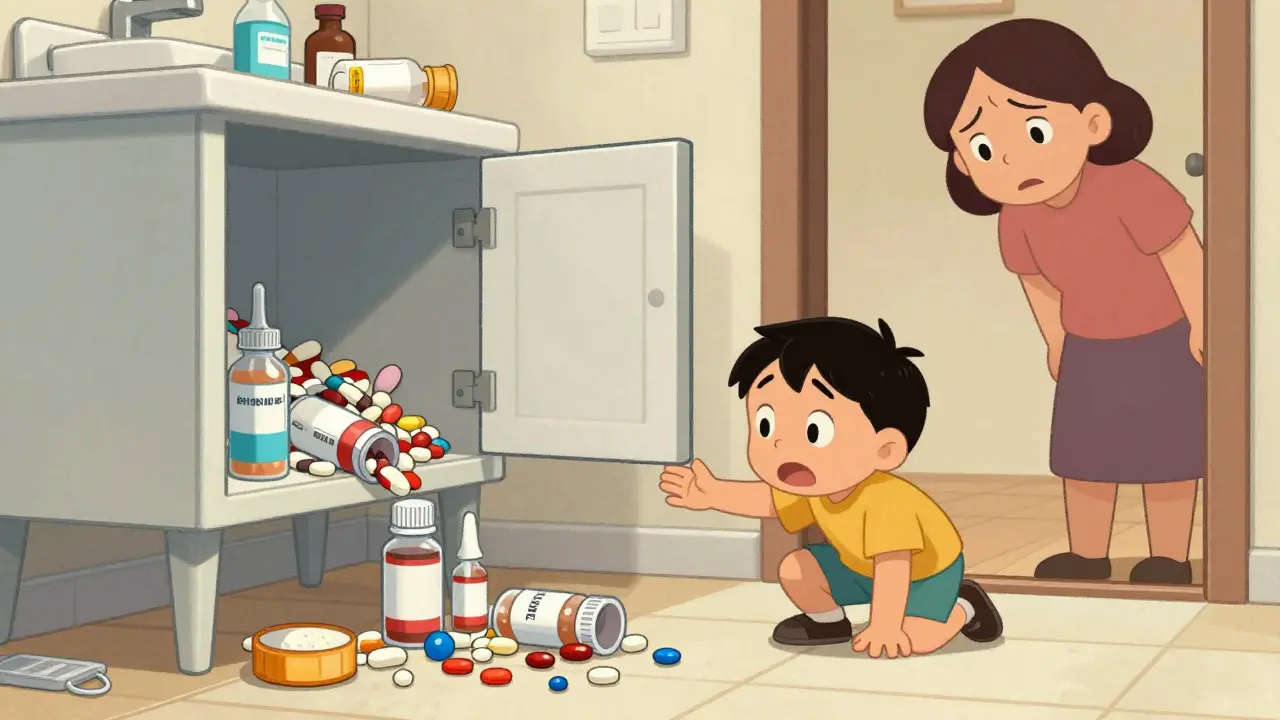
Storing medications in a shared living space isn’t just about keeping pills out of sight-it’s about keeping them safe, effective, and out of the wrong hands. Whether you’re living with roommates, caring for an aging parent in a multi-generational home, or managing meds in a group home, the risks are real. Accidental overdoses, expired drugs, temperature damage, and even theft happen more often than people admit. And the consequences? They can be life-threatening.
Why Medication Storage in Shared Spaces Is Different
In a single-person home, you might toss your blood pressure pills in a bathroom cabinet or leave your insulin on the fridge door. But in shared spaces, that’s a recipe for trouble. Kids rummage through cabinets. Roommates grab what they think is a painkiller. Seniors forget if they already took their dose. And some medications? They lose potency if they get too hot, too cold, or too damp. According to a 2025 survey by SeniorHelpers, 67% of multi-generational households reported at least one medication-related incident in the past year. Nearly half of those involved children accessing meds stored in bathrooms or kitchen counters. Meanwhile, 22% of professional care facilities failed to properly document temperature issues in refrigerated meds-meaning even trained staff mess up. The key difference? Shared spaces demand systems, not habits.Lock It Down-No Exceptions
If you’re storing any prescription, over-the-counter, or even vitamin supplements in a shared space, they need to be locked up. Not just "put in a drawer," but locked. The Joint Commission, which sets healthcare safety standards, requires all medications to be kept under lock and key at all times. And they mean it-13% of hospitals received citations for improper storage between 2020 and 2021. For shared homes, this means:- Use a dedicated locked medicine cabinet in a common area like a bedroom or utility room-not the bathroom.
- For controlled substances like opioids or ADHD meds, use a lockbox with an audit trail if possible. Some smart lockboxes log who opens them and when.
- Keep the key or code with one designated person-usually the primary caregiver or a responsible adult. Never leave it in an obvious spot like taped under a drawer.
Temperature Matters More Than You Think
Your insulin, eye drops, or liquid antibiotics aren’t just pills. They’re biological products. And heat, cold, and humidity can destroy them. The FDA updated its guidance in February 2024 for 47 common medications, clarifying exact storage needs. For example:- Insulin must be kept between 36°F and 46°F (2°C-8°C) when unopened. Once opened, some types can stay at room temperature-but only for a limited time.
- Antibiotics like amoxicillin suspension degrade quickly if left out. They can lose up to 30% of their potency in 24 hours if exposed to temperature swings.
- Suppositories and rectal creams melt above 77°F (25°C).
Label Everything-Even the Obvious
A 2021 Joint Commission survey found that 12% of hospitals got cited for poor labeling. That’s not just about missing names-it’s about clarity. In shared spaces, you need to know:- Who the med is for
- When to take it
- What it’s for
- When it expires
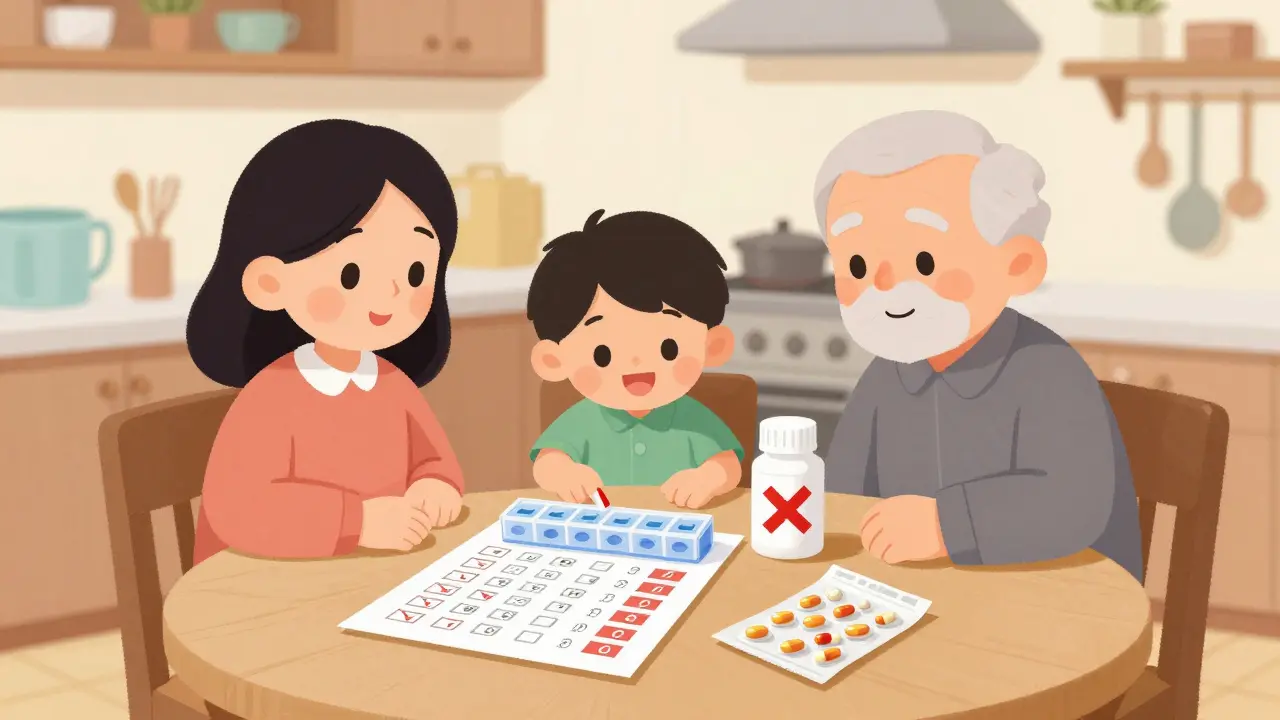
- For daily pills: Use a pill organizer with clear labels (Monday-Sunday, AM/PM).
- For liquids or injections: Write the person’s name, dosage, and date opened on a sticky note and tape it to the bottle.
- For expired meds: Mark them with a red X and remove them immediately.

Separate the Types
Not all meds are created equal. Group them by risk and need:- Controlled substances (opioids, benzodiazepines, stimulants): Locked box, access log, stored separately from other meds.
- Refrigerated meds (insulin, some antibiotics, eye drops): Dedicated fridge zone, temperature log.
- Over-the-counter (painkillers, antihistamines): Locked cabinet, but can be grouped with prescription meds if space is tight.
- Supplements (vitamins, herbal): Keep them in the same cabinet, but label them clearly. Some herbs interact dangerously with prescriptions.
Document, Document, Document
Professional care homes use something called a Medication Administration Record (MAR). It’s a daily log that tracks who took what, when, and if they refused it. It sounds bureaucratic-but it saves lives. In a shared home, you don’t need a full MAR. But you do need a simple system:- Use a whiteboard or printed chart with names and times.
- Put a checkmark when a med is taken.
- Record if someone missed a dose or felt sick after taking it.
Clear Out the Clutter
Before you set up a new system, clean house. Literally. Go through every drawer, cabinet, and purse. Find:- Expired meds (check the date on the bottle)
- Old prescriptions from past illnesses
- Leftover antibiotics
- Supplements you forgot you bought
- Take them to a pharmacy with a take-back program (many in New Zealand offer this).
- If no program exists, mix pills with coffee grounds or cat litter, seal them in a bag, and throw them in the trash.
- Never flush them down the toilet unless the label says to.
What About Smart Tech?
Tech isn’t magic-but it helps. In 2024, companies like DosePacker released smart medication lockboxes that:- Record when they’re opened
- Send alerts if the temperature goes out of range
- Remind users when it’s time to take a pill
Training and Communication
No system works if people don’t understand it. Hold a 15-minute family meeting:- Explain why meds are locked.
- Point out where each person’s meds are stored.
- Go over what to do if someone misses a dose.
- Assign one person to check expiration dates monthly.
What If Someone Breaks the Rules?
Sometimes, someone will take a pill "just this once." Maybe it’s a roommate with a headache. Or a teen who thinks they need something for anxiety. Don’t yell. Don’t shame. Talk. Ask: "Why did you take it?" Then explain the risk: "That’s not for you. It could make you sick. Or worse-it could mess up someone else’s treatment." If it happens again, reassess your system. Is the lock too hard to open? Are meds too far away? Is someone afraid to ask for help? Fix the system, not the person.Final Checklist
Here’s your simple, actionable plan:- ☐ Remove all expired or unnecessary meds
- ☐ Buy a locked, non-bathroom storage box or cabinet
- ☐ Get a mini-fridge for refrigerated meds if you have more than two
- ☐ Label every container with name, dosage, and date
- ☐ Group meds by type and risk
- ☐ Create a simple daily log (paper or digital)
- ☐ Assign one person to check temperatures and expiration dates weekly
- ☐ Teach everyone in the house: "This box is locked for safety. Don’t open it without permission."
What Happens If You Don’t Do This?
People die from accidental overdoses in shared homes. Elderly folks get sicker because their insulin degraded. Kids end up in the ER because they thought a blue pill was candy. Roommates get addicted because opioids were left on the counter. It’s not paranoia. It’s prevention. The number of multi-generational households in the U.S. grew from 51 million in 2020 to nearly 60 million in 2024. That’s millions of homes where meds are now being shared. And the systems aren’t keeping up. You don’t need to be a nurse. You just need to be careful.Can I store all my meds in the bathroom cabinet?
No. Bathrooms are too humid and hot, especially near showers. That moisture can ruin pills, capsules, and liquids. Medications like insulin, nitroglycerin, and some antibiotics degrade faster in humid environments. Always store meds in a cool, dry place-like a locked bedroom cabinet or drawer.
What if someone needs to take their med right away and the key is locked away?
Keep a small, labeled emergency key or code with the person who needs the medication, or with a trusted roommate. For example, if someone takes insulin at night, they should have access to their own locked box with a combination only they know. Avoid one central key that everyone needs to ask for-it delays care and creates stress.
Do I need to refrigerate all my meds?
No. Only refrigerate what the label or pharmacist says to. Most pills are fine at room temperature (below 77°F or 25°C). But insulin, eye drops, liquid antibiotics, and some biologics must be kept cold. Always check the packaging or ask your pharmacist. When in doubt, refrigerate-it’s safer than risking degradation.
How do I dispose of old or expired medications safely?
Take them to a pharmacy with a drug take-back program-many in New Zealand offer this for free. If that’s not available, mix pills with used coffee grounds or cat litter in a sealed plastic bag, then throw them in the trash. Never flush them unless the label specifically says to. Flushing harms waterways and is illegal in many places.
Can children be taught not to touch meds?
Yes, but don’t rely on them to remember. Teach them: "These are not candy. Only adults can open this box." Use simple language and consistent rules. But always lock the meds anyway. Kids are curious. A locked box is the only reliable protection.
What’s the biggest mistake people make?
Assuming it’s fine because "no one’s ever had a problem before." Medication errors don’t always cause immediate harm. But they build up. A degraded antibiotic doesn’t work. A missed dose causes a blood pressure spike. A child grabs the wrong pill. Prevention isn’t dramatic-it’s daily. Check labels. Lock it. Log it. Clean it out.
Yuri Hyuga
This is exactly the kind of practical, life-saving advice we need more of! 🙌 Locked cabinets, temperature logs, labeling everything - it’s not rocket science, but it’s something 90% of households skip until it’s too late. I’ve seen a cousin nearly lose a sibling to a mix-up with ADHD meds - no one meant harm, but no one had a system either. This checklist? Print it. Tape it to the fridge. Share it with your whole household. Safety isn’t optional.
Coral Bosley
I don’t care how many studies you cite or how many boxes you lock - if you don’t talk to the people living with you about why this matters, you’re just moving the problem to another room. My aunt kept her insulin in the bathroom because it was ‘convenient’ - until the humidity turned it to sludge. She didn’t know. No one told her. It’s not about rules. It’s about respect. And communication. Stop treating meds like clutter and start treating them like people.
Steve Hesketh
Brother, I’m from Lagos and we don’t have smart lockboxes or mini-fridges for meds - but we do have family. We have elders who know when someone’s been taking too much. We have cousins who watch out for each other. We don’t need tech to save lives - we need trust. I locked my mother’s meds in a shoebox with a padlock and wrote her name on it in red marker. That’s it. And every night, my little sister asks, ‘Mama’s medicine - did she take it?’ That’s the system. Simple. Human. Real.
Philip Williams
The data presented here is compelling, particularly the 42% incident rate in bathroom-stored medication environments. However, I would urge caution in extrapolating these findings universally. Regional variations in climate, cultural norms around medication use, and access to storage infrastructure may significantly influence outcomes. A standardized protocol is necessary, but implementation must be context-sensitive. Further peer-reviewed validation of the SeniorHelpers survey methodology is recommended before institutional adoption.
Ben McKibbin
Let’s be real - the bathroom cabinet myth needs to die in a fire. It’s not ‘convenient,’ it’s negligent. And labeling? If you’re still relying on tiny bottle print, you’re one careless teenager away from a tragedy. I’ve seen a guy take his roommate’s Xanax because it was ‘just a little blue pill.’ He ended up in the ER. The roommate? Never spoke to him again. This isn’t about being paranoid. It’s about being responsible. Lock it. Label it. Log it. Or get out of shared housing.
Melanie Pearson
While this article presents a superficially logical framework, it fundamentally misunderstands the nature of personal autonomy in shared domestic spaces. Mandating locked storage and surveillance-style documentation is a slippery slope toward institutionalized control over private health decisions. If someone chooses to store their medication improperly, that is their right - and their consequence. The state should not be involved in policing household medicine cabinets. This is a path toward medical authoritarianism disguised as safety.
Rod Wheatley
Just wanted to add - if you’re using a mini-fridge for meds, get a little digital thermometer with a probe! I bought one for $12 on Amazon, stuck it inside, and now I know if it’s actually staying at 38°F or if it’s creeping up to 50°F because someone’s dumping pizza in there. Also, label the fridge in big letters: "MEDS ONLY - NO FOOD, NO DRINK, NO EXCUSES." I’ve seen people put soda in there because "it’s cold and empty." It’s not empty. It’s someone’s life.
And if you’re using a Google Sheet? Make sure everyone has access. Don’t just send the link once. Put it on the fridge. Set a reminder. Check it weekly. Consistency beats fancy tech every time.
Also - expired meds? Don’t just toss them. I take mine to the CVS dropbox. Free. Safe. No guilt. Do that. Please.
Uju Megafu
Oh, so now we’re treating adults like children? Locking up their meds like they’re toddlers? Who’s next? Monitoring their toilet paper use? This isn’t a nursing home - it’s a home. If your roommate is stealing your pills, that’s a relationship problem, not a storage problem. You don’t need a logbook. You need boundaries. You need to say, "If you touch my meds again, I’m calling the cops." Not a checklist. Not a smart box. A conversation. A warning. A line. Stop infantilizing everyone. People aren’t dumb. They’re just dishonest. And you’re enabling that by pretending a lockbox fixes character.