
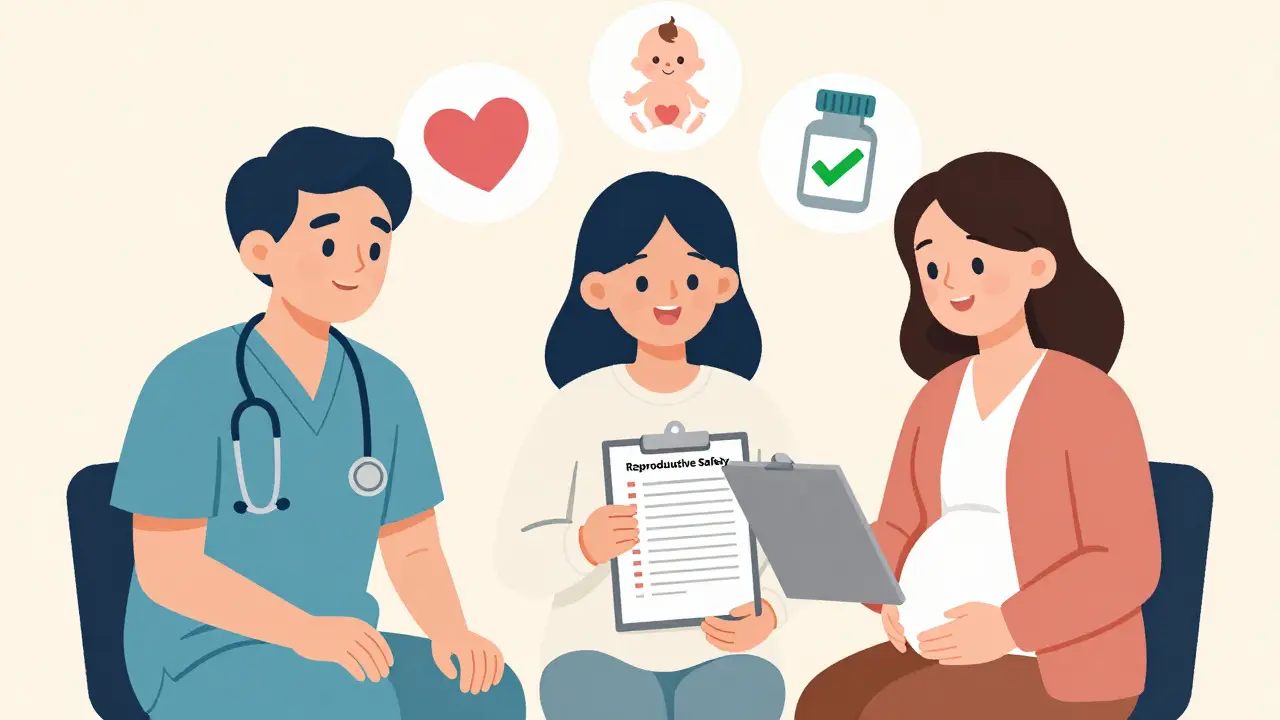
When you’re pregnant or breastfeeding and need psychiatric medication, you’re not just managing your mental health-you’re managing two lives. That’s why coordinating care between your OB/GYN and psychiatrist isn’t optional. It’s essential. Too often, women get caught in the middle: their OB/GYN says one thing about medication safety, their psychiatrist says another, and no one talks to each other. The result? Unnecessary stress, medication changes that don’t make sense, or worse-stopping treatment because of fear.
Why Coordination Matters More Than Ever
About 1 in 5 women experience depression, anxiety, or bipolar disorder during pregnancy or after giving birth. Left untreated, these conditions raise the risk of preterm birth, low birth weight, and even long-term developmental issues for the child. But starting or continuing medication isn’t simple. Some drugs cross the placenta. Some show up in breast milk. And not all providers know the latest safety data. The American College of Obstetricians and Gynecologists (ACOG) made this clear in their 2023 guidelines: coordinated care reduces medication discontinuation by more than half. In one study of nearly 9,000 pregnant women, those who had both an OB/GYN and psychiatrist working together saw a 37% drop in postpartum depression symptoms. That’s not a small win-it’s life-changing.What Medications Are Safe During Pregnancy?
Not all antidepressants are created equal. The safest first-line choices during pregnancy are sertraline and escitalopram. Why? Because decades of data show they have the lowest risk of birth defects. Sertraline, for example, increases the absolute risk of heart defects from 1% in the general population to just 1.5%. That’s a tiny increase-and far lower than the risks of untreated depression. Paroxetine, on the other hand, is linked to a higher risk of heart defects and should be avoided if possible. For bipolar disorder, lithium and lamotrigine are often preferred over valproate, which carries a 10.7% risk of major birth defects. Mood stabilizers shouldn’t be stopped cold turkey unless absolutely necessary. Sudden withdrawal can trigger mania or severe depression, which is dangerous for both mother and baby. The National Pregnancy Registry for Psychiatric Medications, which has tracked over 15,000 pregnancies since 2011, confirms that SSRIs like sertraline and escitalopram don’t cause major malformations at higher rates than the background population. Only paroxetine shows a consistent signal of risk.How Pregnancy Changes How Medications Work
Your body isn’t the same during pregnancy. Blood volume increases by 40-50%. Your kidneys filter faster. Liver enzymes that break down drugs become more active-especially in the third trimester. This means medications may not stay in your system as long. For example, sertraline’s half-life drops from about 26 hours in non-pregnant adults to closer to 18 hours by the third trimester. That’s why some women who were stable on 50 mg before pregnancy suddenly feel anxious or low at 30 weeks. Their dose may need adjustment-but only if their OB/GYN and psychiatrist are talking. Protein binding matters too. Drugs like sertraline bind to proteins in the blood at 98%. During pregnancy, lower protein levels mean more free drug circulates. That can make side effects worse-even if the dose hasn’t changed.What About Breastfeeding?
The good news? Most psychiatric medications pass into breast milk in very small amounts. Sertraline is one of the best-studied and safest options. Levels in breast milk are typically less than 1% of the mother’s dose. Escitalopram is also low-risk. Fluoxetine, however, builds up over time in babies and can cause irritability or sleep problems-so it’s usually avoided unless necessary. The LactMed database, maintained by the National Library of Medicine, is the go-to resource for breastfeeding safety. It shows that even with medications like venlafaxine or bupropion, infant exposure is minimal and rarely causes issues. Still, your psychiatrist needs to know you’re breastfeeding before prescribing anything new.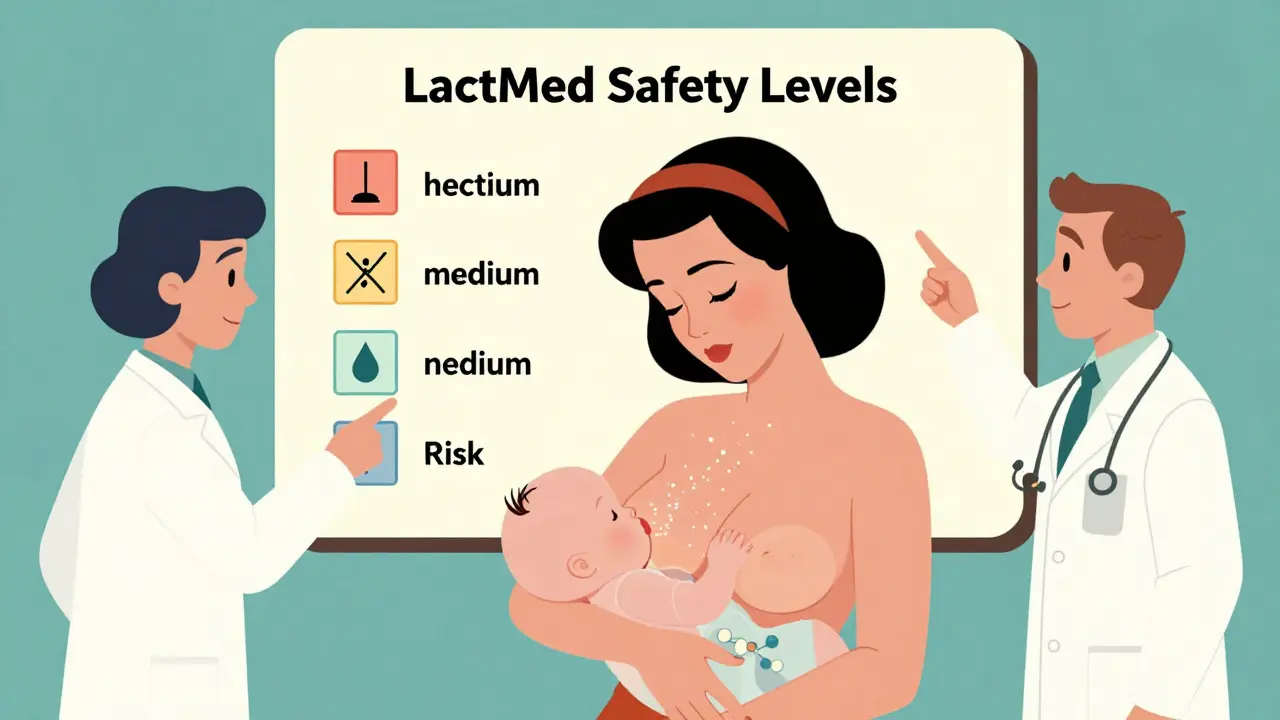
The 5-Step Coordination Protocol
There’s a clear, evidence-based way to make this work. Here’s how it should happen:- Preconception planning - If you’re trying to get pregnant, schedule a joint visit with both providers at least 3-6 months ahead. This is the best time to switch medications safely, adjust doses, and get your mental health stable before conception.
- First coordination meeting by 8-10 weeks - This isn’t optional. By this point, your baby’s organs are forming. Your OB/GYN should already have shared your medication list with your psychiatrist. If they haven’t, ask why.
- Regular check-ins every 4 weeks - For stable patients, monthly communication is enough. If you’re struggling, weekly updates are needed. Use standardized templates that include protein binding, placental transfer, and lactation risk categories.
- Shared decision-making tools - ACOG’s Reproductive Safety Checklist rates risks on a 1-10 scale for both relapse and medication exposure. Use it. It turns vague fears into clear numbers. For example: “Without treatment, your chance of relapse is 65%. With sertraline, your baby’s risk of heart defect is 0.5%.”
- Document everything - Both providers must record the same details in their notes: medication name, dose, reason for choice, risk-benefit calculation, and next follow-up date. If it’s not written down, it didn’t happen.
What Gets in the Way?
Even with great guidelines, coordination still fails. Why? Electronic health records (EHRs) rarely talk to each other. Your OB/GYN’s system might not even show your psychiatrist’s notes. In 67% of practices, providers report this as a major barrier. Some clinics use shared portals, but most don’t. Insurance is another problem. Prior authorizations for psychiatric visits can take over two weeks. One woman in a Project TEACH NY case study stopped her sertraline because she couldn’t get a psychiatrist appointment fast enough. She ended up hospitalized with severe postpartum depression. Then there’s stigma. Some OB/GYNs still think mental health isn’t their job. But ACOG says they’re responsible for initiating treatment in perinatal depression-and referring when needed. Ninety-two percent of maternal-fetal medicine specialists agree.What Works in Real Clinics
Kaiser Permanente’s integrated model is one of the best examples. Their OB/GYNs and psychiatrists sit in the same building. They use shared EHRs, joint consults, and automated alerts. When an OB/GYN prescribes an antidepressant, the system flags it and notifies the psychiatrist within hours. Patient satisfaction? 89%. Epic Systems launched its Perinatal Mental Health Module in early 2023. It’s now used by over 1,200 healthcare systems covering two-thirds of U.S. births. The system auto-generates a coordination note, suggests safe meds based on pregnancy stage, and even flags if a patient is due for a dose adjustment.
What to Ask Your Providers
Don’t wait for them to bring it up. Ask these questions:- “Are you aware of ACOG’s 2023 guidelines on perinatal medication safety?”
- “Have you reviewed my medication with my psychiatrist?”
- “Is sertraline or escitalopram the best choice for me right now?”
- “What’s my risk of relapse if I stop this medication?”
- “Will you communicate directly with my psychiatrist, or should I send a note?”
- “Can I get a copy of the Reproductive Safety Checklist?”
veronica guillen giles
Oh wow, another ‘coordinated care’ pamphlet disguised as a life-saving manifesto. Let me guess - the OB/GYN is just waiting for the psychiatrist to magically appear like a fairy godmother with a shared EHR? In my town, the OB won’t even return a call unless you’ve paid in Bitcoin and recited the Hippocratic Oath backwards. Meanwhile, my psychiatrist is still using fax machines. 🙃
Vincent Sunio
While the general sentiment is laudable, the article exhibits a troubling conflation of correlation with causation. The cited 37% reduction in postpartum depression symptoms lacks proper multivariate control for socioeconomic status, baseline mental health severity, and access to postpartum support systems. Furthermore, the assertion that sertraline is ‘safest’ ignores the confounding influence of dosing variability and pharmacogenomic differences across populations. ACOG guidelines, while authoritative, are not infallible - particularly when derived from observational cohorts with high attrition rates.
Angela Goree
They’re pushing this because Big Pharma wants you on meds forever. Sertraline? It’s just a chemical leash. You think your baby’s safe? What about the kids who grew up on SSRIs and now can’t feel joy? The FDA’s ‘updated labels’? That’s just PR spin. They don’t care about your baby - they care about your prescription refill rate. And now Medicare’s paying extra to keep you hooked? Wake up. This isn’t medicine. It’s a money pipeline.
Ian Detrick
It’s fascinating how we’ve turned medical care into a checklist - preconception planning, 8-week coordination, monthly templates - but forgot the human part. Who’s holding space for the woman who’s terrified to take anything but feels like she’s failing if she doesn’t? The data’s great. But the fear? The guilt? The shame? That’s not in any algorithm. Maybe the real coordination isn’t between doctors… it’s between the system and the soul.
Angela Fisher
Okay but have you heard about the 2025 Medicaid audit that’s going to flag every woman on SSRIs? They’re linking it to autism rates now - not officially, but in the backroom databases. I know a mom who got her baby taken by CPS because her OB said she was ‘non-compliant’ with ‘medication monitoring.’ They don’t tell you this stuff. The LactMed database? That’s a front. The real data’s buried in CDC internal memos. And the NIH’s PACT trial? They’re testing gene chips to see who’s ‘medication-responsive’ - which means they’re trying to sort us into ‘good patients’ and ‘high-risk liabilities.’ I’m not taking anything. Not even water. 😔
Neela Sharma
My sister carried two babies on lamotrigine - no drama, no panic, just quiet strength. The doctors didn’t talk? She made them talk. Printed the ACOG checklist. Sat in their offices until they shook hands. You don’t wait for permission to protect your child. You become the bridge. The system is broken? Build your own path. Love doesn’t need a referral. It needs courage. And tea. Lots of tea. 🌿
Michael Burgess
Biggest takeaway for me? The protein binding thing. I had no idea my dose was basically ‘free-floating’ by week 30. I felt like I was going crazy - but it was just my body doing its thing. My psychiatrist finally adjusted my sertraline after I sent him the half-life data. We’re good now. Also, if you’re breastfeeding: sertraline is your friend. My baby slept like a angel. No jittery weirdness. Just quiet, healthy, thriving. 🤱❤️
Palesa Makuru
Let’s be real - if you’re not in a Kaiser Permanente clinic or some fancy academic hospital, this whole ‘coordination protocol’ is a fantasy. My OB didn’t even know what SSRIs were. My psychiatrist refused to talk to her because ‘she doesn’t understand psychopharmacology.’ So I had to email both of them the same 12-page PDF. And then they both ignored it. This isn’t healthcare. It’s a bureaucratic obstacle course designed to make you cry in the parking lot.
Lori Jackson
There’s a reason we don’t prescribe SSRIs during pregnancy - it’s not because of birth defects. It’s because we’re not supposed to medicate emotional suffering in women. We’re supposed to ‘fix’ their trauma, their marriages, their lack of support. But no - let’s just pop a pill and call it a day. This is patriarchy in white coats. The real solution isn’t coordination - it’s dismantling the systems that make women feel like broken machines needing chemical patchwork.
Wren Hamley
Wait - if sertraline’s half-life drops to 18 hours in the third trimester, does that mean you need to split doses? Or just increase the total daily? And is there any data on CYP2D6 metabolizer status affecting this? I’m a poor metabolizer and my doc just upped my dose to 150mg because I ‘felt worse’ - but I’m terrified of toxicity. Also, does anyone have a link to the actual ACOG checklist PDF? I can’t find it on their site.
innocent massawe
Thank you for writing this. In Nigeria, we don’t even have psychiatrists in most maternity clinics. Women stop meds because they’re scared - or because no one tells them it’s safe. I wish this was translated to Hausa and Yoruba. You’re not alone. You’re not weak. You’re fighting for two lives. That’s not madness - that’s love.
erica yabut
Let’s not romanticize SSRIs. Sertraline is not a ‘safe’ choice - it’s a compromise. The fact that we’ve normalized chemical management of maternal mental health reveals how little we value systemic support. Breastfeeding? Sure, the levels are low - but what about epigenetic effects? Long-term neurodevelopment? We’re playing Russian roulette with fetal brain wiring and calling it ‘evidence-based.’
Tru Vista
ACOG 2023? LOL. They still say paroxetine is bad but don’t mention it’s fine if you’re past 12 weeks. Also, ‘shared decision-making’? My OB just handed me a pamphlet and said ‘take what you want.’ My psychiatrist didn’t even know I was pregnant until I told him. I stopped meds. Now I’m crying in the shower every day. Thanks for nothing.