
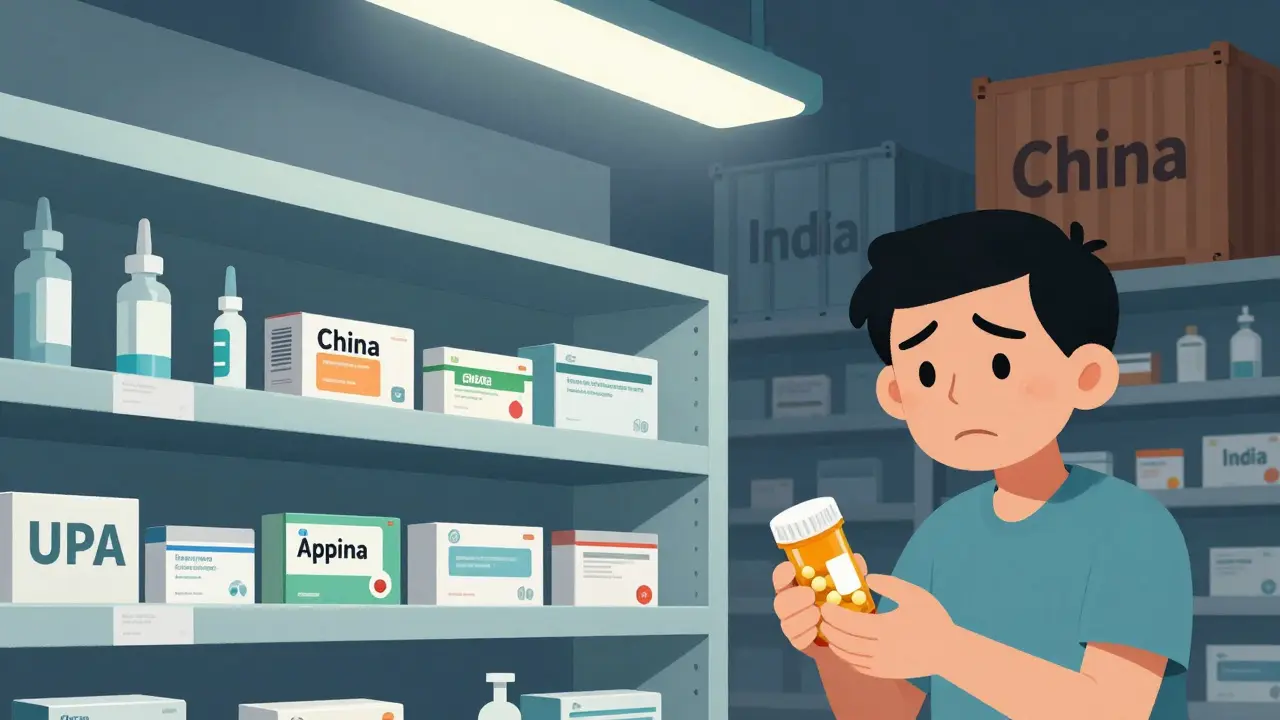
When the pandemic hit, most people worried about masks, ventilators, and hospital beds. But behind the scenes, something quieter but just as dangerous was happening: drug shortages started popping up everywhere. Insulin. Antibiotics. Blood pressure pills. Even basic painkillers. People didn’t just struggle to find them-they had to ration, delay doses, or switch to riskier alternatives. And it wasn’t just prescription meds. The illegal drug market collapsed, too, pushing people toward deadlier substances like fentanyl. This wasn’t a glitch. It was a system breaking down.
Why Did Medications Vanish Overnight?
The problem wasn’t that factories stopped making drugs. It was that the whole chain-raw ingredients, shipping, packaging, distribution-got tangled. Most of the active ingredients in pills and injections come from just two countries: China and India. When lockdowns hit there in early 2020, production slowed. Trucks couldn’t move. Ports backed up. By February to April 2020, nearly one in three drug supply reports turned into actual shortages. That’s a five-fold jump from normal levels. Some of the hardest-hit drugs were the ones you’d expect in a crisis: sedatives for ICU patients, antibiotics for secondary infections, and steroids used to treat severe COVID-19. But it wasn’t just hospital drugs. Generic medications-cheaper, everyday pills like metformin or amoxicillin-also disappeared. Why? Because manufacturers make less profit on generics. When costs rise and demand gets unpredictable, they cut back. The FDA stepped in by fast-tracking inspections and pushing companies to report issues earlier. By May 2020, the worst of the shortages started to ease. But the cracks stayed.The Illicit Drug Market Turned Deadly
While prescription drugs got harder to find, illegal drugs became more dangerous. With borders closed and traditional supply routes broken, traffickers didn’t stop selling-they just made their products stronger. Fentanyl, a synthetic opioid 50 to 100 times more powerful than heroin, started showing up in cocaine, meth, and even fake pills sold as oxycodone. Users didn’t know what they were taking. One Reddit user in June 2020 described it this way: “The street supply got weird after lockdowns started-people were getting knocked out by doses that used to be normal.” The result? Overdose deaths exploded. From May 2019 to April 2020, about 77,000 Americans died from drug overdoses. The next year? Nearly 98,000. That’s a 27% jump in just 12 months. States like West Virginia, Kentucky, and Vermont saw increases over 50%. In places with strong harm reduction programs, naloxone distribution rose by 30% in 2020. But for many, help was too late-or too hard to reach.Telehealth Helped Some, Left Others Behind
On the treatment side, things got messy fast. People with opioid use disorder suddenly lost access to in-person counseling, support groups, and supervised dosing. But the government moved quickly to let doctors prescribe buprenorphine via video calls and allow take-home methadone doses for longer periods. By April 2020, 95% of buprenorphine prescriptions were done remotely-up from just 13% in February. That saved lives. One study found Medicare beneficiaries on telehealth treatment were less likely to die from an overdose. But not everyone could use it. Older adults didn’t have smartphones. Rural residents had spotty internet. People without stable housing couldn’t charge devices. A 72-year-old in rural Montana might get a prescription by Zoom, but if she couldn’t get to the pharmacy because her bus route was canceled, the pill might as well not exist. Meanwhile, behavioral health visits dropped 75% among those with private insurance. The safety net tore in places it was needed most.
Who Got Left Out?
The pandemic didn’t create inequality-it exposed it. People of color, low-income communities, and those without insurance were hit hardest by both drug shortages and overdose spikes. A person without a regular doctor had no one to call when their blood pressure meds ran out. Someone without a car couldn’t get to a drive-through naloxone station. And stigma kept many from seeking help. One study found that fear of legal consequences or being judged kept people from calling 911 during an overdose. Harm reduction centers saw their services cut by up to 40% during lockdowns. Needle exchanges shut down. Supervised consumption sites closed. Even when they reopened, staffing was thin. The people who needed help the most were the ones who lost access first.What’s Still Broken?
Drug shortages from the pandemic are mostly over. But the system hasn’t fixed itself. Manufacturers still rely on overseas suppliers. There’s still no real-time tracking of inventory levels. And no one is paying enough attention to why generics vanish when profits dip. The FDA’s emergency powers helped in 2020, but they were temporary. Without permanent policy changes, the next crisis-whether it’s another pandemic, a war, or a climate disaster-will hit just as hard. Meanwhile, overdose deaths keep climbing. In 2022, over 107,000 people died from drug overdoses in the U.S. That’s more than the number of people who died in car crashes or gun violence that year. Fentanyl is still everywhere. Treatment access is still uneven. And the mental health toll from isolation, grief, and economic stress hasn’t faded.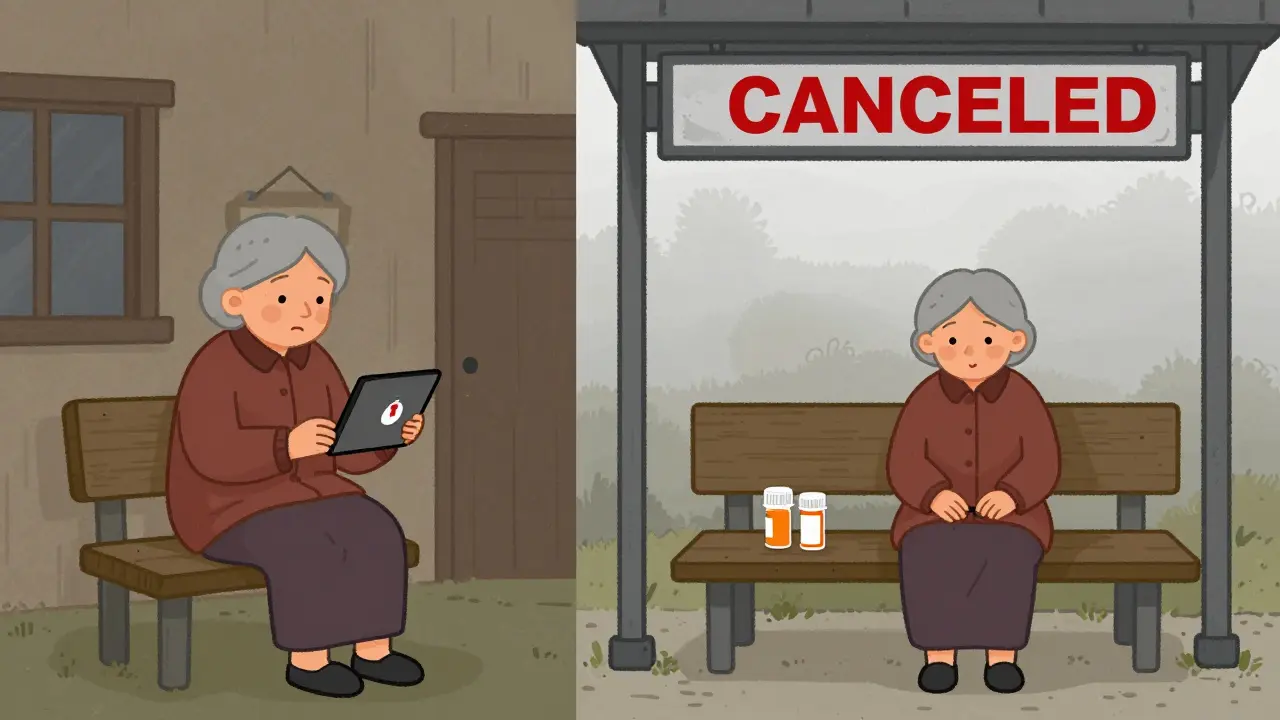
Caitlin Foster
So let me get this straight-we let our entire pharmaceutical supply chain become a fragile, overseas-dependent house of cards… and then we were shocked when it collapsed?!!?!!? I mean, really?!! We had YEARS to fix this!! And now we’re acting like it’s some kind of surprise that people died because they couldn’t get insulin or naloxone??!!??
Someone please tell me why we still think ‘market forces’ should decide who lives and who doesn’t!!
Todd Scott
It’s important to recognize that the drug supply chain disruption wasn’t just about China and India-it was a perfect storm of just-in-time inventory models, globalization overresilience, and the complete absence of strategic stockpiling for essential medicines. In 2010, the FDA had already flagged over 150 critical APIs sourced from Asia, yet no meaningful contingency plans were implemented. Meanwhile, the U.S. pharmaceutical industry, incentivized by profit margins, prioritized branded drugs over generics, leaving the backbone of public health-low-cost, high-volume medications-vulnerable to even minor logistical hiccups. The result? A systemic fragility masked by decades of complacency. We didn’t just lose access to pills-we lost the social contract that medicine should be reliably available, regardless of economic status.
What’s worse, the response was reactive, not structural. Telehealth expanded access for some, but it also widened the digital divide. Rural communities, elderly populations, and undocumented immigrants were left out of the ‘innovation’ narrative. We need policy that treats medicine as infrastructure-not a commodity.
Andrew Gurung
OMG. I’m literally shaking. 😭 This is the most tragic, beautiful, and horrifying thing I’ve read all year. 🌑💔 I mean-fentanyl in fake oxycodone pills?? And people are just… dying?? Like… is this the end times?? 🤕💀 I need a hug and a glass of wine. And maybe a new government. 🙏🍷
Paula Alencar
It is imperative that we acknowledge, with the utmost gravity, the profound and enduring societal fractures laid bare by the pharmaceutical disruptions of the pandemic era. The erosion of equitable access to life-sustaining medications did not emerge ex nihilo-it was the inevitable consequence of decades of deregulation, privatization of public health infrastructure, and the systematic de-prioritization of preventive and community-based care. The fact that a 72-year-old woman in rural Montana could not access her prescribed medication due to the cancellation of a bus route is not an isolated incident; it is a moral indictment of our collective priorities. We must, therefore, advocate with urgency for the institutionalization of robust, publicly funded, and universally accessible pharmaceutical logistics networks, underpinned by ethical imperatives rather than market-driven imperatives. To neglect this is to condone preventable suffering as policy.
Nikki Thames
You know what’s really sad? It’s not the drugs that disappeared-it’s that we still treat addiction like a personal failure instead of the systemic trauma it is. People don’t choose fentanyl because they’re weak. They choose it because the system gave them no other option. And yet, here we are, still whispering about ‘bad choices’ while pharmacies run out of metformin. Hypocrisy is the new normal.
Chris Garcia
As a Nigerian observer, I find this deeply resonant-not because we suffered the same shortages, but because we have always lived them. In Lagos, insulin is a luxury. Antibiotics are often counterfeit. The global North only notices scarcity when it touches middle-class lives. The same supply chains that failed you in Ohio also fail us in Kano every single day-with no media attention, no emergency declarations, no telehealth solutions. We don’t have the luxury of ‘crisis moments’-we have chronic, quiet collapse. The pandemic didn’t create this-it just exposed how the world has always chosen who gets to survive.
James Bowers
While the narrative presented is emotionally compelling, it lacks rigorous policy analysis. The FDA’s emergency waivers were appropriate under extraordinary circumstances, yet the suggestion that domestic manufacturing of APIs is a viable long-term solution ignores the economic reality of scale, labor cost, and global comparative advantage. The notion that ‘market forces’ are to blame presupposes a failure of regulation, not of capitalism. The real issue lies in the absence of mandatory strategic reserve requirements for critical pharmaceuticals-a technical, not ideological, fix. Emotional appeals, however valid, do not substitute for structural reform.
Raushan Richardson
I’ve been on metformin for 10 years. In spring 2020, I waited 3 weeks for a refill. My doctor said ‘try this other brand’-but it gave me nausea so bad I threw up for two days. I didn’t tell anyone because I felt guilty. Like I was being dramatic about a pill. But I almost passed out from high blood sugar. No one talks about that part. The quiet panic. The shame. Just… hoping your body holds out until the next delivery.
Kishor Raibole
One must question the underlying assumption that pharmaceutical supply chains are inherently vulnerable to geopolitical shocks. This is not a failure of capitalism-it is a failure of imagination. The solution lies not in building redundant domestic manufacturing facilities, which are economically inefficient, but in developing a decentralized, blockchain-secured, AI-optimized global inventory network with dynamic allocation protocols. The FDA’s role should be to certify interoperability standards, not to micromanage production. The real tragedy is not the shortage-it is our collective inability to think beyond the 20th-century model of centralized pharmaceutical distribution.