
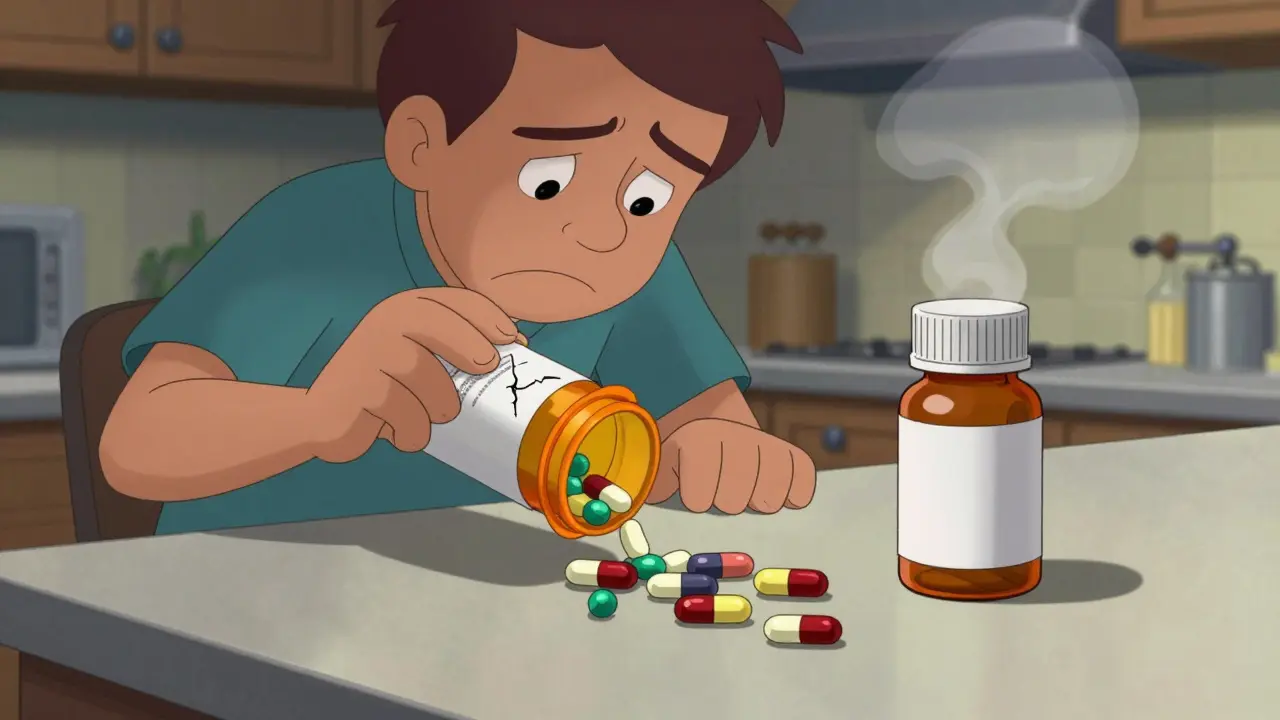
Counterfeit medications are not just a distant problem in developing countries-they’re in your medicine cabinet right now. Every year, over a million people die worldwide because of fake drugs. These aren’t just inferior copies; they’re dangerous, unpredictable, and often indistinguishable from the real thing. In 2024, counterfeit versions of popular weight-loss and diabetes drugs like Mounjaro®, Zepbound®, and Ozempic® were found circulating in North America and Europe. Fake pills are being sold on social media, disguised as prescription medications like Xanax, Adderall, or OxyContin. If you’ve ever bought medication online, gotten a refill that looked different, or accepted a pill from a friend-you’re at risk.
What Exactly Are Counterfeit Medications?
Counterfeit medications are deliberately mislabeled products. They might say they contain a real drug like semaglutide or alprazolam, but they don’t. They could have no active ingredient at all, the wrong dose, or even toxic chemicals like fentanyl, rat poison, or chalk. The World Health Organization (WHO) separates two types: substandard (poor quality due to bad manufacturing or storage) and falsified (deliberately fake). What makes falsified drugs so dangerous is that they’re designed to look real. A fake Xanax pill can have the same color, shape, and imprint as the real one-only it’s made in a hidden lab in China or India and shipped through a fake online pharmacy.
The U.S. Food and Drug Administration (FDA) says these fake products are often made in unregulated labs with no quality control. They’re not just sold on shady websites. Criminal networks now use Instagram, WhatsApp, and Telegram to push counterfeit pills directly to users. In 2023, the DEA reported that nearly 70% of fake pills tested in the U.S. contained lethal doses of fentanyl. You don’t need to be using drugs recreationally to be at risk. Many people unknowingly buy these pills thinking they’re getting a legitimate prescription.
Warning Signs You’re Holding a Fake Pill
Here’s what to look for when you open a new prescription or refill:
- Different appearance: Has the pill changed color, size, shape, or markings? Even a slight difference-like a slightly lighter shade of blue or a thinner coating-could mean it’s fake.
- Poor packaging: Check for spelling errors, mismatched fonts, blurry printing, or labels that look like they were printed on a home printer. Legitimate pharmaceutical labels use raised ink, consistent colors, and precise alignment.
- Missing information: No lot number? No expiration date? No pharmacy name or phone number on the label? That’s a red flag. Real medications always include these.
- Strange smell or taste: If your pill tastes metallic, bitter, or smells odd, stop taking it. Real pills have a neutral or slightly chemical taste-not foul.
- Unusual texture: Crumbly, cracked, or bubbled surfaces? Legitimate pills are factory-made to be smooth and uniform. If it feels like chalk or breaks apart easily, it’s not real.
- Unusually low price: If a website offers 80% off a brand-name drug like Ozempic, it’s fake. Real pharmaceuticals have tight pricing controls. If the price seems too good to be true, it is.
- Unexpected side effects: Did you suddenly feel dizzy, nauseous, or have chest pain after taking a pill you’ve used before? That’s a major warning sign. Fake drugs can contain unknown toxins.
Pfizer’s global security team confirms that counterfeit pills often have a “factory-made” look but fail under close inspection. Look for uneven edges, inconsistent lettering, or a coating that looks too glossy or too dull. Some fakes even have the wrong imprint-like a pill that says “V 30” when the real one says “V 30 71”.
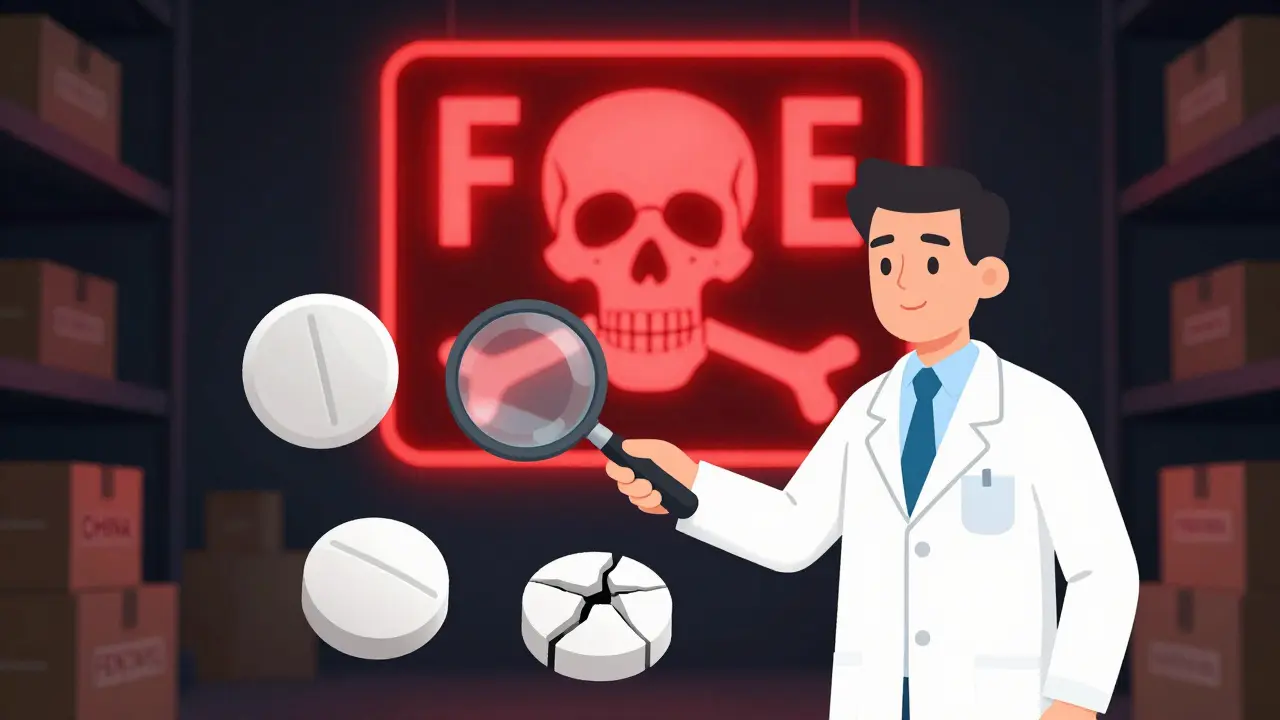
Where Counterfeit Drugs Come From
Most fake medications originate from unregulated countries, especially China, India, and parts of Eastern Europe. But they don’t stay there. They’re shipped globally through mail, courier services, and online marketplaces. A 2024 report by the National Association of Boards of Pharmacy (NABP) found over 10,000 illegal online pharmacies selling counterfeit drugs. Many of these sites look professional-they have secure-looking URLs (like “pharmacheap.com”), fake licenses, and even customer reviews.
Worse, some of these websites are designed to mimic real pharmacies. They copy the branding of CVS, Walgreens, or even hospital pharmacies. They’ll even use real-looking prescription forms. But if you’re buying from a site that doesn’t require a prescription, or that lets you pick your dosage without a doctor’s approval, you’re dealing with a fake.
Even if you buy from a local pharmacy, counterfeits can slip in. In 2023, the FDA warned about falsified versions of Muro 128 eye drops found in U.S. retail pharmacies. These weren’t imported-they entered through compromised supply chains. That’s why checking your medication every time you refill is critical.
How to Protect Yourself
The safest way to avoid counterfeit drugs is simple: only use licensed pharmacies.
- Buy from U.S.-licensed pharmacies: Only get your prescriptions from pharmacies that are licensed by your state’s board of pharmacy. Look for the VIPPS seal (Verified Internet Pharmacy Practice Sites) on websites-this means the pharmacy has been independently verified by the NABP.
- Never buy from overseas or unlicensed sites: Even if a site says “FDA approved,” it’s likely lying. The FDA does not approve foreign pharmacies. If you’re ordering from Canada, Mexico, or anywhere outside the U.S., you’re at risk.
- Ask your pharmacist: If your pill looks different, ask them. Pharmacists are trained to spot counterfeits. They can check lot numbers, compare packaging, and contact the manufacturer.
- Call the manufacturer: If you suspect a fake, call the drugmaker directly. Pfizer, Eli Lilly, and Novo Nordisk all have dedicated hotlines to report counterfeit products. Provide the lot number, expiration date, and where you bought it. They track these reports and can warn others.
- Never share or take pills from others: A friend’s leftover Adderall or a pill from a party isn’t safe. Fake pills are often sold as prescription drugs to unsuspecting users.
- Use the FDA’s Drug Safety Reporting portal: If you suspect a counterfeit, report it at fda.gov/medwatch. Your report helps the agency track outbreaks and remove dangerous products.
Pharmaceutical companies are now using advanced tracking systems. The Drug Supply Chain Security Act (DSCSA), fully active since November 2023, requires every prescription drug to have a unique digital identifier. This lets pharmacies trace a pill back to the manufacturer. While you won’t see this code, it means the supply chain is more secure than ever-if you buy from a licensed pharmacy.
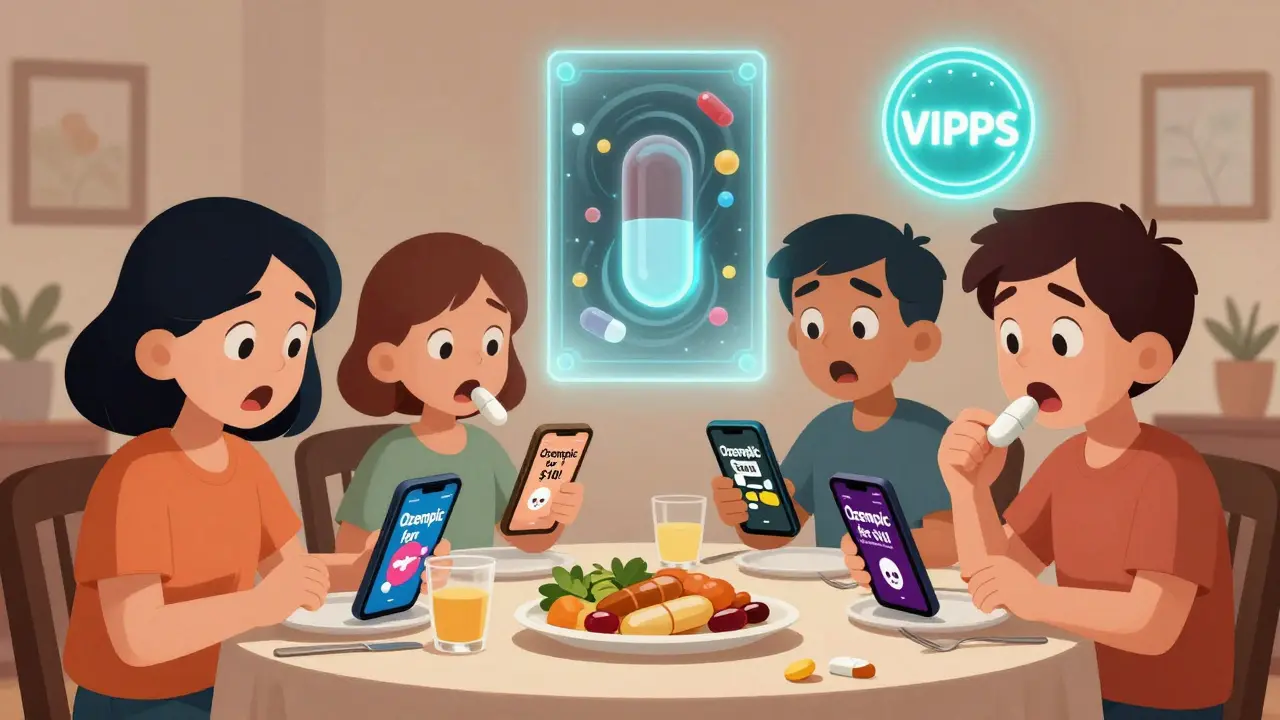
What to Do If You’ve Taken a Fake Pill
If you’ve taken a pill you suspect is fake, stop using it immediately. Don’t flush it-keep it in the original packaging. Call your doctor and your pharmacist. If you feel unwell-especially if you have chest pain, trouble breathing, confusion, or extreme drowsiness-go to the ER. Fake pills can cause sudden overdose, organ failure, or long-term damage.
Report it. Use the FDA’s MedWatch system or call your local health department. If the drug was a weight-loss or diabetes medication like Mounjaro®, contact the manufacturer directly. Eli Lilly’s safety page says: “If you suspect a counterfeit product, call Lilly.” They keep logs of every report and use them to alert regulators.
Don’t assume you’re safe just because you’ve used the same pill before. Counterfeiters change their batches. One batch might be harmless. The next might contain fentanyl. Always check.
Why This Isn’t Just a “Someone Else’s Problem”
Many people think counterfeit drugs only affect people who buy online. But that’s not true. A 2024 study found that 1 in 10 prescriptions filled at U.S. pharmacies had packaging inconsistencies that matched known counterfeit patterns. These weren’t from shady websites-they came from distributors with broken supply chains.
Even if you never go online to buy medicine, you’re still at risk. Counterfeiters don’t just target the internet. They infiltrate legitimate distribution channels. A single fake batch can end up in a hospital, a clinic, or your local pharmacy. That’s why vigilance matters-not just for you, but for everyone.
There’s no foolproof way to spot a counterfeit with your eyes alone. As Pfizer’s Amy Callanan says, “It really takes laboratory testing to confirm 100%.” But you don’t need a lab to protect yourself. You just need to be informed, skeptical, and proactive.
Can I tell if a pill is fake just by looking at it?
You can spot some warning signs-like spelling errors, wrong colors, or odd textures-but you can’t be 100% sure without lab testing. Fake pills are made to look identical to real ones. The best approach is to combine visual checks with trusted sourcing: only buy from licensed pharmacies and report anything suspicious.
Are online pharmacies ever safe to use?
Only if they’re verified by the National Association of Boards of Pharmacy (NABP) with the VIPPS seal. Most online pharmacies are illegal. If a site doesn’t require a prescription, sells drugs without a doctor’s approval, or offers prices that are way below market value, it’s not safe. Stick to pharmacies you know-like CVS, Walgreens, or your hospital’s pharmacy.
What should I do if my medication looks different this time?
Don’t take it. Call your pharmacist right away. They can compare the new batch with previous ones, check the lot number, and contact the manufacturer. If the pill looks, smells, or tastes different, it’s not normal. Always speak up-your pharmacist is trained to catch these issues.
Are generic drugs more likely to be counterfeit?
No, generics aren’t more likely to be fake-but they’re more commonly targeted. Counterfeiters use generics because they’re cheaper to copy and widely used. A fake generic version of metformin or atorvastatin can be sold for pennies, making them easy to distribute. Always check your generic pills the same way you check brand names-look for packaging changes and ask your pharmacist.
Can counterfeit medications cause long-term damage?
Yes. Fake drugs can contain toxic substances like lead, arsenic, or fentanyl. Even one dose can cause organ damage, heart problems, or neurological injury. Some counterfeit diabetes drugs have been found with no active ingredient at all, leading to uncontrolled blood sugar and long-term complications like kidney failure or blindness. Don’t wait for symptoms to appear-act fast if you suspect a fake.
How can I verify if my pharmacy is legitimate?
Check the pharmacy’s license through your state’s board of pharmacy website. For online pharmacies, visit the NABP’s VIPPS program (nabp.pharmacy/vipps) and search for the site. A legitimate pharmacy will have a physical address, a licensed pharmacist on staff, and require a valid prescription. If you can’t find this information, walk away.
Allison Priole
Stop buying pills off Instagram. That's it. That's the whole post. If you're getting meds from a DM, you're already dead.
Paul Cuccurullo
It's heartbreaking how normalized this has become. I had a neighbor take a "Xanax" from a friend last year-turned out to be fentanyl-laced. She spent three days in ICU. Her story isn't unique. We treat these pills like candy, but they're landmines disguised as solutions. The system is broken, but personal vigilance is our last line of defense. Always check the packaging. Always call your pharmacist. Always assume nothing is safe until proven otherwise.
Casey Tenney
My cousin died from a fake Ozempic. He thought he was saving money. He wasn't. He was signing his own death warrant. This isn't a warning. It's an obituary waiting to happen.
Sandy Wells
I don't trust pharmacies anymore. Even the big ones. The supply chain is a joke. I've seen pills with different logos on the same bottle. And nobody cares. The FDA is asleep at the wheel. We're all just guessing if our meds will kill us or not. I'm just waiting for my turn
Thomas Jensen
Let me tell you what they don't want you to know-pharma companies know this is happening. They're not fixing it because fake drugs create fear, and fear sells. They want you scared so you'll pay $800 for a bottle of Ozempic instead of $80. Meanwhile, the real manufacturers are getting sued for counterfeit pills they didn't make. It's all a scam. Even the VIPPS seal? Probably fake too. Who's auditing the auditors? Nobody. You're being played. Always.
trudale hampton
I used to think this was just a problem for people who buy meds online. Then I got my refill of metformin and noticed the pill was a slightly different shade of white. I called my pharmacist. She said, "Oh yeah, they switched manufacturers last month." But she also said, "Always check." So now I do. I hold it up to the light. I smell it. I compare it to the last bottle. It takes 30 seconds. That's all it takes to stay alive. Small habits save lives.
Natali Shevchenko
There's something deeply ironic about how we've turned medicine into a consumer product. We shop for pills like we shop for sneakers-price, brand, discount, delivery speed. But a pill isn't a pair of Jordans. It's a chemical interaction with your biology. We treat it like a commodity, but it's a covenant between your body and science. When we outsource trust to a website with a .xyz domain and a 5-star review from "Samantha_420", we're not being smart-we're surrendering our biology to chaos. The real danger isn't the counterfeit pill. It's the mindset that lets us believe we can outsource safety.
Nicole James
Have you ever wondered why every fake pill has the exact same imprint? "V 30"? "M 30"? "WY 30"? It's not random. It's coded. The same Chinese labs churn out thousands of identical pills because they know the algorithm: mimic the most common prescriptions. Adderall. Xanax. Oxycodone. They're not trying to fool experts-they're trying to fool the 17-year-old who Googles "how to get Adderall without a script." And it works. Every. Single. Time. The system isn't broken. It's designed this way. And the real criminals? They're the ones selling the pills. The ones who don't care if you die. They just want your cash.
Nishan Basnet
As someone from India, I see this daily. Our labs make 80% of the world’s generic drugs-many of them life-saving. But the same factories that produce quality medicines also churn out fakes for black markets. It’s not the country-it’s the corruption in distribution. The real solution? Traceability. Blockchain for pills. QR codes on every bottle. Let the consumer scan and verify. India needs better oversight. But so does every country that lets online pharmacies operate in the shadows. This isn’t about blame-it’s about building systems that can’t be gamed.
Bryan Woody
Let’s be real-no one’s gonna read all this. You’ll skim the headline, nod, then buy your "Mounjaro" off Telegram because it’s $30 and your insurance won’t cover it. We know this is dangerous. We just don’t care enough until it’s too late. The FDA? They’re swamped. Your pharmacist? They’re overworked. Your doctor? They’re on a Zoom call with a guy who just wants a refill. So who’s left? You. And you’re gonna keep clicking "buy now" until your heart stops. Good luck.