
More than half of people who’ve had one kidney stone will get another within five years. It’s not a one-time problem. It’s a chronic condition that demands daily attention. If you’ve been told to drink more water and cut back on salt, you’re not alone-but most people don’t do it right. The truth is, kidney stones aren’t caused by eating too much calcium or avoiding all oxalate foods. They’re caused by a broken system-your body’s chemistry is out of balance. And fixing it isn’t about a quick fix. It’s about building habits that last.
Why Kidney Stones Keep Coming Back
Kidney stones form when minerals in your urine clump together. The most common type-calcium oxalate-makes up about 80% of cases. But here’s the twist: eating less calcium doesn’t help. In fact, cutting calcium out of your diet makes stones more likely. Why? Because calcium binds to oxalate in your gut, stopping it from reaching your kidneys. Without enough calcium, oxalate runs free and forms stones. That’s why experts now say: don’t avoid calcium. Eat it with meals. The real problem? Not drinking enough. When your urine is too concentrated, minerals stick together. The European Association of Urology says you need to make at least 2.5 liters of urine a day. That means drinking 2.5 to 3 liters of fluid-water, tea, coffee, even lemonade. And no, thirst isn’t a good guide. By the time you’re thirsty, you’re already dehydrated.The Fluid Rule: Drink More Than You Think
Most people think drinking eight glasses of water a day is enough. For kidney stone prevention, that’s barely the starting line. You need to aim for clear or light yellow urine throughout the day. Dark yellow? You’re behind. If you’re sweating a lot-working out, in hot weather, or even just sitting in a warm room-you need even more. Try this: Use a marked water bottle. Fill it up three times a day. That’s your goal. Don’t guess. Measure. A 1-liter bottle means three refills. Add a slice of lemon to one of them. Lemon juice is packed with citrate, a natural stone blocker. The NHS recommends it. So do urologists. Citrate stops calcium from forming crystals. It’s not a magic potion, but it’s one of the few dietary tricks with solid evidence. Coffee and tea? Yes, they count. Contrary to old myths, caffeine doesn’t dehydrate you enough to hurt. The National Kidney Foundation says these beverages are fine. Just don’t swap all your water for sugary sodas. Fizzy drinks, especially colas, contain phosphoric acid and high fructose corn syrup-both linked to higher stone risk. Skip them. Plain water is still the best choice.Salt Is the Silent Culprit
You might think sugar or fat is the enemy. But sodium is the real troublemaker. Too much salt makes your kidneys dump calcium into your urine. More calcium in urine = more stones. The goal? No more than 2 grams of sodium a day. That’s 5 grams of salt-about one teaspoon. But here’s the catch: 75% of sodium comes from processed foods. Not the salt shaker. Check labels. Bread, canned soup, deli meats, frozen meals, even breakfast cereals can be loaded. Choose low-sodium versions. Cook at home more. Use herbs, lemon, or vinegar instead of salt. If you eat out, ask for no added salt. It’s not always possible, but every little bit helps. A study from the American Academy of Family Physicians found that people who lowered their sodium intake cut their stone recurrence risk by nearly half.Protein: Less Is More
Animal protein-beef, chicken, pork, fish, eggs-raises uric acid and lowers citrate. Both changes make stones more likely. The guideline? No more than 8 ounces of cooked meat per day. That’s about the size of a deck of cards. Two meals. Not three. Plant proteins like beans, lentils, tofu, and nuts are fine. In fact, people who eat more plant foods tend to have fewer stones. The National Kidney Foundation points to this clearly: a diet rich in fruits, vegetables, and whole grains is protective. You don’t need to go vegan. Just balance your plate. Make plants the main event, not the side.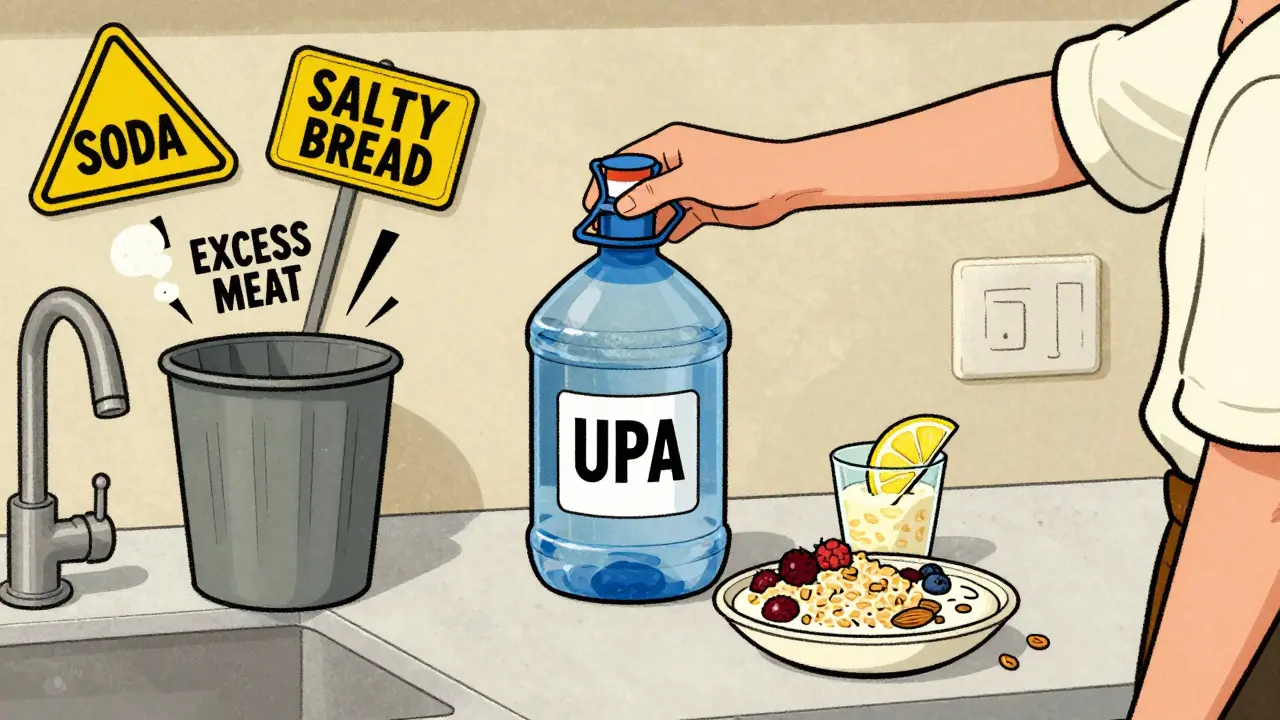
Oxalate: Don’t Fear It-Manage It
Oxalate gets blamed for kidney stones. Spinach, nuts, beets, chocolate-all high in oxalate. But here’s the truth: you don’t need to cut them out. You need to eat them with calcium. Eat spinach with yogurt. Have almonds with milk. Have chocolate milk instead of plain chocolate. When calcium and oxalate meet in your gut, they bind and pass out together. They never reach your kidneys. Avoiding oxalate-rich foods entirely can backfire. You lose the benefits of fiber, antioxidants, and nutrients these foods provide. The key is pairing. Don’t eat high-oxalate foods alone. Always include a calcium source at the same meal. That’s the smart way.The DASH Diet: Proven to Work
The DASH diet-originally designed for high blood pressure-is now one of the best tools for preventing kidney stones. It’s high in fruits, vegetables, whole grains, and low-fat dairy. Low in salt, sugar, and red meat. A 2023 study from the National Kidney Foundation showed people who followed DASH cut their stone risk by 40% to 50%. It’s not a fad. It’s a lifestyle. Think: oatmeal with berries for breakfast, a big salad with beans and grilled chicken for lunch, baked salmon with roasted veggies for dinner. Snack on yogurt or an apple. You’re not starving yourself. You’re eating better.What About Supplements and Medications?
Some people are prescribed medications like hydrochlorothiazide or potassium citrate. But here’s the problem: studies show they don’t always work better than diet and fluids alone. One 2023 trial found hydrochlorothiazide didn’t significantly reduce recurrence compared to placebo. That doesn’t mean they’re useless. For some-with high urine calcium or low citrate-they help. But they’re not a substitute for diet. Citrate supplements? They can help if your urine citrate is low. But lemon juice in water is cheaper, safer, and just as effective for most people. Talk to your doctor before starting any supplement. Don’t self-prescribe.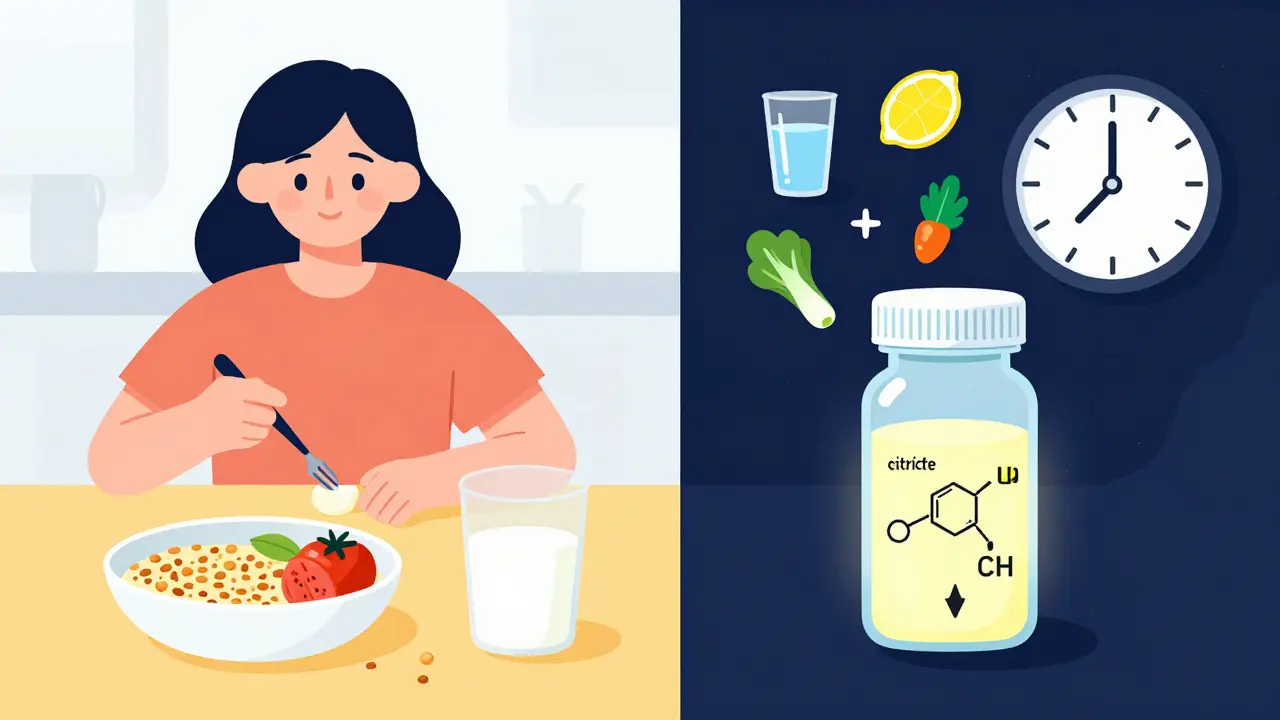
Monitoring and Long-Term Commitment
This isn’t a 30-day challenge. Kidney stones are a lifelong condition. The recurrence rate? 14% in one year, 35% in five years, and over 50% in ten years if you do nothing. That’s why follow-up matters. After starting dietary changes, get a 24-hour urine test in 8 to 12 weeks. It tells you if your urine volume, sodium, citrate, and calcium levels are on track. If not, adjust. Maybe you need more water. Maybe you’re still eating too much salt. The test shows you what’s really happening inside your body. Keep doing it. Every year or two, repeat the test. Even if you feel fine. Stones form silently. You won’t know until it’s too late.What to Do If You’ve Had a Stone
If you’ve passed a stone, save it. Bring it to your doctor. The composition matters. Calcium oxalate? Adjust your oxalate and calcium intake. Uric acid stones? Cut back on meat and alcohol. Struvite? Often tied to infections. Cystine? Rare, but needs special care. Knowing your stone type helps tailor your plan. Most are calcium oxalate, but even small differences change the advice. Don’t assume your plan is the same as someone else’s.Final Thought: It’s a Lifestyle, Not a Diet
You’re not trying to eat perfectly. You’re trying to build a system that keeps your urine balanced. Drink enough. Watch your salt. Eat calcium with meals. Choose plants over meat. Skip the soda. Add lemon to your water. That’s it. It’s not hard. It’s just consistent. And if you do it, you won’t just avoid another stone. You’ll protect your kidneys. You’ll lower your risk of chronic kidney disease, which affects nearly 1 in 5 people who keep getting stones. That’s not just about pain. It’s about your long-term health.Think of it like brushing your teeth. You don’t do it once and call it done. You do it every day because you know what happens if you don’t. Kidney stones are the same. Your body is trying to tell you something. Listen. Change your habits. Your kidneys will thank you.
Skye Kooyman
Been stone-free for 3 years now. Just drink water. Not hard.
Karen Droege
This is the most clear-headed, evidence-based guide to kidney stone prevention I've ever read. Seriously. Stop scrolling and start sipping. Lemon water + low sodium + calcium with meals = your kidneys doing a happy dance. I'm printing this out and taping it to my fridge. Also, DASH diet? Yes. I've been on it for 8 months and my 24-hour urine citrate jumped 40%. No meds needed. You're not just preventing stones-you're rewiring your entire metabolic health. This isn't a diet. It's a love letter to your nephrons.
Peter Sharplin
Biggest mistake people make? Thinking they need to avoid calcium. I used to eat zero dairy because I was told it caused stones. Turned out I was getting more oxalate absorption because I had no calcium to bind it. Started having yogurt with spinach salad and my stone frequency dropped from monthly to once every 18 months. Also, lemon juice in water-real lemon, not concentrate-makes a measurable difference in urine citrate. The science here is rock solid.
Kipper Pickens
From a nephrology perspective, the DASH diet’s efficacy in reducing stone recurrence is well-documented in the Journal of the American Society of Nephrology (JASN), particularly in cohort studies from the 2019–2023 period. The sodium-calcium-citrate triad remains the primary modifiable axis. Interestingly, the 2023 meta-analysis by Zhang et al. demonstrated that dietary citrate from citrus sources outperforms pharmacologic citrate in terms of compliance and long-term adherence, likely due to pleiotropic effects on gut microbiota and acid-base balance. Also, coffee’s diuretic effect is negligible at habitual intakes-per the National Kidney Foundation’s 2022 guidelines, it contributes positively to total fluid volume.
Rakesh Kakkad
As someone who has passed seven stones in ten years, I can confirm that hydration is everything. I carry a 1.5L bottle everywhere. I refill it four times a day. I track my urine color on a scale from 1 to 8. Anything above 4 means I’m behind. I don’t care if it’s 3 AM-I drink. I don’t care if I’m at a wedding-I drink. My kidneys don’t care about your social calendar. And yes, I eat cheese with my spinach. Calcium binds oxalate. It’s not complicated. Stop overthinking it. Just drink. Just pair. Just live.
Dan Nichols
Most of this is correct but you’re ignoring the elephant in the room-environmental toxins. Heavy metals like cadmium and arsenic in water and food are major contributors to crystallization disorders. Studies from the CDC show elevated urinary cadmium in recurrent stone formers, yet no one talks about it. You blame salt? Blame the industrial food system. Blame the pesticides. Blame the water pipes. The real solution isn’t lemon water-it’s systemic change. But sure, drink more water. That’s the capitalist solution to a structural problem.
eric fert
Okay so let me get this straight-you’re telling me I can drink coffee and soda and still be fine as long as I don’t drink the soda? That’s not a diet, that’s a paradox. And why is lemon juice magic but apple cider vinegar isn’t? And why are you ignoring the fact that 60% of kidney stones in young men are uric acid, not calcium oxalate? You’re painting a one-size-fits-all picture while ignoring the most common type in my demographic. Also, who says I want to live longer? Maybe I like the pain. Maybe it keeps me grounded. Maybe I’m not here to follow your wellness checklist. Just saying.
Suresh Kumar Govindan
The DASH diet is a corporate ploy disguised as science. The National Kidney Foundation receives funding from pharmaceutical companies that profit from citrate supplements and thiazides. Why not just tell people to avoid all processed food? That’s the real solution. But no-let’s sell you a $12 lemon-infused water bottle and call it prevention. I’ve been stone-free for 12 years by eating only raw meat and distilled water. No calcium. No citrus. No nonsense. Your body is a temple. Not a laboratory for Big Nephro.
Neil Thorogood
Bro. I used to think I was hydrated because I drank ‘a lot.’ Then I started using a hydration app with a urine color chart. Day 1: dark amber. Day 3: yellow. Day 7: pale straw. I cried. Not because I was emotional-because I realized I’d been slowly poisoning myself for 15 years. Now I drink 4 liters a day. I have a glass next to my bed. I drink before coffee. I drink before sex. I drink before I sleep. My stones? Gone. My energy? Skyrocketed. My wife says I’m less grumpy. This isn’t health advice. This is a life upgrade.
Simran Kaur
I’m from Punjab and we eat a lot of spinach and dairy. My grandmother always said, ‘Have your greens with curd.’ I never knew why. Now I do. She didn’t know about oxalate or citrate-but she knew how to protect kidneys. This isn’t new science. It’s old wisdom with a lab report. Thank you for validating what our elders knew without words.
Allie Lehto
i think this is sooo important but like... why do we always have to be so perfect?? i mean, i drink water but sometimes i just want a coke. is it the end of the world if i have one? i feel guilty every time. like am i a bad person if i eat chocolate without yogurt? i just want to live. not be a kidney stone robot. also i think the government should make lemon water free in public places. like, imagine water fountains with lemon slices. that would be so nice. just saying.
Jessica Knuteson
Interesting how this ignores the role of gut microbiome in oxalate metabolism. Studies show Oxalobacter formigenes colonization reduces stone risk by up to 70%. Yet no one mentions probiotics or fecal transplants. You’re treating symptoms, not root causes. Also, citrate doesn’t ‘block’ crystals-it chelates calcium. Terminology matters. This post reads like a wellness blog masquerading as medical advice. The real solution? Genetic testing. Your stone type isn’t random. It’s coded.
Faisal Mohamed
The real truth? We’re all just temporary vessels for mineral deposits. The stone isn’t the enemy-it’s the messenger. Your body is screaming, ‘I’m out of balance.’ But you don’t listen. You drink lemon water and call it healing. You’re not fixing your chemistry. You’re just adding flavor to your denial. What if the stone is the point? What if pain is the only language your soul understands? Maybe you’re not supposed to prevent it. Maybe you’re supposed to surrender to it. Let the stone come. Let it pass. And in its passage, find peace.
Renia Pyles
Wow. Another white-coat wellness guru telling people what to eat. Meanwhile, your ‘experts’ are the same ones who told us fat was evil, then carbs were evil, now sodium is the devil. Who are you to decide what my body needs? I’ve had three stones. I’m 32. I’m strong. I don’t need your lemon water. I don’t need your DASH diet. I need to be left alone. You’re not helping. You’re policing my life. And that’s the real disease.