
What Is Bell’s Palsy?
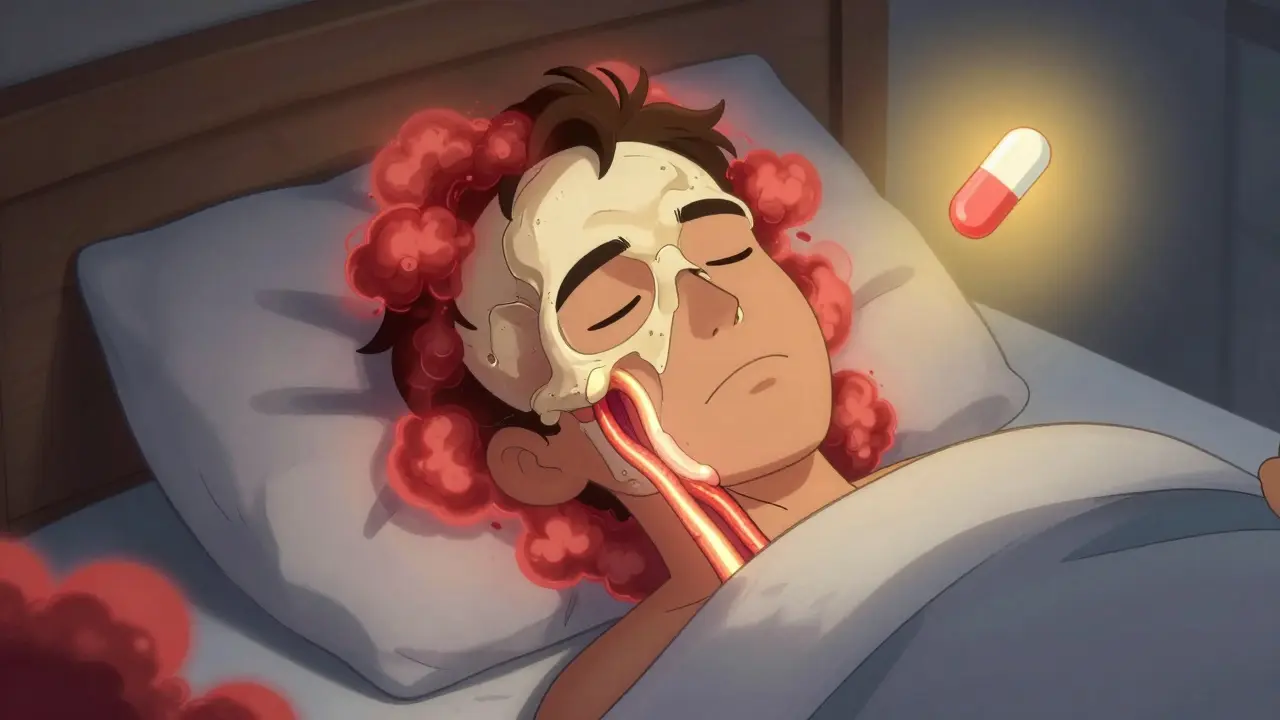
Bell’s palsy is sudden, one-sided facial weakness or paralysis that comes on without warning. It happens when the facial nerve - the seventh cranial nerve - becomes inflamed and compressed inside a narrow bony tunnel in the skull. This nerve controls the muscles you use to smile, blink, and close your eyes. When it’s swollen, those muscles don’t get the right signals, and the face droops.
It’s not a stroke. It’s not a tumor. It’s not caused by an injury. In most cases, doctors can’t find a clear reason why it happens, which is why it’s called idiopathic facial paralysis. About 15 to 30 people out of every 100,000 get it each year, according to the American Academy of Family Physicians. It’s most common between ages 15 and 45, but anyone can be affected.
Why Corticosteroids Are the First-Line Treatment
For decades, doctors debated what to do when someone woke up with a drooping face. Some tried acupuncture, others tried herbs, electric stimulation, or even hyperbaric oxygen. But the only treatment backed by solid, repeated evidence is corticosteroids - specifically, oral prednisone.
The reason is simple: inflammation. When the facial nerve swells inside its tight bony canal, it gets pinched. That’s what causes the paralysis. Corticosteroids like prednisone reduce that swelling. Less swelling means less pressure on the nerve, and that gives it a better chance to heal.
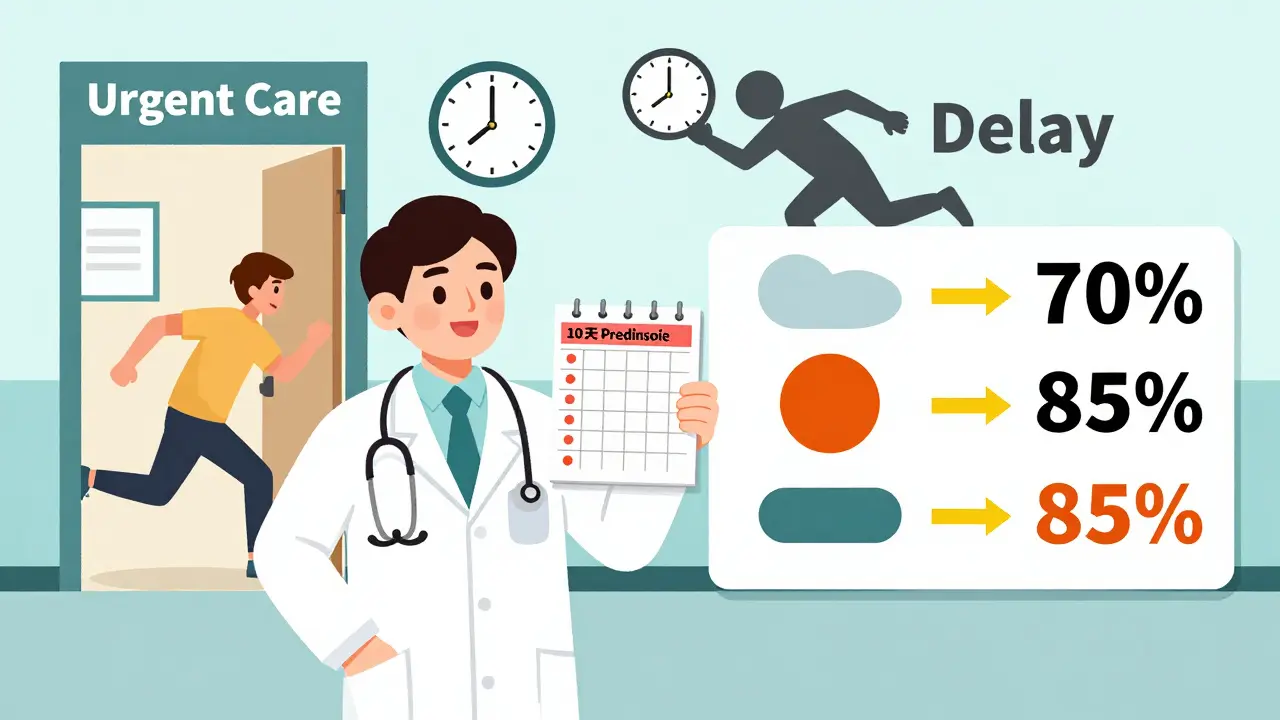
Studies show that without treatment, about 70% of people recover fully within a few months. But with corticosteroids, that number jumps to about 85%. That means one in every 10 people who take prednisone avoids a long-term problem like partial facial weakness or abnormal muscle movements - a condition called synkinesis, where smiling makes your eye twitch.
The Right Dose and Timing Matter
Taking corticosteroids isn’t as simple as popping a pill and hoping for the best. There’s a precise protocol that makes all the difference.
The standard treatment is 50 to 60 milligrams of prednisone per day for five days, followed by a five-day taper down to zero. That’s a total of 500 to 600 milligrams over 10 days. Research shows that doses under 450 milligrams don’t work as well - patients are twice as likely to have incomplete recovery.
But timing is even more critical. The best results happen when treatment starts within 48 hours of symptoms appearing. After 72 hours, the benefit drops off sharply. A 2023 study of nearly 500 patients found that those who started prednisone on day one recovered faster and more completely than those who waited even a day or two longer.
Many people delay seeking care because they think it’s a stroke, or they wait to see if it gets better on its own. That’s the biggest mistake. If you notice one side of your face drooping, you can’t close your eye, or your smile is uneven - don’t wait. Go to a doctor or urgent care right away.
Corticosteroids vs. Antivirals: What Actually Works
You might have heard that Bell’s palsy is caused by the herpes virus, so antivirals like acyclovir or valacyclovir should help. That’s a common myth.
Studies have tested antivirals alone - and they show no benefit. The American Academy of Family Physicians says there’s no high-quality evidence to support using antivirals by themselves.
What about combining antivirals with corticosteroids? The data is mixed. Some studies suggest the combo might reduce the risk of synkinesis - those unwanted muscle twitches - but it doesn’t significantly improve full recovery. The evidence is rated as moderate, not strong. So while some doctors still prescribe both, especially if they suspect Ramsay Hunt syndrome (which involves a visible rash), it’s not required for typical Bell’s palsy.
For most people, prednisone alone is enough. Adding an antiviral doesn’t hurt, but it also doesn’t dramatically change outcomes.
What About Side Effects?
People hear “steroid” and think of weight gain, mood swings, or diabetes. Those are real risks - but only with long-term use. A 10-day course of prednisone for Bell’s palsy is too short to cause those problems.
Studies tracking over 700 patients found no significant difference in side effects between those taking prednisone and those taking a placebo. The most common complaints were mild: trouble sleeping, increased appetite, or feeling more emotional. One trial reported only three people out of hundreds had sleep issues.
Diabetics should monitor blood sugar closely during treatment, since prednisone can raise glucose levels temporarily. But for most people, the short-term side effects are minor compared to the benefit of regaining full facial movement.
What Doesn’t Work
There are a lot of alternative treatments out there. Low-level laser therapy. Intratympanic steroid injections (shots into the ear). Stellate ganglion blocks. Hyperbaric oxygen chambers. Some clinics even offer acupuncture.
None of these have strong evidence backing them. Multiple reviews, including the 2023 AAFP evidence update, found no high-quality studies showing these methods are better than corticosteroids. Some may feel helpful to patients - and that’s understandable - but they’re not replacements for the proven treatment.
Also, avoid waiting to see if it gets better. Delayed treatment is the biggest reason people end up with lasting symptoms.
How Doctors Know It’s Bell’s Palsy - and Not Something Worse
Not every facial weakness is Bell’s palsy. A stroke, tumor, Lyme disease, or Ramsay Hunt syndrome can look similar. That’s why doctors check for key differences.
Bell’s palsy affects the whole side of the face - forehead, eye, and mouth. If you can’t raise your eyebrow on one side, that’s a sign it’s likely Bell’s palsy. In a stroke, the forehead usually still moves because the nerve pathways are different.
Ramsay Hunt syndrome includes a painful rash around the ear or mouth, caused by the same virus that causes chickenpox. If you see blisters, it’s not Bell’s palsy - it’s a different condition that needs antivirals and sometimes stronger steroids.
Doctors use the House-Brackmann scale to grade severity, from I (normal) to VI (complete paralysis). Most Bell’s palsy cases start at grade III or IV. Tracking progress with this scale helps determine if treatment is working.
Recovery Timeline and What to Expect
Recovery doesn’t happen overnight. Most people start seeing improvement within two weeks. Full recovery usually takes three to six months. A 2023 machine learning study of 493 patients found that 72.6% recovered fully by three months, and 89.5% by nine months - as long as they started prednisone early.
Some people have lingering issues. About 10% to 15% don’t fully recover. That’s why early treatment matters so much. The nerve has a limited window to heal. After that, muscle atrophy and abnormal nerve regrowth can lead to permanent changes.
Physical therapy isn’t required for most, but gentle facial exercises - like practicing smiling or closing the eye - can help maintain muscle tone during recovery. Eye care is critical: if you can’t blink, use artificial tears and tape your eye shut at night to prevent dryness and damage.
Why This Treatment Isn’t Changing - and Why That’s Good
For a condition that affects tens of thousands every year, there’s been little innovation in treatment. No new drugs. No breakthrough therapies. Just prednisone.
That’s not because science has stalled. It’s because the evidence is so clear. Prednisone works. It’s cheap - a 10-day course costs under $5 in the U.S. It’s safe in the short term. And it’s been tested in dozens of high-quality studies across decades.
Companies aren’t rushing to develop new treatments because there’s no profit in it. Generic prednisone can’t be patented. But that’s actually a win for patients. You don’t need an expensive new drug. You need quick access to a simple, proven pill.
The real advancement isn’t in medicine - it’s in awareness. Telemedicine tools now help people recognize Bell’s palsy faster. Public education campaigns are reducing delays in treatment. And that’s making the biggest difference.
Sonal Guha
Prednisone works. No fluff. No magic pills. Just science. Stop wasting time on acupuncture and hyperbaric chambers. If your face droops, get the steroid within 48 hours or accept the limp smile.
gary ysturiz
This is the kind of clear, simple info we need more of. So many people panic thinking it's a stroke when it's just a swollen nerve. Prednisone is cheap, safe for 10 days, and it works. If you're reading this and your face feels weird right now - don't wait. Go now. You've got a narrow window and this treatment is your best shot.
laura manning
The evidence base for corticosteroid use in idiopathic facial paralysis is, indeed, robust. Multiple randomized controlled trials, meta-analyses, and systematic reviews-including those published by the American Academy of Family Physicians-consistently demonstrate a statistically significant improvement in complete recovery rates when prednisone is administered within the critical 48-hour window. The mechanism-reduction of endoneurial edema within the fallopian canal-is physiologically sound. Alternative interventions, while anecdotally reported, lack methodological rigor and are not supported by Level I evidence.
Bryan Wolfe
I had this last year. Woke up like I'd been punched in the face. Thought I was having a stroke. Went to urgent care, got the prednisone script same day. Two weeks in, I could blink again. Three months later, no one could tell. The eye drops and tape at night were annoying but life-saving. Don't wait. Don't overthink it. Just take the pill. Your face will thank you.
Cassie Widders
I've seen this happen twice in my family. First time, they waited a week. Didn't fully recover. Second time, got the steroids on day two. Back to normal. Simple. No drama. Just medicine. Why do people always wait?
Konika Choudhury
Western medicine always thinks it has all the answers. In India we have Ayurveda. Nerve oils. Herbal pastes. These work too. You just don't hear about them because big pharma doesn't profit from turmeric. Prednisone is fine but don't act like it's the only way
Darryl Perry
The 10-day taper is arbitrary. Why not 7 days? Why not 12? Where's the data? Also, why is this still a first-line treatment in 2024? No innovation. Just laziness.
Daniel Pate
It's fascinating how the most effective treatment is also the most overlooked. Prednisone isn't glamorous. It doesn't come with a TED Talk. No startup raised $50M on it. But it works. The real tragedy isn't the disease-it's that people don't know about this. We have more awareness about crypto than we do about facial nerve inflammation. We need to stop treating medical knowledge like a luxury.